
Top 10 Accessories for Sambar Deer Hunting
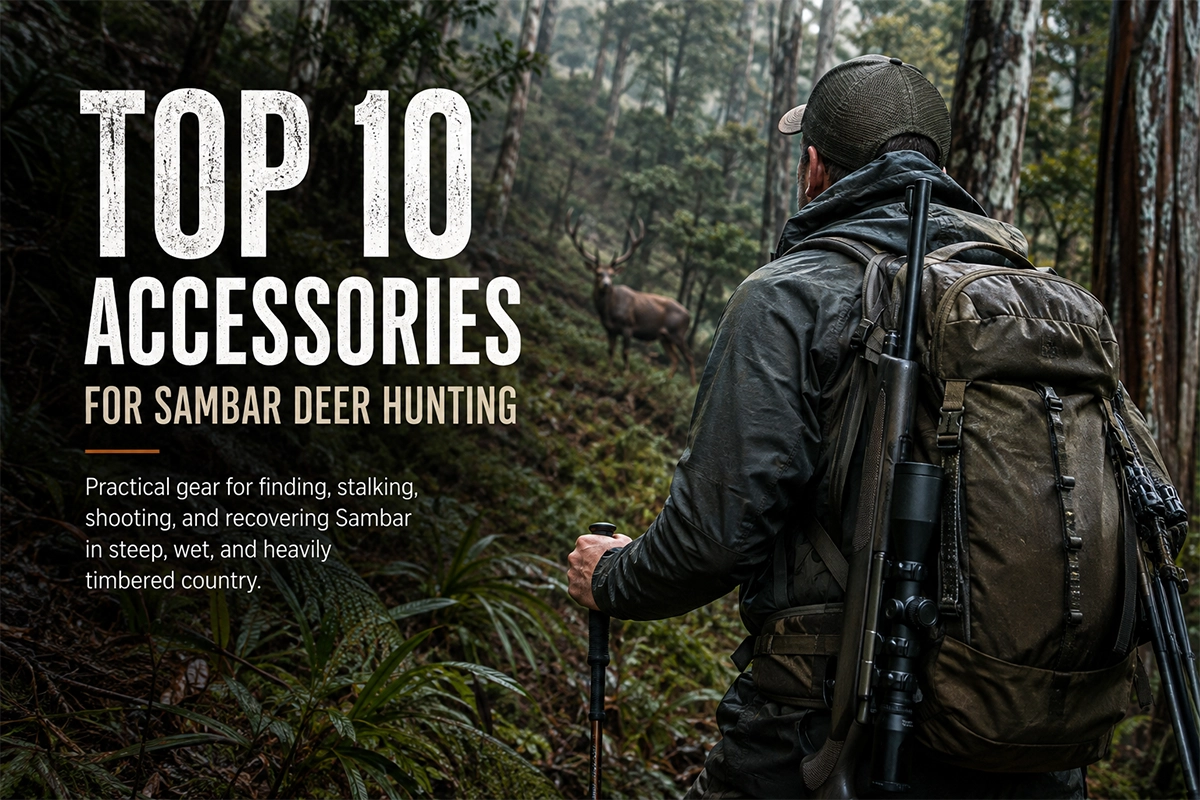
Practical gear for finding, stalking, shooting, and recovering Sambar in steep, wet, and heavily timbered country.
The most useful Sambar deer hunting accessories solve problems created by the country itself: steep climbs, dense vegetation, rain, low-light glassing, difficult shooting positions, and demanding meat recovery. A hunter may spend hours moving slowly through wet forest before getting only seconds to make a controlled shot, so dependable optics, weatherproof clothing, stable shooting support, navigation equipment, and a comfortable carrying system matter more than unnecessary gadgets. Choose equipment that fits your hunting method, works with the rest of your kit, and remains easy to operate when you are cold, wet, tired, or wearing gloves.
Where/When: Sambar are native to parts of South and Southeast Asia and are also well established in parts of Australia, particularly Victoria, where hunters commonly encounter them in forested mountains, steep gullies, creek systems, thick cover, and adjoining open areas. Hunters often concentrate on tracks, droppings, rubs, feeding areas, water, bedding cover, and established travel corridors. Sambar frequently move during lower-light periods around morning and evening, although cool, wet, overcast weather can sometimes encourage activity at other times. Seasonal food sources, hunting pressure, weather, and local breeding behavior all influence movement. Timing and legal hunting methods vary considerably by region, so always check current seasons, access rules, firearm requirements, and other local regulations before hunting.
1. Quality Binoculars
Good binoculars help locate Sambar before unnecessary movement gives away your position, especially when glassing forest edges, opposite slopes, and openings in broken mountain country.
Overview
For most Sambar hunting, 8×42 or 10×42 binoculars provide a useful balance of field of view, low-light performance, and manageable weight. Eight-power models are often easier to hold steady in close forest, while 10x magnification can help when searching distant slopes. Prioritize clear glass, waterproof construction, comfortable eyecups, and a focusing wheel that works easily with gloves. A binocular harness keeps the optic accessible while protecting it from rain and brush.
Benefits
- Helps identify deer and evaluate terrain before moving closer.
- Reduces unnecessary walking through difficult country.
- Improves visibility during common dawn and dusk activity periods.
Notable Brands
- Vortex
- Leupold
- Nikon
2. Binocular Harness
A secure chest harness keeps binoculars immediately available without letting them swing into rocks, branches, or your rifle while climbing through steep Sambar habitat.
Overview
Look for a harness that fits closely to the chest, opens quietly, and provides enough weather protection for your optic. Magnetic closures are convenient but should be tested for noise, while elastic or mechanical closures can be simpler. The harness should work comfortably with your backpack straps and should not interfere with shouldering your rifle. Small side pockets can carry a wind checker, lens cloth, or rangefinder without becoming bulky.
Benefits
- Protects expensive optics from rain, mud, and vegetation.
- Keeps binoculars accessible for frequent short glassing sessions.
- Prevents excessive movement while climbing or crawling.
Notable Brands
- Marsupial Gear
- Alaska Guide Creations
- Vortex
3. Laser Rangefinder
A rangefinder removes guesswork when a Sambar appears across a gully, clearing, or steep slope where visual distance estimates can be misleading.
Overview
Choose a compact waterproof rangefinder with a clear display and simple controls. Angle-compensating capability can be useful in mountainous country, but hunters should understand exactly what the displayed correction means before relying on it. Fast ranging and good target acquisition in low light are more valuable than extremely long advertised maximum distances. Practice ranging trees, rocks, and other landmarks before the season so operation becomes automatic.
Benefits
- Provides objective distance information before a shot.
- Helps hunters stay within practiced ethical shooting limits.
- Useful for planning routes and evaluating steep terrain.
Notable Brands
- Leupold
- Vortex
- Bushnell
4. Comfortable Rifle Sling
A dependable sling makes long climbs safer and less tiring while keeping your rifle controlled when both hands are needed for balance.
Overview
Sambar hunters often cover rough ground, so choose a non-slip sling with durable swivels and enough adjustment to fit over changing clothing layers. Wider padded models distribute rifle weight well, while simpler lightweight slings collect less water and debris. Confirm the swivels match your rifle’s attachment points and regularly inspect them for looseness. A sling can also provide limited positional support when properly practiced, although it should never substitute for a stable shooting position.
Benefits
- Reduces fatigue on long approaches.
- Keeps hands available while negotiating steep slopes.
- Improves rifle retention in dense vegetation.
Notable Brands
- Butler Creek
- Quake
- Allen
5. Shooting Sticks
Portable shooting sticks can create a stable position quickly when wet vegetation, tall grass, or steep ground prevents a comfortable prone shot.
Overview
Bipod and tripod-style sticks each have advantages. Lightweight bipod sticks deploy quickly, while tripods provide greater stability and can sometimes double as glassing supports. Choose a model that adjusts quietly and accommodates common kneeling, sitting, and standing positions. Practice deploying it while wearing your normal pack. The goal is not simply owning a support but being able to establish a steady position without excessive movement.
Benefits
- Improves stability from field positions.
- Useful when vegetation blocks lower shooting positions.
- Encourages deliberate shot placement rather than rushed unsupported shooting.
Notable Brands
- Primos
- Bog
- Vanguard
6. Waterproof Hunting Jacket
Reliable rain protection keeps a wet day from becoming a cold, uncomfortable hunt and helps maintain concentration during long periods in exposed mountain weather.
Overview
Look for a waterproof, breathable shell that fits over insulating layers without restricting rifle mounting. Quiet fabric is desirable for close-range forest stalking, as stiff material can create unnecessary noise against branches. Ventilation matters because steep climbs generate substantial heat even in cool conditions. A hood with good peripheral vision, protected zippers, and accessible pockets can make the jacket more practical in persistent rain.
Benefits
- Keeps core clothing dry during prolonged wet weather.
- Helps reduce chilling after strenuous climbs.
- Allows hunters to remain effective when conditions deteriorate.
Notable Brands
- Sitka
- Kuiu
- Browning
7. Supportive Hunting Backpack
A properly fitted backpack carries water, layers, navigation tools, and recovery equipment without turning a steep Sambar hunt into an endurance test.
Overview
For day hunts, capacity should match the actual equipment and weather exposure expected rather than simply choosing the largest pack available. A supportive hip belt, adjustable torso length, and stable compression straps matter on steep ground. Hunters planning to carry meat should consider a load-hauling frame or shelf designed for heavy weight. Pack frequently used equipment where it can be reached without emptying the entire bag.
Benefits
- Distributes equipment weight more comfortably.
- Provides organized storage for changing weather conditions.
- Can assist with safe, efficient meat recovery when designed for hauling.
Notable Brands
- Eberlestock
- Mystery Ranch
- Badlands
9. Reliable Headlamp
A dependable headlamp is invaluable for pre-dawn approaches, late recoveries, navigating rough ground, and organizing equipment without occupying either hand.
Overview
Choose a water-resistant headlamp with straightforward controls, useful low and high settings, and enough battery capacity for an unexpectedly long recovery. A red or low-output mode can preserve night vision around camp, while a stronger white beam is more useful for route finding. Carry spare batteries or a backup light in a separate pocket. Test the lamp before every hunt rather than discovering a battery problem after dark.
Benefits
- Keeps both hands free on steep or slippery terrain.
- Improves safety during early starts and late finishes.
- Supports careful tracking and field work after sunset where lawful.
Notable Brands
- Petzl
- Black Diamond
- Streamlight
10. Field Dressing and Game Processing Kit
A compact processing kit helps turn a successful shot into an efficient recovery, especially when a large Sambar must be handled far from vehicle access.
Overview
A practical kit can include a sharp fixed-blade or replaceable-blade hunting knife, lightweight sharpener, durable gloves, game bags, cord, and clean material for protecting meat. Choose a knife that gives secure control when wet rather than simply selecting the largest blade. Breathable game bags help protect meat from dirt and insects while allowing heat to escape. Plan recovery before the hunt, including how many trips may be required and whether additional help is necessary.
Benefits
- Supports clean and efficient field processing.
- Helps protect recovered meat during the pack-out.
- Encourages hunters to prepare for recovery before taking a shot.
Notable Brands
- Outdoor Edge
- Gerber
- Buck
Good Sambar hunting gear should make difficult country simpler rather than add unnecessary weight. Start with binoculars, navigation, rain protection, a stable rifle-carrying system, and a pack that fits correctly, then add equipment such as a rangefinder or shooting sticks according to your normal terrain and hunting method. Before the season, test every accessory while wearing the clothing and pack you actually intend to use. Practice mounting the rifle safely with the binocular harness in place, deploying shooting sticks without sweeping anyone with the muzzle, and reaching essential equipment without excessive movement.
Equipment also cannot replace sound hunting judgment. Always maintain safe firearm handling, positively identify your target and what lies beyond it, and only take shots that offer a high probability of ethical placement in the vital area. Plan for tracking and recovery before firing, particularly in steep country where an animal may travel downhill or into heavy vegetation. Hunting regulations can specify legal seasons, access, minimum firearm requirements, ammunition restrictions, non-toxic projectile requirements, magazine limits, and approved hunting methods. These rules vary by region and can change, so check the current local regulations for the exact area you intend to hunt.