
Top 10 Accessories for Northern Shoveler Hunting
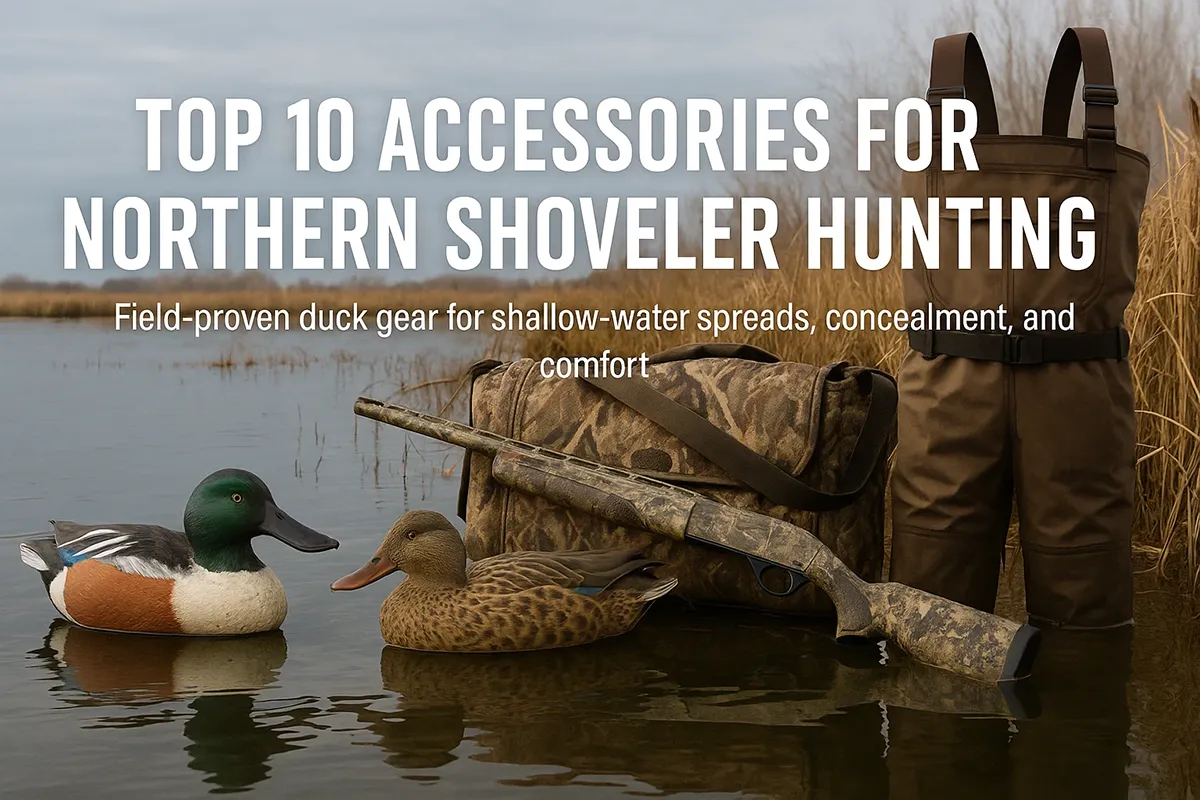
Field-proven duck gear for shallow-water spreads, concealment, and comfort.
These northern shoveler hunting accessories focus on realistic motion, low-profile concealment, and staying dry in ankle- to knee-deep marshes. Always handle firearms safely, pattern your setup with non-toxic shot, and verify local waterfowl regulations (non-toxic shot, seasons, and limits vary by state).
1. Puddle-Duck Decoys (Mallard/Teal Mix)
Shovelers work classic puddle-duck spreads. A small mix of mallards and teal looks natural on shallow water.
Pro Tips
- Keep the spread sparse—shovelers prefer open water lanes to swim through.
- Face most decoys into the wind; add a landing pocket 15–25 yards out.
- Use lighter rigs for ankle-deep sheet water to prevent tipping.
2. Spinning-Wing Decoy (Remote-Control)
Flash pulls distant puddle ducks; a remote lets you kill the wings when birds get wary.
Pro Tips
- Run it high and off to the side so birds finish in the pocket, not on top of the spinner.
- Cycle the wings—constant motion can flare late-season birds.
- Use rechargeable batteries and carry a spare set in cold weather.
3. Duck Call (Mallard Hen + Whistle)
Shovelers aren’t chatty, but a mallard hen call and simple drake whistles steer mixed flocks.
Pro Tips
- Keep it subtle: soft quacks and feeding chuckles work best over decoys.
- Pair with a whistle for teal/wood duck notes when mixed flights buzz the spread.
- Practice cadence more than volume—natural rhythm brings birds down.
4. Decoy Rigging & Weights
Tangle-free lines and the right weights keep your spread fishing instead of drifting.
Pro Tips
- Use 4–6 oz anchors for breezy marshes; go lighter for sheet water.
- Rig droppers long enough for knee-deep sloughs to avoid skating decoys.
- Label keels for quick species sorting in the dark.
5. Layout or Panel Blind
Low-profile concealment is king on shallow flats where vegetation is sparse.
Pro Tips
- Brush with local cover—saltgrass, smartweed, cane—so it matches the flat.
- Position downwind of the landing pocket for easy shots.
- Stake or sandbag the blind to stop shifting in gusts.
6. Breathable Chest Waders (Insulated)
Stay dry and mobile while setting spreads on cold, shallow marshes.
Pro Tips
- Layer under breathable waders rather than over-insulating the shell.
- Use a wading belt for safety and to keep water out if you slip.
- Felt or lug soles grip better on slick gumbo mud.
7. Blind Bag or Dry Bag
Keeps shells, calls, snacks, and first-aid dry during spray and rain.
Pro Tips
- Pack shells in a segregated pouch for fast reloads.
- Carry spare gloves, a space blanket, and a compact trauma kit.
- Clip the bag above waterline in layout/panel setups.
8. Marsh/Hunting Stool
Sitting low and still beats fidgeting—key on calm, bluebird days.
Pro Tips
- Pick a wide foot so it won’t sink in muck.
- Set seat height so your gun mounts cleanly without telegraphing movement.
- Leash it to the blind; stools drift when the water rises.
9. 12 Gauge Choke Tubes (IC/Modified)
Fine-tune patterns for #3–#4 steel or bismuth at shoveler ranges.
Pro Tips
- Pattern your exact load at 30–40 yards; adjust choke to keep even coverage.
- Check tube tightness during the hunt—recoil can loosen them.
- Mark tubes so you can identify constriction by touch in the dark.
10. Shotgun Sling (Quick-Detach)
Hands-free for hauling decoys and blinds across long, muddy walks.
Pro Tips
- Choose non-slip backing so it stays put over waders.
- QD swivels speed transitions in and out of the blind.
- Keep it rolled when shooting to avoid snagging on brush.