
Top 10 Accessories for Mallard Hunting
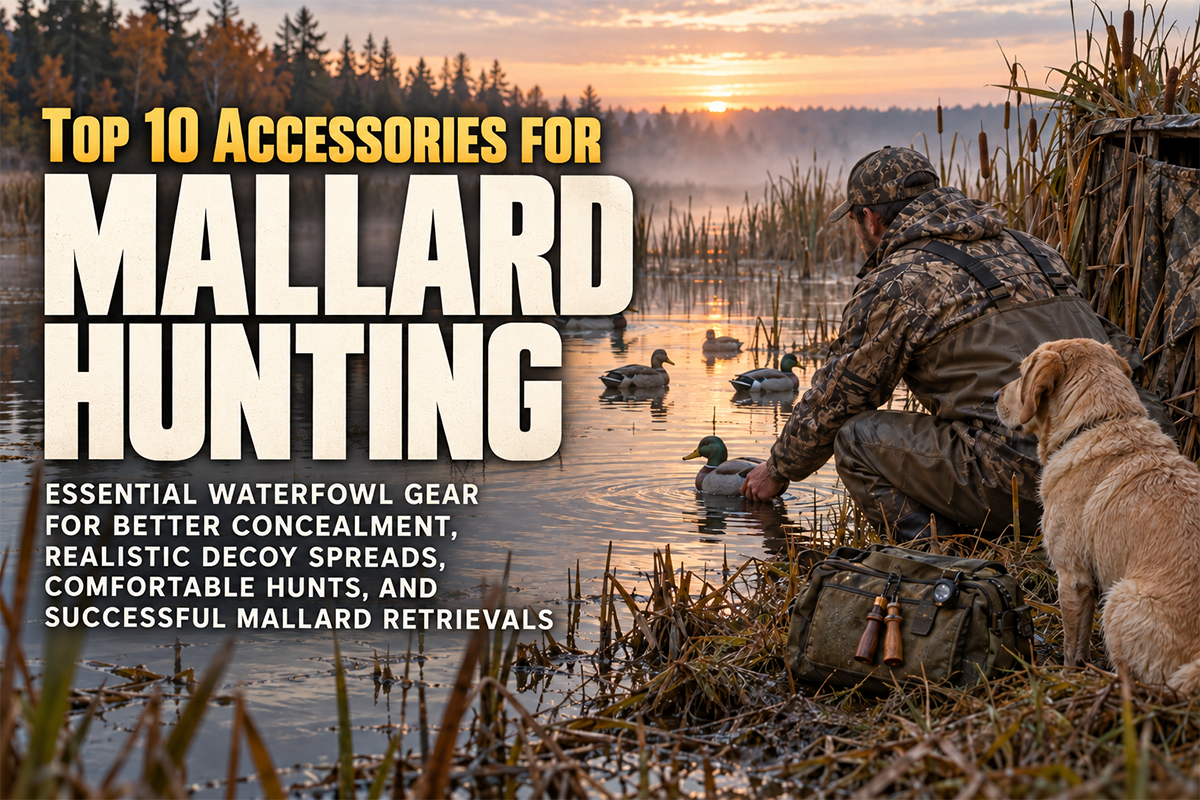
Essential waterfowl gear for better concealment, realistic decoy spreads, comfortable hunts, and successful mallard retrievals.
The right mallard hunting accessories can make a significant difference when hunting flooded timber, agricultural fields, marshes, and open wetlands. While selecting a suitable shotgun and ammunition is important, effective waterfowl hunting also depends on concealment, realistic decoys, comfortable clothing, and dependable equipment. From reliable chest waders to practical duck calls, every accessory should solve a specific problem in the field. This guide covers ten worthwhile purchases for beginners and experienced duck hunters, explaining what each accessory does, when it matters most, and which features deserve attention before buying.
Where/When: Mallards are widely hunted across North America, particularly along the Pacific, Central, Mississippi, and Atlantic Flyways. Common hunting locations include prairie potholes, flooded timber, coastal marshes, rivers, shallow wetlands, and harvested agricultural fields. Early-season mallards often use shallow feeding areas and vegetated wetlands, while late-season birds may concentrate around open water, flooded grain fields, and sheltered river systems as temperatures fall. Hunters commonly watch feeding areas, roost-to-feed flight paths, and sheltered landing zones for signs of activity. Morning flights can be productive, although afternoon movement may increase with changing weather and hunting pressure. Wind, cold fronts, and precipitation can affect feeding patterns and decoy approaches. Migration timing, seasons, shooting hours, and regulations vary by region, so always verify local requirements before hunting.
1. Realistic Mallard Duck Decoys
A dependable mallard decoy spread helps approaching birds recognize a potential feeding or resting area.
Overview
Mallard decoys are among the most valuable accessories for hunters working shallow water, marshes, and flooded timber. Choose durable floating decoys with realistic paint, natural body proportions, and stable keels. A starter spread of six to twelve decoys can work in smaller locations, while larger water or field setups may benefit from additional birds. Consider weight, storage space, and whether decoys remain upright in wind and current. Mixed feeding and resting postures provide visual variety. Prioritize realistic positioning over simply buying the largest spread possible.
Benefits
- Creates visible landing interest for approaching mallards.
- Supports flexible spreads in different water conditions.
- Reusable equipment offers long-term value.
Notable Brands
- Higdon Outdoors
- Avian-X
- Flambeau Outdoors
2. Waterproof Chest Waders
Chest waders provide essential protection when navigating shallow wetlands, flooded timber, and muddy access routes.
Overview
Breathable chest waders are useful for active hunters who walk long distances, while insulated neoprene designs may suit colder, relatively stationary hunts. Look for reinforced knees, durable boot construction, adjustable shoulder straps, and reliable seam sealing. Correct boot sizing should accommodate thick socks without restricting circulation. Consider weight and insulation carefully: overly warm waders can become uncomfortable during strenuous approaches. Always use a wading belt, check water depth, and avoid entering unfamiliar currents or submerged hazards. Waders are not flotation devices.
Benefits
- Keeps legs and clothing dry in shallow water.
- Protects against mud, vegetation, and cold conditions.
- Improves access to otherwise difficult hunting locations.
Notable Brands
- Banded
- Frogg Toggs
- LaCrosse
3. Mallard Duck Calls
A quality mallard call provides realistic vocalizations that can complement an effective decoy spread.
Overview
Single-reed calls offer substantial tonal flexibility but usually require more practice. Double-reed calls are often easier for beginners to control, making them a sensible first purchase. Acrylic models can produce sharp, consistent sounds, while polycarbonate calls offer an affordable alternative. Consider mouthpiece comfort, required air pressure, and how easily the call can be maintained. Learn basic quacks, greeting calls, and feeding sounds before experimenting with aggressive calling. Watch how approaching birds respond; excessive calling can be counterproductive, especially around heavily pressured wetlands.
Benefits
- Adds realistic mallard sounds to a decoy setup.
- Allows hunters to adapt calling to bird behavior.
- Compact enough for convenient transport.
Notable Brands
- Duck Commander
- RNT Calls
- Buck Gardner Calls
4. Waterproof Hunting Blind Bag
A well-organized blind bag protects essential equipment and makes frequently used items easier to access.
Overview
Mallard hunters regularly carry ammunition, gloves, calls, snacks, headlamps, licenses, and emergency supplies. A water-resistant blind bag helps organize these necessities during wet conditions. Choose a compact model for walk-in hunting or a larger floating-style bag for boat-based setups. Look for sealed storage compartments, sturdy zippers, adjustable straps, and an abrasion-resistant bottom. A waterproof inner pouch provides extra protection for electronics and documents. Avoid oversized bags that encourage unnecessary weight or clutter inside small blinds.
Benefits
- Organizes essential hunting supplies.
- Helps protect sensitive items from moisture.
- Reduces misplaced equipment during busy hunts.
Notable Brands
- Rig’Em Right
- Avery Outdoors
- Banded
5. Portable Waterfowl Hunting Blind
Effective concealment prevents approaching mallards from noticing unnatural hunter movement and exposed equipment.
Overview
Portable panel blinds work well along marsh edges, while low-profile layout blinds are commonly used in agricultural fields. Choose concealment based on local vegetation, terrain, and available space rather than camouflage pattern alone. Look for lightweight frames, adjustable panels, grass attachment loops, and a practical packed size. Natural vegetation can help blend equipment into the surroundings where collection and use are permitted. Avoid blocking your field of view or creating unsafe shooting angles. Field hunters should compare layout comfort carefully before purchasing.
Benefits
- Conceals movement from approaching waterfowl.
- Adapts to fields, marshes, and shoreline positions.
- Provides a designated area for organizing hunting equipment.
Notable Brands
- Avian-X
- Avery Outdoors
- Rig’Em Right
6. Insulated Waterproof Hunting Jacket
Weather-resistant outerwear helps hunters remain comfortable through cold, windy, and wet mallard hunts.
Overview
A dependable waterfowl jacket should combine moisture protection, wind resistance, and enough mobility for safe shotgun handling. Look for sealed seams, adjustable cuffs, a practical hood, and pockets accessible while wearing waders. Insulated jackets suit stationary late-season hunts, while breathable shell jackets allow more flexible layering. Check shoulder mobility and stock fit when trying on a jacket. Bulky collars or excessive padding can interfere with a consistent shotgun mount. Camouflage should suit the surrounding vegetation without replacing proper concealment.
Benefits
- Provides protection against rain, wind, and cold.
- Supports longer, more comfortable hunts.
- Allows adjustable layering across changing conditions.
Notable Brands
- Drake Waterfowl
- Banded
- Sitka Gear
7. Duck Decoy Anchors and Rigging Systems
Reliable decoy rigging keeps floating spreads positioned correctly while simplifying setup and retrieval.
Overview
Poorly rigged decoys can drift, tangle, or bunch together in changing wind and current. Texas-style decoy rigs are convenient for shallow-water hunting, while traditional anchor lines may suit deeper locations. Choose corrosion-resistant weights, durable swivels, and line lengths appropriate for expected water depth and movement. Adjustable systems offer flexibility when switching locations. Budget-conscious hunters can begin with simple weights and cord, but organized rigging saves effort during repeated setups. Inspect knots, clips, and lines before every trip.
Benefits
- Keeps decoys positioned in wind and current.
- Reduces tangled lines and setup frustration.
- Makes transport and retrieval more efficient.
Notable Brands
- Rig’Em Right
- Higdon Outdoors
- Avery Outdoors
8. Waterfowl Motion Decoy System
Natural water movement can make an otherwise motionless decoy spread appear more convincing.
Overview
A jerk-rig system allows hunters to create subtle ripples and movement among floating decoys. Manual systems are relatively affordable, lightweight, and do not depend on batteries. Motorized motion decoys offer another option but introduce additional expense and maintenance. Wind conditions, water depth, and the behavior of approaching birds should determine how frequently motion is used. Check local regulations before purchasing electronic, spinning-wing, or mechanically operated decoys because restrictions differ by jurisdiction and hunting season.
Benefits
- Adds natural-looking water movement.
- Can improve realism during calm weather.
- Manual options avoid battery dependence.
Notable Brands
- MOJO Outdoors
- Higdon Outdoors
- Rig’Em Right
9. Waterproof Hunting Headlamp
A dependable headlamp makes early-morning setup, gear organization, and navigation easier in low-light conditions.
Overview
Mallard hunters often reach their setups before legal shooting light. Choose a headlamp with a water-resistance rating, adjustable brightness, and a comfortable headband that fits over cold-weather headwear. A low-output mode preserves battery life and reduces unnecessary glare. Red-light settings can help with nearby tasks but should not substitute for safe navigation lighting. Consider rechargeable batteries alongside a backup power source. Keep the light available for emergencies and never mistake illumination for permission to shoot outside lawful hours.
Benefits
- Provides hands-free lighting for setup.
- Improves visibility around uneven terrain and equipment.
- Useful for emergency preparedness.
Notable Brands
- Princeton Tec
- Streamlight
- Black Diamond
10. Duck Retrieval Pole and Game Strap
Practical retrieval equipment supports responsible recovery of harvested mallards while reducing unnecessary entry into hazardous water.
Overview
A telescoping retrieval pole can help collect birds from shallow water, vegetation, or difficult shorelines without excessive wading. Look for durable telescoping sections, corrosion-resistant hardware, a secure grip, and a suitable hook or attachment. A separate game strap makes carrying retrieved ducks more convenient. Hunters using trained retrievers should also consider appropriate canine safety equipment. No retrieval device justifies entering dangerous water, and swimming or boating conditions should always be evaluated before attempting recovery.
Benefits
- Assists recovery in hard-to-reach shallow areas.
- Supports ethical efforts to retrieve harvested birds.
- Makes transporting recovered ducks easier.
Notable Brands
- Avery Outdoors
- Rig’Em Right
- MOmarsh
Choosing the Right Mallard Hunting Accessories
The best mallard hunting accessories depend on the terrain, weather, hunting style, and equipment you already own. Beginners should prioritize dependable waders, decoys, weather-resistant clothing, a duck call, and a practical gear bag before investing in advanced motion systems or specialized blinds. Hunters who frequently change locations may value lightweight equipment, while late-season hunters often benefit from additional insulation and durable wet-weather protection.
Equipment should complement safe, ethical hunting practices. Maintain muzzle control, positively identify legal game, confirm safe shooting backgrounds, and use only approved non-toxic ammunition. Pattern-test your shotgun to establish an effective shooting range. Check current seasons, bag limits, licenses, permits, shooting hours, shotgun magazine restrictions, and legal decoy methods before every hunt. U.S. hunters can review guidance from the U.S. Fish and Wildlife Service, while Canadian hunters should consult Environment and Climate Change Canada. If hunting from a boat, carry and wear appropriate flotation equipment and follow boating safety requirements.
Start with practical essentials, learn how mallards respond to your setups, and upgrade equipment where it solves a genuine problem. A small, well-managed collection of reliable accessories can be more useful than an expensive assortment of unnecessary gear.