
Top 10 Accessories for Green Pheasant Hunting
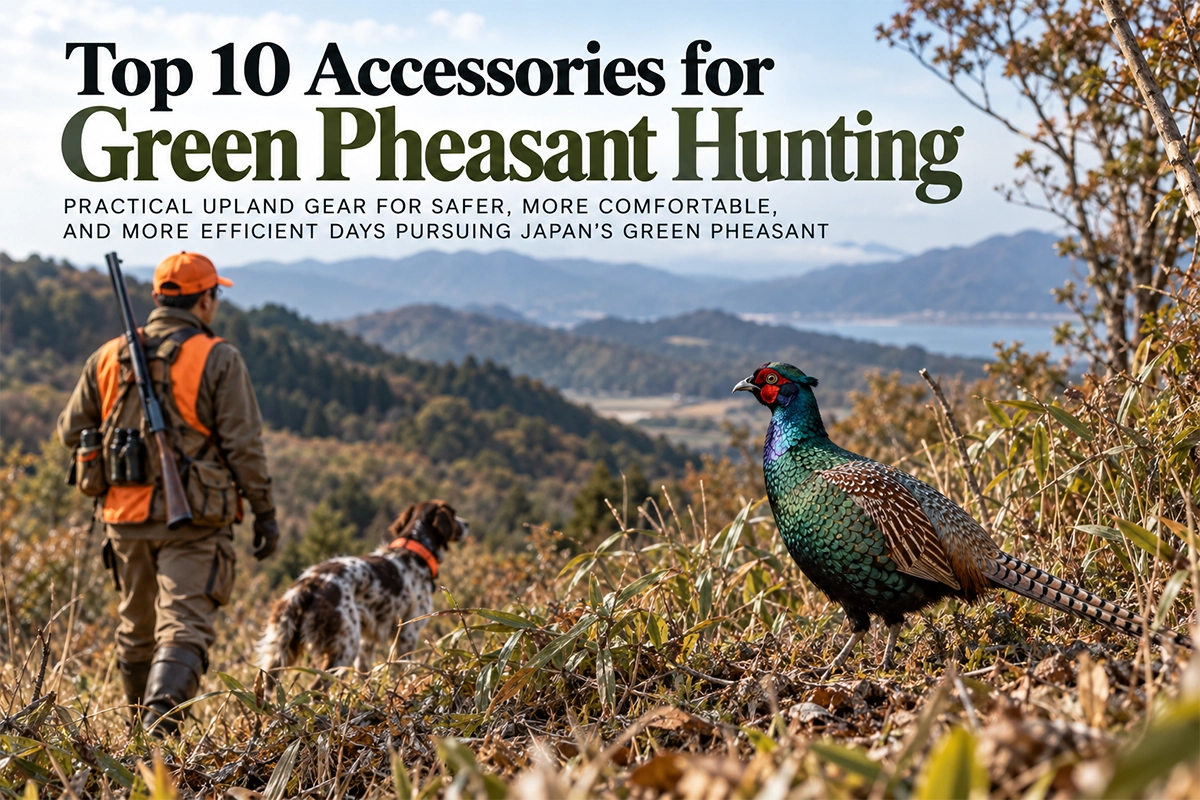
Practical upland gear for safer, more comfortable, and more efficient days pursuing Japan’s green pheasant.
The best green pheasant hunting accessories should help you move comfortably through grass, field margins, brush, and uneven ground while staying ready for sudden flushes. Prioritize visibility, foot protection, hearing and eye protection, and simple organization over unnecessary bulk. Gear should fit without interfering with a smooth gun mount. Keep the muzzle controlled, positively identify the bird and what lies beyond it, and limit shots to distances where your shotgun and load have produced an effective pattern.
Where/When: Green pheasants occur across much of Japan from Kyushu northward and commonly use bright woodland, grassland, and agricultural areas. Hunters may find birds near feeding ground, field edges, water-adjacent cover, loafing cover, and travel corridors; morning and late-afternoon movement often favors edges, while wind, rain, cold, or snow may push birds toward shelter. Early-season birds may behave differently from pressured late-season birds. Japan’s Ministry of the Environment lists pheasant as a game bird and gives a general season outside Hokkaido of November 15 through February 15, but prefectures can impose additional restrictions. Legal areas, methods, limits, firearm rules, timing, and other requirements vary, so check current national and prefectural regulations before hunting.
1. Blaze-Orange Upland Hunting Vest
A well-fitted upland vest keeps shells, water, small tools, and harvested birds organized while adding high-visibility material that can help hunting partners track one another in cover.
Overview
Choose a vest that rides close without restricting a smooth shotgun mount. Look for a washable game pouch, secure shell pockets, hydration storage, and useful blaze-orange panels. Adjustable shoulder and waist straps help over changing layers, while balanced pocket placement reduces fatigue on long walks.
Benefits
- Keeps shells and field tools accessible without a bulky pack
- Adds visible material for partner awareness in mixed cover
- Provides a dedicated, ventilated place to carry harvested birds
Notable Brands
- Browning
- Orvis
- Filson
2. Waterproof Upland Hunting Boots
Supportive boots solve one of the biggest problems on walking hunts: wet feet, poor traction, and fatigue across fields, ditches, slopes, and rough farm edges.
Overview
Match boot height and insulation to expected temperature, moisture, and vegetation. Waterproof construction helps in damp grass and shallow mud, while dependable tread improves grip. Leave toe room for downhill walking and hunting socks, but avoid heel lift. Favor lighter boots for mileage and more insulation for colder conditions.
Benefits
- Improves traction on wet vegetation, mud, and uneven ground
- Reduces foot fatigue during long walking hunts
- Protects feet from moisture, stubble, and light brush
Notable Brands
- Danner
- Irish Setter
- Crispi
3. Brush-Resistant Hunting Pants or Chaps
Tough field pants or chaps protect your legs from abrasive grass, briars, seed heads, and wet vegetation while allowing you to push through productive pheasant cover.
Overview
Look for reinforced fronts, articulated knees, and enough stretch for ditches and banks. Chaps add protection over existing pants, while dedicated brush pants usually shift less. Avoid loose fabric that snags. Prioritize breathability in mild weather and leave room for a base layer when cold or wet.
Benefits
- Shields legs from thorns, grass stems, and abrasive cover
- Helps keep ordinary pants drier and cleaner
- Makes it easier to work through thick field edges confidently
Notable Brands
- Browning
- Orvis
- Carhartt
4. Electronic Hearing Protection
Electronic muffs or filtered ear protection reduce exposure to gunfire while preserving enough ambient sound for communication, dog handling, and awareness in the field.
Overview
Low-profile muffs should clear the stock during a normal gun mount. In-ear electronic protection can reduce interference but must fit securely. Compare noise-reduction rating, battery type, weather resistance, and amplification controls. Test the setup at the range and carry spare batteries for electronic models.
Benefits
- Reduces harmful noise from repeated shotgun fire
- Maintains useful awareness of partners and surroundings
- Encourages consistent hearing protection during field shooting
Notable Brands
- Walker’s
- Howard Leight
- Peltor
5. Impact-Rated Shooting Glasses
Shooting glasses protect against branches, windblown debris, ejected hulls, and fragments while helping maintain clear vision in changing field light.
Overview
Choose impact-rated lenses with useful side coverage and temples that remain comfortable under a hat or hearing protection. Clear or lightly tinted lenses suit dim cover; darker lenses can help in bright fields. Anti-fog treatment is useful, and frames should stay stable during a normal gun mount.
Benefits
- Protects eyes from vegetation, debris, and shooting-related hazards
- Improves comfort in wind, dust, and bright sunlight
- Can improve visual consistency through interchangeable lens options
Notable Brands
- Oakley
- Radians
- Wiley X
6. Lightweight Field Gloves
Field gloves protect hands from rough vegetation and cold without sacrificing the dexterity needed for safe firearm handling, loading, unloading, and equipment adjustments.
Overview
Fit matters more than bulk. Choose gloves with close-fitting fingers, secure wrists, and enough grip for safe gun handling in damp weather. Avoid loose fingertips or insulation that interferes with controls. Thin gloves often work well while walking; conductive fingertips can help with mapping devices.
Benefits
- Protects hands from brush, cold, and abrasive vegetation
- Adds grip in damp or chilly conditions
- Preserves dexterity for safe gun handling and field tasks
Notable Brands
- Sitka
- First Lite
- Mechanix Wear
7. Compact Binoculars
Compact binoculars help with scouting field edges, checking distant cover, confirming landmarks, and observing birds without adding much weight to an upland kit.
Overview
An 8x model often balances field of view, steadiness, and compact size. Objectives around 25 to 32 mm keep weight reasonable for daylight use. Look for waterproof construction and secure carry. Binoculars support scouting, but never replace positive target identification during a fast flush near people, dogs, buildings, or roads.
Benefits
- Supports efficient scouting of open fields and habitat edges
- Adds little bulk when compact models are selected
- Useful beyond hunting for navigation and wildlife observation
Notable Brands
- Vortex
- Nikon
- Leupold
8. Shotgun Shell Pouch
A dedicated shell pouch keeps ammunition organized and easy to reach while separating live shells from empties and reducing loose items in vest pockets.
Overview
Choose a pouch sized for the gauge you carry and only as large as needed. A wide opening helps with gloves, while divided designs can separate loads or retain spent hulls. Keep ammunition dry and verify that every shell matches the shotgun’s gauge and chamber length before loading.
Benefits
- Keeps compatible ammunition organized and accessible
- Reduces clutter in pockets during fast-paced field movement
- Provides a convenient place to retain empty hulls
Notable Brands
- Allen
- Browning
- Beretta
9. Shotgun Patterning Targets
Patterning targets show how a specific shotgun, choke, and hunting load actually distribute pellets, helping establish a realistic effective range before entering the field.
Overview
Use large paper targets with a clear aiming point and enough area to show the full pattern. Test the exact hunting load at realistic distances on a safe range with a proper backstop. Look for even pellet distribution. Patterning matters especially with 28 gauge or .410 bore, where smaller payloads provide less margin.
Benefits
- Reveals the real performance of your chosen field load
- Helps set an ethical personal maximum shooting distance
- Supports informed choke and ammunition selection
Notable Brands
- Birchwood Casey
- Champion
- Allen
10. GPS, Offline Mapping, and Backup Power Kit
Reliable navigation tools help hunters track legal access, return routes, vehicles, and meeting points when agricultural roads and field edges start to look similar.
Overview
A handheld GPS or offline map works best when maps and important points are saved before the hunt. Carry backup power for longer outings. Mapping technology does not establish legal access, so confirm boundaries and permissions independently. In unfamiliar terrain, share your route and expected return plan with someone.
Benefits
- Helps maintain orientation in repetitive field and woodland terrain
- Supports route planning and return-to-vehicle navigation
- Backup power keeps essential electronics useful throughout the day
Notable Brands
- Garmin
- Anker
- Nitecore