
Top 10 Accessories for Greater White-fronted Goose Hunting
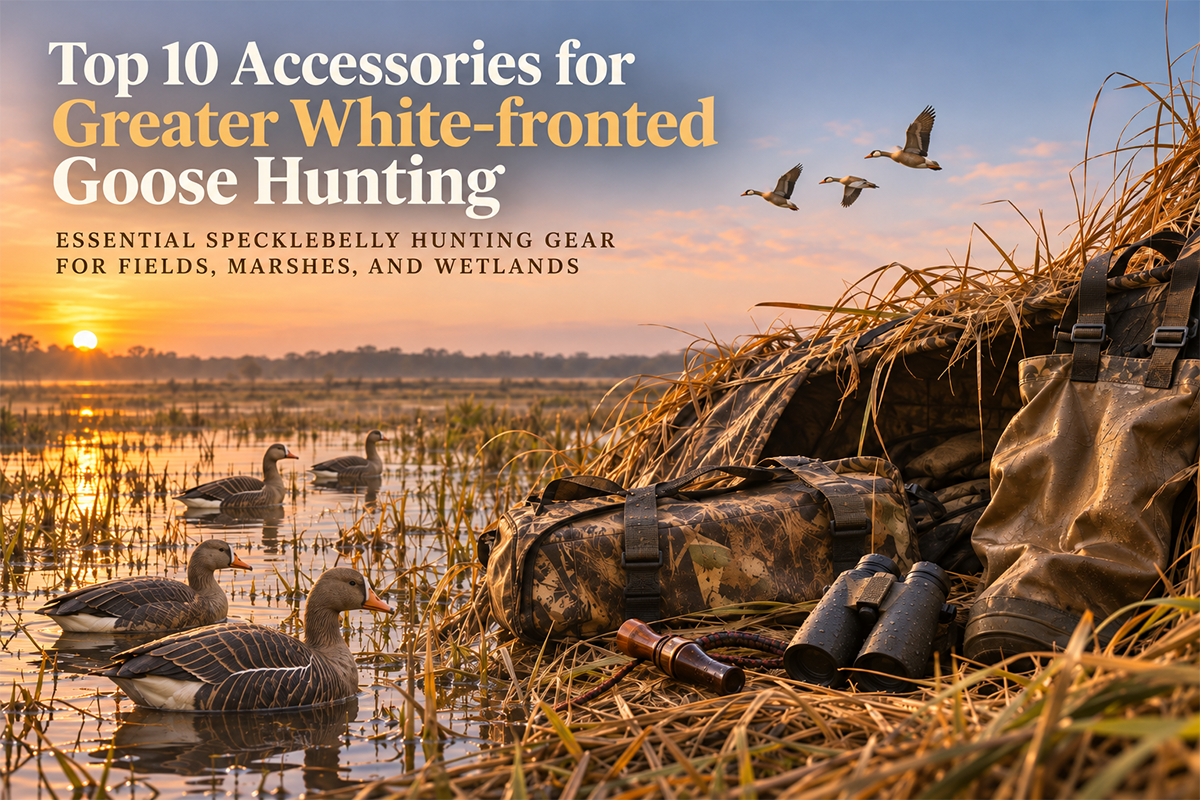
Essential Specklebelly Hunting Gear for Fields, Marshes, and Wetlands
Successful specklebelly hunting requires more than a reliable shotgun. Greater white-fronted geese are vocal, observant waterfowl that can respond to realistic calls and decoys but quickly notice poorly concealed hunters. Choosing the right greater white-fronted goose hunting accessories helps improve scouting, concealment, comfort, and equipment organization. From specialized goose calls to waterproof clothing, these ten accessories address common challenges encountered during North American hunts. Whether you’re assembling your first setup or upgrading existing equipment, prioritize practical features and dependable performance over unnecessary extras.
Where/When: Greater white-fronted geese migrate through the Canadian Prairies and central United States, with wintering concentrations often occurring in Arkansas, Louisiana, Texas, California, and parts of Mexico. Hunters commonly find them feeding in harvested rice fields, grain stubble, pastures, and shallow wetlands. Scout feeding locations, fresh droppings, feathers, and flight corridors connecting roosting water to agricultural areas. Early-season birds may respond readily to modest spreads, while late-season flocks often become more cautious after sustained hunting pressure. Morning feeding flights are commonly productive, although afternoon movements can change with weather and food availability. Cold fronts and favorable winds may alter migration activity. Hunting seasons, shooting hours, access rules, and bag limits vary significantly by region, so always verify current local regulations before heading afield.
1. Specklebelly Goose Calls
A specialized specklebelly call helps imitate the distinctive yelps, clucks, and conversational sounds of greater white-fronted geese.
Overview
Unlike traditional Canada goose calls, specklebelly calls are designed around the higher-pitched vocalizations of white-fronted geese. Their tone and ease of control vary with reed design, insert dimensions, and construction material. Acrylic offers crisp sound, while wood and synthetic materials provide different tonal characteristics. Beginners should prioritize comfortable air pressure and repeatable notes rather than maximum volume. Practice realistic calling sequences before hunting.
Benefits
- Creates realistic species-specific vocalizations.
- Helps communicate with approaching flocks.
- Offers a compact, affordable equipment upgrade.
Notable Brands
- Riceland Custom Calls
- RedBone Calls
- Chien Caille Calls
2. Specklebelly Goose Decoys
Realistic specklebelly decoys create an inviting feeding scene and help direct approaching geese toward a suitable landing area.
Overview
Full-body decoys provide realistic profiles, while silhouettes reduce cost, weight, and transportation space. Choose accurate white-fronted goose coloration, multiple body postures, and durable finishes that resist glare. Stable bases matter on windy agricultural ground. A modest, convincing spread can outperform an oversized, poorly positioned one. Leave a practical landing opening and observe how real flocks arrange themselves in nearby fields.
Benefits
- Creates recognizable feeding and resting groups.
- Helps guide birds toward appropriate shooting distances.
- Allows flexible setups across different fields.
Notable Brands
- Avian-X
- Dakota Decoy
- Dive Bomb Industries
3. Layout Hunting Blinds
A low-profile layout blind helps conceal hunters in open agricultural fields where natural vegetation provides little coverage.
Overview
Layout blinds position hunters close to ground level, reducing their visibility to circling geese. Look for adjustable backrests, adequate shoulder room, quiet doors, and attachment loops for vegetation. Lightweight folding models suit hunters covering substantial distances. Larger insulated designs provide greater comfort during stationary hunts. Before purchasing, check interior measurements against your height, winter clothing, and shotgun mounting needs.
Benefits
- Reduces the hunter’s visible silhouette.
- Provides concealment in harvested fields.
- Offers shelter during extended waiting periods.
Notable Brands
- ALPS OutdoorZ
- Avery Outdoors
- Tanglefree
4. Blind Grass and Camouflage Material
Natural-looking camouflage helps blend blinds and equipment into surrounding vegetation, especially when hunting wary late-season geese.
Overview
Even an expensive layout blind can stand out against pale rice stubble or dark, wet soil. Raffia grass, camouflage netting, and locally available vegetation help break up unnatural shapes. Match material color and texture to the actual field rather than relying on a generic camouflage pattern. Avoid reflective surfaces and excessive vegetation that interferes with vision, firearm movement, or safe shooting.
Benefits
- Breaks up recognizable blind outlines.
- Adapts concealment to changing terrain.
- Improves existing equipment without major expense.
Notable Brands
- Avery Outdoors
- Tanglefree
- Final Approach
5. Waterproof Hunting Binoculars
Reliable binoculars help locate feeding flocks, observe flight patterns, and identify potential hunting locations before setting equipment.
Overview
Scouting often contributes more to successful goose hunting than adding extra decoys. An 8×42 binocular generally offers a useful balance of field of view, brightness, and stability. A 10×42 model provides additional magnification but may be harder to hold steady. Select waterproof, fog-resistant construction and comfortable eye relief if you wear glasses. Binoculars support observation but never replace positive identification before shooting.
Benefits
- Improves long-distance scouting efficiency.
- Helps assess feeding activity and flock movement.
- Reduces unnecessary disturbance while observing birds.
Notable Brands
- Vortex Optics
- Leupold
- Nikon
6. Insulated Waterproof Waders
Durable waders provide protection when accessing flooded rice fields, shallow wetlands, and muddy goose hunting locations.
Overview
Breathable stockingfoot and insulated bootfoot designs serve different conditions. Bootfoot waders simplify dressing and provide integrated footwear, while breathable models may offer greater mobility. Choose insulation based on typical temperatures and exertion rather than assuming thicker is always better. Check boot sizing with winter socks, ensure unrestricted knee movement, and use a secure wading belt. Never enter water beyond safe, known depths.
Benefits
- Keeps clothing dry in shallow flooded habitats.
- Provides warmth during cold-weather hunts.
- Protects legs against mud and vegetation.
Notable Brands
- Frogg Toggs
- Drake Waterfowl
- Banded
7. Waterproof Blind Bags
An organized blind bag protects ammunition, calls, licenses, and essential supplies from moisture and field damage.
Overview
Waterfowl hunting exposes equipment to rain, mud, and standing water. Choose a bag with a water-resistant or waterproof construction appropriate to your hunting conditions. Separate storage compartments help prevent misplaced accessories during busy mornings. Consider a stable base, quiet closures, and enough capacity for extra gloves, calls, and approved nontoxic shotshells. Compact bags suit walk-in hunts, while larger options work well in permanent blinds.
Benefits
- Protects essential equipment from moisture.
- Improves organization and accessibility.
- Simplifies packing before early morning hunts.
Notable Brands
- Rig’Em Right
- Avery Outdoors
- Banded
8. Waterproof Waterfowl Hunting Jackets
A weather-resistant hunting jacket helps maintain comfort and mobility during cold, windy, or rainy specklebelly hunts.
Overview
Good waterfowl outerwear combines wind protection, moisture resistance, and freedom of movement. Breathable waterproof shells work with adjustable insulation layers, allowing hunters to adapt as conditions change. Choose subdued camouflage that matches local habitat and avoid excessively bulky sleeves that interfere with mounting a shotgun. Adjustable cuffs, secure pockets, and quiet fabric improve practicality during extended blind sessions.
Benefits
- Reduces exposure to cold wind and rain.
- Maintains comfortable shooting mobility.
- Provides useful storage for small accessories.
Notable Brands
- Sitka Gear
- Drake Waterfowl
- Banded
9. Electronic Hearing Protection
Proper hearing protection reduces exposure to harmful shotgun noise while helping hunters remain aware of their surroundings.
Overview
Electronic earmuffs and specialized electronic earplugs amplify ordinary environmental sounds while limiting loud impulse noise. For layout blinds, low-profile models help prevent interference with shotgun stocks and head movement. Compare noise reduction ratings, battery life, moisture resistance, and comfort. Fit is essential: poorly sealed earmuffs provide less protection, especially around glasses or headwear. Verify that your chosen product provides appropriate shooting protection.
Benefits
- Reduces hazardous firearm noise exposure.
- Preserves awareness of calls and communication.
- Supports safer communication among hunting partners.
Notable Brands
- Walker’s
- Howard Leight
- Sordin
10. Retriever Dog Vests
For hunters working with trained retrievers, a properly fitted dog vest provides additional protection in cold water and rough vegetation.
Overview
Retrievers can help recover downed geese from fields and shallow wetlands. Neoprene vests offer insulation and may reduce minor abrasions, although they cannot replace supervision or safe water conditions. Measure the dog’s chest and neck according to manufacturer instructions. Check shoulder movement, drainage, and fit before hunting. A visible handle can assist controlled lifting, but never use an unsuitable handle to suspend a dog.
Benefits
- Provides additional insulation during cold retrieves.
- Helps shield the body against minor abrasions.
- Supports organized, responsible bird recovery.
Notable Brands
- Momarsh
- Avery Outdoors
- Drake Waterfowl
Choosing the Best Accessories for Specklebelly Hunting
The most valuable greater white-fronted goose hunting accessories depend on your hunting location and experience. For beginners, a dependable goose call, realistic decoys, and effective concealment offer a practical starting point. Hunters working flooded agricultural areas should prioritize appropriate waders and weather protection. Experienced waterfowlers may benefit more from improved scouting optics, specialized calls, and lighter equipment than from simply increasing their decoy count.
Equipment cannot replace safe and ethical hunting. Maintain muzzle discipline, keep firearms unloaded when crossing obstacles or transporting them, identify individual birds positively, and shoot only within distances supported by effective shotgun pattern testing. In the United States, waterfowl hunting requires federally approved nontoxic shot. Review applicable licenses, federal duck stamps, permits, shooting hours, shotgun magazine restrictions, seasons, and bag limits. Special local provisions can be important: California’s Sacramento Valley imposes additional white-fronted goose restrictions. Consult the U.S. Fish and Wildlife Service and your relevant wildlife agency before hunting. Proper preparation, responsible decisions, and reliable gear contribute to a better experience afield.