
Top 10 Accessories for Greater Kudu Hunting
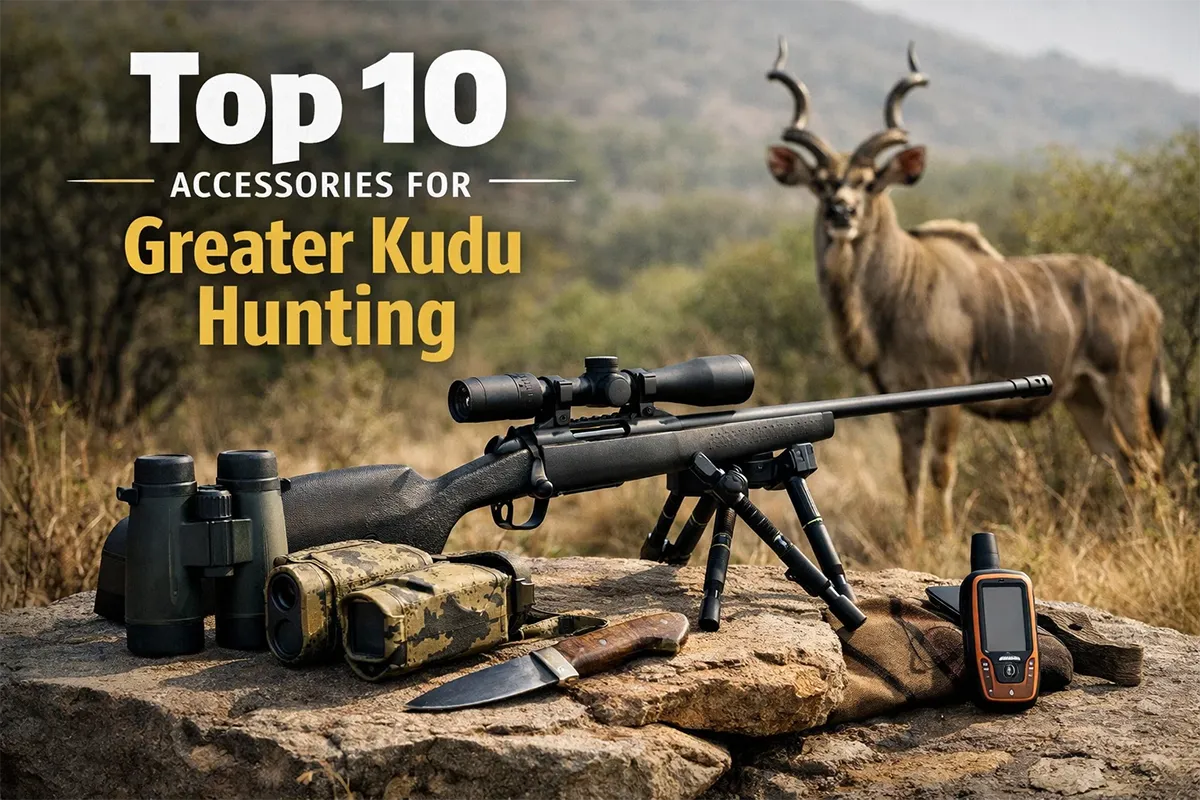
Gear that helps you glass better, stalk smarter, shoot steadier, and recover ethically.
Choosing the right greater kudu hunting accessories is about solving real problems: spotting a bull that’s half-hidden in thornbush, keeping the wind in your favor, getting steady support on sticks, and being ready when the shot window is brief. The accessories below focus on what most improves success and ethics—better identification, better distance calls, and better shot placement.
Safety and ethics still lead the list: keep muzzle control, keep your finger off the trigger until you’re on target, and practice with the exact rifle/ammo setup you’ll hunt with. Regulations and outfitter rules vary by country and province (minimum calibers/energy, transport paperwork, and sometimes magazine limits), so confirm local requirements before you travel.
Adjustable Shooting Sticks or Tripod
A steady rest is the #1 “difference maker” on kudu, where quick windows and awkward angles are common. Good sticks let you settle the reticle fast, control wobble, and place a clean shot without rushing.
Overview
Most greater kudu shots happen from standing or semi-standing positions using sticks provided by a PH, but bringing a set you’ve practiced with can improve speed and comfort. Look for quiet locks, a yoke that won’t scratch your stock, and enough height for tall grass or uphill/downhill shots. Tripods add stability for longer ranges but can be slower to deploy; classic two- or three-leg sticks are often faster in thick bush.
Benefits
- Stabilizes real-world field shots for ethical heart/lung placement
- Reduces wobble at 150–350 yards and helps you call your shot
- Speeds up target acquisition when a bull pauses briefly
Notable Brands
- Primos
- Bog
- Vanguard
Quality Binoculars (8x or 10x)
Kudu are masters of blending into thornbush. Good binoculars help you pick out horn tips, shoulder lines, and movement so you don’t waste time stalking the wrong animal—or miss the right one entirely.
Overview
In many kudu areas you’ll glass constantly: edges of thickets, rocky kopjes, and shaded drainages. Choose durable 8×42 or 10×42 binoculars with a bright image and comfortable eye relief. 8x is steadier in hand and great in thicker cover; 10x can help judge horn length at distance if you’re steady or can brace on a tree or pack.
Benefits
- Finds animals sooner and reduces unnecessary miles and noise
- Improves trophy judgment and helps confirm a clear shooting lane
- Less eye strain during long glassing sessions
Notable Brands
- Vortex
- Leupold
- Zeiss
Laser Rangefinder
Distances in savanna and broken hills can be deceiving. A rangefinder removes guesswork, helping you hold correctly and avoid the most common long-shot mistakes: shooting over the back or low in the brisket.
Overview
Look for a unit that reads reliably on game out to at least 400 yards and also on vegetation/rocks for pre-ranging landmarks. Angle compensation is useful in hilly terrain. If your scope has a simple ballistic turret or holdover reticle, pair it with a rangefinder you can operate one-handed while the rifle stays on sticks.
Benefits
- Confident holds for 200–400 yard opportunities
- Faster decision-making when a bull stops briefly
- Helps you pre-range lanes before the shot window opens
Notable Brands
- Leupold
- Sig Sauer
- Bushnell
Low-Power Variable Rifle Scope (LPVO or 2-10x class)
A reliable scope with a forgiving eyebox and a useful reticle makes kudu shots faster and cleaner—especially when the bull appears suddenly at 60 yards or hangs up at 280 across a clearing.
Overview
For kudu, many hunters like a 1-6x/1-8x in thick bush or a 2-10x/3-9x for mixed terrain. Prioritize rugged tracking, a simple reticle you can use under stress, and good low-light performance for early/late hunting. Keep magnification lower than you think on sticks (often 3–6x) so you maintain field of view and don’t “lose” the animal.
Benefits
- Quick target acquisition up close and precision at moderate range
- Better low-light visibility in shaded thickets
- Repeatable holds with a clean, easy reticle
Notable Brands
- Leupold
- Nightforce
- Trijicon
Quiet, Comfortable Rifle Sling
You’ll carry a rifle a lot while stalking kudu. A good sling keeps the rifle secure, reduces fatigue, and helps you move quietly through brush without constantly shifting your grip.
Overview
Choose a sling that won’t squeak, doesn’t slip off your shoulder, and has enough padding for long walks. Quick-adjust slings let you cinch the rifle tight when climbing or crawling, then loosen quickly when you’re ready to shoot. If you’re hunting in thornbush, avoid loose hardware that can snag or clink on metal swivels.
Benefits
- Less fatigue and steadier shooting late in the day
- Quieter movement through brush and around rocks
- Better rifle control when climbing or crossing obstacles
Notable Brands
- Blue Force Gear
- Butler Creek
- Magpul
Light Daypack with Hydration
Kudu hunts can involve long stalks and hot midday pushes. A compact daypack keeps water, snacks, and essentials on you so you don’t make risky decisions when you’re dehydrated or fumbling for gear.
Overview
Look for a quiet fabric, a slim profile that won’t snag thorns, and a harness that won’t rub during hours of walking. Hydration capacity (bladder or bottles) is key, plus a few organized pockets for rangefinder, ammo, and small tools. If you’ll shoot off a pack occasionally, choose one that can double as a rest without being too tall on sticks.
Benefits
- Better focus and steadier hands with consistent hydration
- Organized access to ammo, rangefinder, and small essentials
- Comfort on long stalks so you move quieter and slower
Notable Brands
- Mystery Ranch
- Badlands
- Eberlestock
Wind Checker (Powder) or Lightweight Wind Ribbon
Wind isn’t just a long-range problem—kudu will bust you fast if your scent blows into the thicket. A wind indicator helps you plan stalks and pick the right lane before you ever shoulder the rifle.
Overview
Powder wind checkers are simple and effective: a quick puff shows wind direction and swirl near the ground. Wind ribbons tied to a pack strap or rifle can work too, but powder is easier in complex, shifting terrain. Use it often during the stalk; in broken hills and drainages, wind can change multiple times within a few hundred yards.
Benefits
- Smarter stalk routes that keep you out of a bull’s nose
- Better timing for moving across openings
- More confident shot calls when wind affects bullet drift
Notable Brands
- Primos
- HME
- Allen
Headlamp (Plus Spare Batteries)
Early starts and late recoveries are normal on kudu. A dependable headlamp keeps you safe around camp, helps with gear checks, and makes blood trailing and field handling easier when daylight disappears.
Overview
Pick a headlamp with a secure headband, a simple interface you can use with gloves, and a low mode that won’t blind your partners. A red or green mode can be useful for preserving night vision. Bring spare batteries (or a spare rechargeable pack) in your daypack—small item, big payoff when something runs long.
Benefits
- Safer walking and vehicle loading in the dark
- Hands-free tracking and gear work after sunset
- Reduces stress during late recoveries or camp tasks
Notable Brands
- Petzl
- Black Diamond
- Streamlight
Electronic Hearing Protection for Practice and Zeroing
You might not wear hearing protection during the final stalk, but using good electronic ear pro in practice helps you train more, shoot better, and avoid the flinch that ruins field accuracy.
Overview
Electronic muffs or in-ear units amplify voices while cutting gunshot noise at the range. That makes it easier to practice from sticks, confirm your zero, and run realistic drills without fatigue. If your hunt plan includes shooting from a vehicle rest or near others, compact electronic ear pro can also be handy to keep communication clear while protecting hearing.
Benefits
- More comfortable training sessions = better fundamentals
- Helps prevent flinch and improves follow-through
- Clear communication on the range and around camp
Notable Brands
- Walker’s
- Howard Leight
- Peltor
Wrap-Up: Build a Simple, Field-Ready Kudu Kit
For most hunters, the “core three” are shooting sticks, dependable binoculars, and a fast rangefinder. Add a reliable scope set up for field use and controlled-expansion ammunition, and you’ve covered the biggest variables that lead to clean kills. Then tailor comfort and logistics with a quiet daypack, sling, and small essentials like a wind checker and headlamp.
Test everything before the hunt—batteries, zero, and your “sticks routine.” Most importantly, keep it ethical: don’t shoot through brush, don’t exceed your proven distance, and wait for a clear, high-percentage angle into the vitals.