
Top 10 Accessories for Fulvous Whistling-Duck Hunting
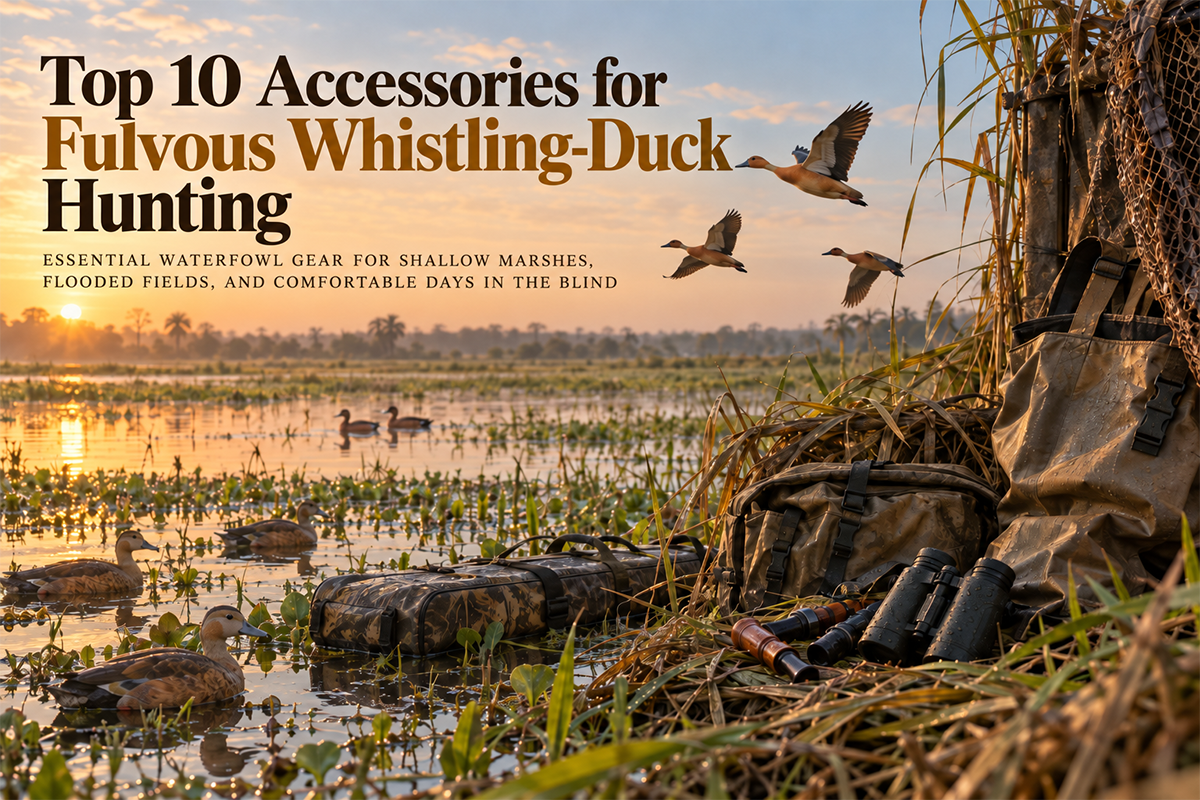
Essential waterfowl gear for shallow marshes, flooded fields, and comfortable days in the blind.
Choosing the right fulvous whistling-duck hunting accessories can make a meaningful difference when navigating muddy wetlands, identifying passing birds, and protecting equipment from water. These cinnamon-colored ducks favor shallow freshwater habitats, making traditional waterfowl gear a practical starting point. However, not every accessory deserves space in your blind bag. Hunters should prioritize reliable waders, effective concealment, species identification, and dependable equipment rather than unnecessary gadgets. This guide covers ten useful accessories, explaining their benefits, important specifications, and buying considerations for both new and experienced waterfowl hunters.
Where/When: In North America, fulvous whistling-ducks occur in Gulf Coast wetlands, including Texas, Louisiana, and Florida. South Florida’s freshwater marshes, flooded rice fields, and agricultural wetlands provide an established hunting context. Look for shallow feeding areas, emergent vegetation, and movement between roosting and feeding locations. Birds often travel around dawn and dusk, although weather, water levels, and seasonal movements can change their patterns. Florida’s 2026–27 general duck season includes fulvous whistling-ducks, with a one-bird daily species limit within the overall duck bag. The restricted early teal-and-wood-duck season does not include them. Regulations and hunting opportunities vary by location, so always review the current Florida migratory bird regulations and local access rules before hunting.
1. Waterproof Binoculars for Duck Identification
Quality binoculars help hunters identify fulvous whistling-ducks before approaching a hunting location. They are especially valuable when similar-looking waterfowl share flooded fields and marshes.
Overview
Consider waterproof 8×42 binoculars for their combination of field of view, light gathering, and manageable weight. Look for comfortable eye relief, fog-resistant construction, and a secure carrying harness. Study the fulvous duck’s cinnamon body, gray bill, and white flank markings, distinguishing it from black-bellied whistling-ducks. Binoculars support scouting but never replace positive identification before shooting.
Benefits
- Improves identification of distant waterfowl.
- Helps locate feeding and resting birds.
- Waterproof construction withstands humid marsh conditions.
Notable Brands
- Vortex Optics
- Nikon
- Bushnell
2. Waterproof Chest Waders
Chest waders are among the most useful fulvous whistling-duck hunting accessories because productive wetlands often involve shallow standing water, soft mud, and dense vegetation.
Overview
Breathable waders are appealing for Florida’s warmer hunting conditions, while insulated models better suit colder outings. Choose appropriately sized boots with dependable traction and enough room for socks without restricting circulation. Adjustable suspenders, reinforced knees, and waterproof seams improve durability. Never enter unfamiliar deep water without assessing footing, currents, and potential hazards.
Benefits
- Keeps clothing dry during shallow-water access.
- Protects against mud and wet vegetation.
- Allows comfortable positioning around marsh edges.
Notable Brands
- Frogg Toggs
- LaCrosse
- Banded
3. Floating Waterfowl Decoys
Floating decoys help create a natural-looking feeding or resting area. A modest, thoughtfully positioned spread is often more practical than transporting numerous decoys into a remote marsh.
Overview
Choose realistic puddle-duck or appropriate whistling-duck decoys with stable keels and durable paint. A starting spread of six to twelve decoys may be manageable for walk-in hunts, although local bird behavior should determine placement. Use anchors suited to water depth, leave open landing space, and observe wind direction. Ordinary decoys are legal, but live birds cannot be used as hunting decoys.
Benefits
- Creates a visible waterfowl resting area.
- Supports organized decoying presentations.
- Reusable across several duck-hunting situations.
Notable Brands
- Higdon Outdoors
- GHG Decoys
- Avian-X
4. Manual Duck Calls and Whistles
A handheld duck call or whistle can supplement a decoy setup, although fulvous whistling-ducks do not necessarily respond like mallards. Calling should remain a secondary consideration.
Overview
Fulvous whistling-ducks produce distinctive whistled vocalizations rather than conventional mallard quacks. Study their natural sounds before selecting a manual whistle or suitable waterfowl call. Compact, moisture-resistant designs are convenient in humid conditions. Practice restraint because excessive or inaccurate calling may discourage approaching birds. Recorded and electronically amplified game calls are prohibited for Florida waterfowl hunting.
Benefits
- Provides an optional hands-on calling technique.
- Lightweight enough for any blind bag.
- Encourages learning natural waterfowl vocalizations.
Notable Brands
- Buck Gardner Calls
- Haydel’s Game Calls
- Zink Calls
5. Marsh Camouflage Netting and Blind Material
Concealment matters when waterfowl approach open marsh edges. Portable camouflage netting helps break up the hunter’s outline without requiring an elaborate permanent structure.
Overview
Select lightweight, quick-drying mesh that matches nearby grasses, reeds, or flooded agricultural cover. A matte finish and subdued colors are preferable to glossy synthetic surfaces. Look for attachment loops and sufficient dimensions to cover exposed equipment while allowing safe movement. Check property and wildlife-area rules before cutting vegetation, constructing blinds, or leaving materials behind.
Benefits
- Reduces obvious human silhouettes and movement.
- Adapts to different marsh vegetation.
- Packs smaller than many rigid blinds.
Notable Brands
- Avery Outdoors
- Allen Company
- CamoSystems
6. Waterproof Waterfowl Blind Bag
A reliable blind bag keeps essential equipment organized and helps protect personal belongings from rain, splashes, and wet ground during a long marsh outing.
Overview
A bag around 20–30 liters often provides useful space without excessive bulk. Look for sealed seams, a water-resistant or roll-top closure, and compartments for gloves, snacks, licenses, and first-aid supplies. Confirm whether the bag is genuinely waterproof or merely splash-resistant. An adjustable shoulder strap makes carrying easier when other equipment occupies your hands.
Benefits
- Organizes frequently used marsh equipment.
- Helps prevent moisture damage to valuables.
- Simplifies packing for short hunting trips.
Notable Brands
- Rig’Em Right
- Banded
- Avery Outdoors
7. Floating Shotgun Case
Waterfowl shotguns regularly encounter wet vegetation, muddy access routes, and occasional splashes. A padded floating case provides additional protection while transporting an unloaded firearm.
Overview
Choose a case long enough for your shotgun’s overall length, including its barrel and choke. Water-resistant fabric, durable stitching, and substantial padding are useful features. Some cases offer flotation, but buoyancy depends on the firearm and manufacturer’s rating. A floating case does not replace safe handling, proper firearm storage, or a personal flotation device when boating.
Benefits
- Protects firearms against scratches and moisture.
- Adds cushioning during transport.
- May reduce sinking risk after accidental immersion.
Notable Brands
- Allen Company
- Browning
- Rig’Em Right
8. Waterproof Hunting Headlamp
Hunters often reach access points before daylight. A compact headlamp helps with equipment preparation, navigating established paths, and organizing decoys without occupying both hands.
Overview
Look for an adjustable beam, low-output setting, secure headband, and dependable water-resistance rating. Red-light modes can be convenient for close work without producing an unnecessarily bright beam. Carry spare batteries or a charging backup. Use lighting for safe navigation and setup, not to locate or illuminate birds for taking. Always follow lawful shooting hours.
Benefits
- Improves visibility during low-light preparation.
- Provides convenient hands-free illumination.
- Supports safer movement around muddy access routes.
Notable Brands
- Princeton Tec
- Streamlight
- Black Diamond
9. Handheld GPS Navigation Device
Large marsh complexes can become disorienting when vegetation obscures familiar landmarks. A handheld GPS provides useful navigation assistance for hunters exploring unfamiliar legal access routes.
Overview
Prioritize a weather-resistant receiver with clear mapping, long battery life, and saved waypoint capability. Mark safe entry points and return routes before traveling into complicated wetlands. Download offline maps when supported, but remember GPS positioning does not establish legal property access. Carry a compass and independent navigation backup rather than relying entirely on electronics.
Benefits
- Helps track routes through unfamiliar marshes.
- Records useful scouting and access waypoints.
- Supports planning and emergency navigation.
Notable Brands
- Garmin
- Magellan
- Lowrance
10. Non-Toxic-Shot-Compatible Shotgun Choke Tubes
An appropriate choke tube helps hunters evaluate shotgun patterns with approved waterfowl ammunition. This accessory is especially relevant when comparing 12, 20, 16, and 28 gauge shotguns.
Overview
Choose choke tubes specifically compatible with your shotgun’s gauge, barrel-thread system, and chosen shot material. Modified or improved-cylinder constrictions can be useful starting points, but actual results vary. Pattern several approved non-toxic loads at realistic distances before hunting. Never assume a choke suitable for lead shot is automatically compatible with steel or other hard pellets.
Benefits
- Allows testing different shotgun pattern characteristics.
- Supports more informed ammunition selection.
- Helps establish responsible, pattern-tested shooting limits.
Notable Brands
- Carlson’s Choke Tubes
- Patternmaster
- Briley
Choosing the Right Fulvous Whistling-Duck Hunting Accessories
Build your equipment collection around the habitat you actually hunt. Waders, binoculars, and waterproof storage are sensible priorities for wetland access, while decoys, camouflage, and optional calls can complement a thoughtfully planned hunt. Budget for essentials before specialized equipment. Always identify your target positively, use safe firearm handling, and take shots only within your demonstrated effective patterning range. Have a reliable plan to retrieve every downed bird without entering dangerous water. U.S. duck hunting requires federally approved non-toxic shot, and shotguns generally must hold no more than three shells and be no larger than 10 gauge. Confirm current seasons, species limits, shooting hours, licenses, HIP registration, applicable duck stamps, permitted methods, and property access. Florida’s waterfowl equipment guide provides additional recommendations for local conditions.