
Top 10 Accessories for Brown/Grizzly Bears Hunting
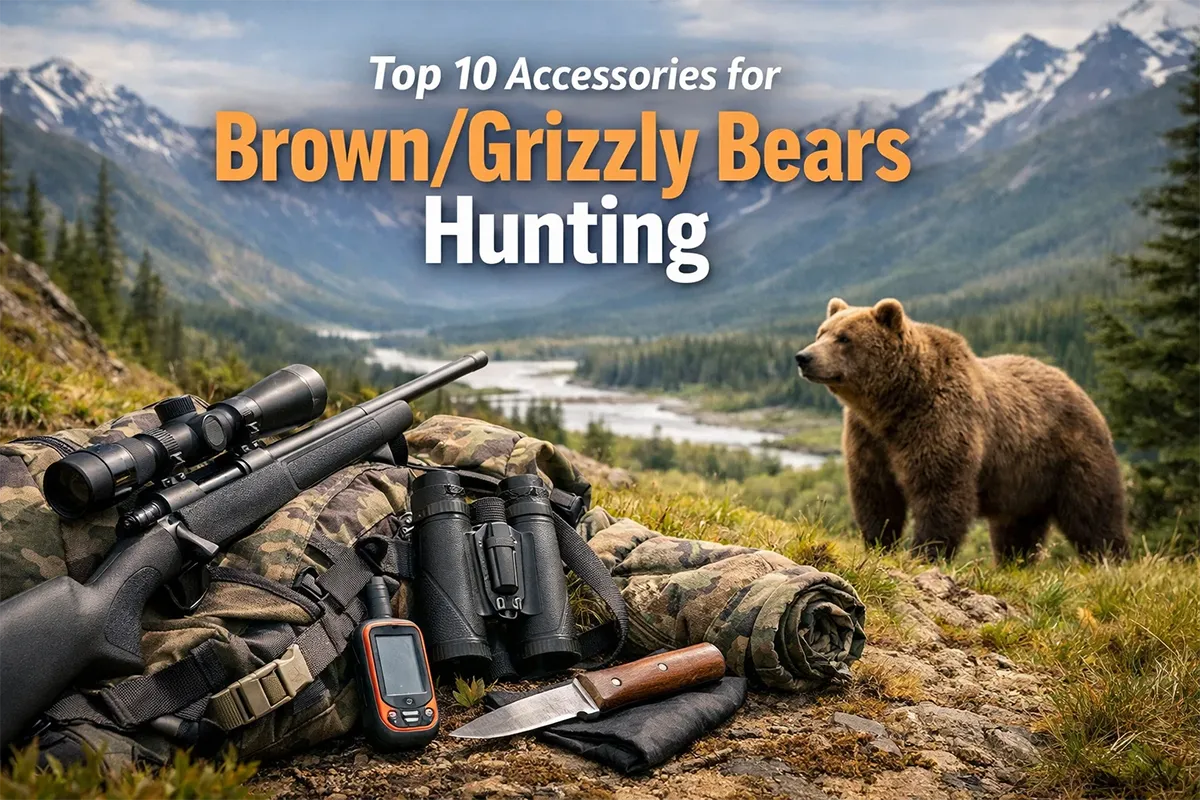
Build a bear-capable kit that helps you spot them sooner, shoot steadier, and stay safer in big, wet, brushy country.
The best brown/grizzly bear hunting accessories aren’t about “tacticool” extras—they solve problems you’ll actually face: glassing huge basins or tidal flats for hours, moving through wet brush where encounters can be fast, managing meat in warm/rainy conditions, and keeping your hands free while still having quick access to what matters. The goal is simple: reduce mistakes and friction in the field so you can make a safe, ethical shot (when legal and appropriate) and handle the aftermath efficiently. Below are 10 high-impact add-ons that consistently earn their place on serious bear hunts.
Where/When: Brown/grizzly bears are found across Alaska and parts of western Canada and the northern Rockies in the U.S., and they typically live in big, broken country—coastal tidal flats and salmon streams, alpine basins, river bottoms, berry slopes, and thick willow/alder drainages where visibility can be limited. Hunters commonly locate sign along food sources (salmon runs, berry patches, sedge/grass flats), travel corridors (creek bottoms, ridgelines, game trails), and near bedding cover on cool north-facing slopes or brushy benches. Seasons and daily movement vary by region and regulations, but in many areas spring hunting often centers on bears feeding on new green-up and carrion with good evening movement, while fall hunting commonly lines up with berries and salmon where available; weather shifts (wind, rain, sudden warm-ups/cold snaps) can change activity and where bears hold. Always confirm timing and legal methods for your specific unit and season.
1) Chest Bino Harness (with rangefinder pocket)
If you buy one “comfort” item for big bears, make it a harness that keeps optics protected, quiet, and instantly accessible while you’re climbing, crawling, and pushing brush.
Overview
Brown/grizzly hunts often involve long glassing sessions mixed with wet hikes and brush-busting. A good chest harness keeps binoculars centered, reduces neck strain, and shields lenses from rain, salt spray, and grit. Look for a secure lid closure (magnets or buckles that won’t pop open), a comfortable back panel under pack straps, and a dedicated pocket for a compact rangefinder so you’re not digging in pockets when a bear stands up.
Benefits
- Faster target ID and bear judging without fumbling in a pack.
- Better lens protection in constant rain, brush, and sand.
- More comfort on all-day hikes compared to a neck strap.
Notable Brands
- KUIU
- Sitka Gear
- Badlands
3) Laser Rangefinder (fast read in rain)
A rangefinder turns “I think it’s 250” into a confident hold—especially across canyons, tidal flats, and angled slopes where distance is easy to misjudge.
Overview
With bears, ethical shot placement is everything. A rangefinder helps you avoid rushed guesses when a bear pauses for only seconds. Look for quick readings, a display you can see in dim light, and solid performance on dark targets (bears) against dark backgrounds (timber). Angle compensation can be useful in mountains, but reliability and speed matter more than complex modes. Practice ranging rocks and brush clumps so you can range without overexposing yourself.
Benefits
- Reduces bad holds and wounding risk from distance errors.
- Speeds up decision-making when a bear is moving.
- Improves dope confidence in wind and uneven terrain.
Notable Brands
- Leica
- Sig Sauer
- Bushnell
4) Stable Shooting Support (bipod or shooting sticks)
A solid rest makes your first shot more precise—and on big bears, that first shot is the one that most often prevents the hardest follow-up situations.
Overview
In open country, a bipod or sturdy sticks can be the difference between a controlled lung shot and a rushed hit that starts a long tracking job in brush. For bipods, favor simplicity, durability, and a height range that works from prone to seated. For sticks, look for quick deployment and a yoke that cradles the rifle without squeaking. Whatever you choose, practice building a position fast—because bears rarely pose on schedule.
Benefits
- Improves shot placement and reduces “wobble” under stress.
- Helps you take ethical shots at longer distances when conditions allow.
- Can speed follow-up shots by keeping you stable and on target.
Notable Brands
- Harris
- Magpul
- Primos
5) Wind Meter (compact anemometer)
Wind is a double threat on bear hunts: it affects bullet drift and it affects how close you can stalk without being scented.
Overview
On coasts, river bars, and alpine ridges, wind can shift quickly. A small wind meter helps you make better hold decisions and avoid “guessing” a full-value crosswind. It also supports safer stalk planning—if the wind is wrong, you can back out and re-approach instead of forcing a bad angle. Look for a model with a simple display, decent battery life, and a lanyard so it doesn’t disappear in tall grass.
Benefits
- More accurate holds for longer shots in open terrain.
- Better stalk decisions to avoid blowing bears out of the basin.
- Helps you standardize practice vs. real field conditions.
Notable Brands
- Kestrel
- WeatherFlow
- HoldPeak
6) Bear Spray (plus a real belt/chest holster)
Even on firearm hunts, bear spray is a practical safety tool for camp and close encounters—especially when hands are busy with meat, packs, or brush.
Overview
This isn’t a replacement for safe gun handling—it’s a supplement. A can of bear spray only helps if you can access it instantly, so the holster matters as much as the spray. Choose a secure holster that won’t dump the can when you crawl or fall, and place it where you can reach it with either hand (belt, chest strap, or pack harness). Practice the draw motion, keep the safety clip oriented consistently, and confirm any local rules for transport and use.
Benefits
- Adds a non-lethal defensive option for unexpected close encounters.
- Useful around carcasses/meat hangs where bears may investigate.
- Encourages safer behavior in brush: pause, listen, and be ready.
Notable Brands
- Counter Assault
- Sabre
- UDAP
7) Satellite Communicator (SOS + two-way messaging)
Brown/grizzly country can be remote, wet, and unforgiving. A satellite messenger helps you manage risk when there’s no cell service and plans change fast.
Overview
Whether it’s an injury, weather delay, boat pickup change, or simply coordinating with a partner, two-way messaging can be a game-changer. Look for a rugged device with a protected screen, reliable battery performance in cold/rain, and an SOS feature you can activate under stress. Set up contacts and preset messages before the hunt, and keep the unit where it can “see” the sky—shoulder strap pouch beats buried in a pack.
Benefits
- Emergency capability in remote terrain where rescue is complex.
- Logistics support for pickups, meat runs, and weather delays.
- Adds peace of mind for family and hunting partners.
Notable Brands
- Garmin
- ZOLEO
- ACR
8) Waterproof Dry Bags (pack organization + meat protection)
If your gear gets soaked, your hunt can unravel. Dry bags keep critical items functional and help you separate wet layers from essentials.
Overview
Coastal and river-country bear hunts often mean steady rain, river crossings, and wet brush. Dry bags protect insulation layers, socks, med kits, electronics, tags, and fire-starting supplies. They also help you pack smarter: one bag for sleep system, one for insulation, one for “must stay dry” items. Choose tough fabric, reliable roll-top closures, and sizes that fit your pack. A bright color can help you find the right bag fast in low light.
Benefits
- Protects critical gear from rain, river splash, and soaked brush.
- Improves organization so you can move efficiently and quietly.
- Reduces the chance of hypothermia by keeping dry layers dry.
Notable Brands
- Sea to Summit
- Outdoor Research
- SealLine
9) Heavy-Duty Game Bags (breathable, durable, sized for big quarters)
Bear hides and meat can be heavy, messy, and time-consuming to handle. Quality game bags keep meat clean, breathable, and more manageable during pack-out.
Overview
After the shot, the work begins—often in rain and bugs. Game bags protect meat from dirt, hair, and insects while allowing cooling. For large animals and long carries, prioritize tough stitching, generous sizing, and fabric that won’t trap heat. Mark each bag (front/back, left/right) to speed packing, and plan your meat care steps in advance. Always follow local salvage requirements, and keep bear awareness high around carcasses.
Benefits
- Keeps meat cleaner and reduces contamination during pack-out.
- Supports cooling and airflow, especially when hung correctly.
- Makes loads easier to manage and organize in the pack.
Notable Brands
- Caribou Gear
- Allen
- TAG Bags
10) Pack Frame or Meat Hauler Pack (stout suspension)
If you’re packing hide, skull, and meat, the right frame isn’t optional—it’s how you avoid injuries and get everything out safely and legally.
Overview
Brown/grizzly recovery can mean awkward, heavy loads over slick logs, tussocks, shale, or tidal mud. A true load-hauling pack with a rigid frame, adjustable torso fit, and a real hip belt transfers weight correctly and keeps you stable. Look for strong straps, compression that locks loads down, and an easy meat shelf or load sling. Fit matters more than brand—if the pack doesn’t ride right, you’ll pay for it on mile two.
Benefits
- Safer, more stable carry of heavy, shifting loads.
- Less fatigue and fewer hot spots over multiple trips.
- Better load control in steep, wet, or brushy terrain.
Notable Brands
- Mystery Ranch
- Kifaru
- Stone Glacier
Putting It Together: A Bear-Ready System
A smart accessories list isn’t about carrying more—it’s about carrying what prevents bad outcomes. Start with optics you’ll actually use all day (binoculars + harness) and tools that support ethical shot placement (rangefinder + stable support). Add safety and decision-making layers that matter in real bear country (bear spray with a usable holster, and a satellite communicator for remote hunts). Then round it out with the “keep the hunt going” items—dry bags to protect your core gear, game bags for clean meat care, and a true load-hauling pack so you can get everything out without wrecking yourself.
No accessory replaces safe handling and disciplined shooting fundamentals. Keep your muzzle controlled, have a clear backstop, and don’t take shots you can’t place confidently. Regulations vary by state/province and unit—always check local rules on seasons, salvage requirements, methods of take, and any minimum caliber or equipment restrictions. Build a system you can run smoothly under stress, practice with it before the hunt, and you’ll be better prepared for the moments that matter.