
Top 10 Accessories for Belding’s Ground Squirrel Hunting
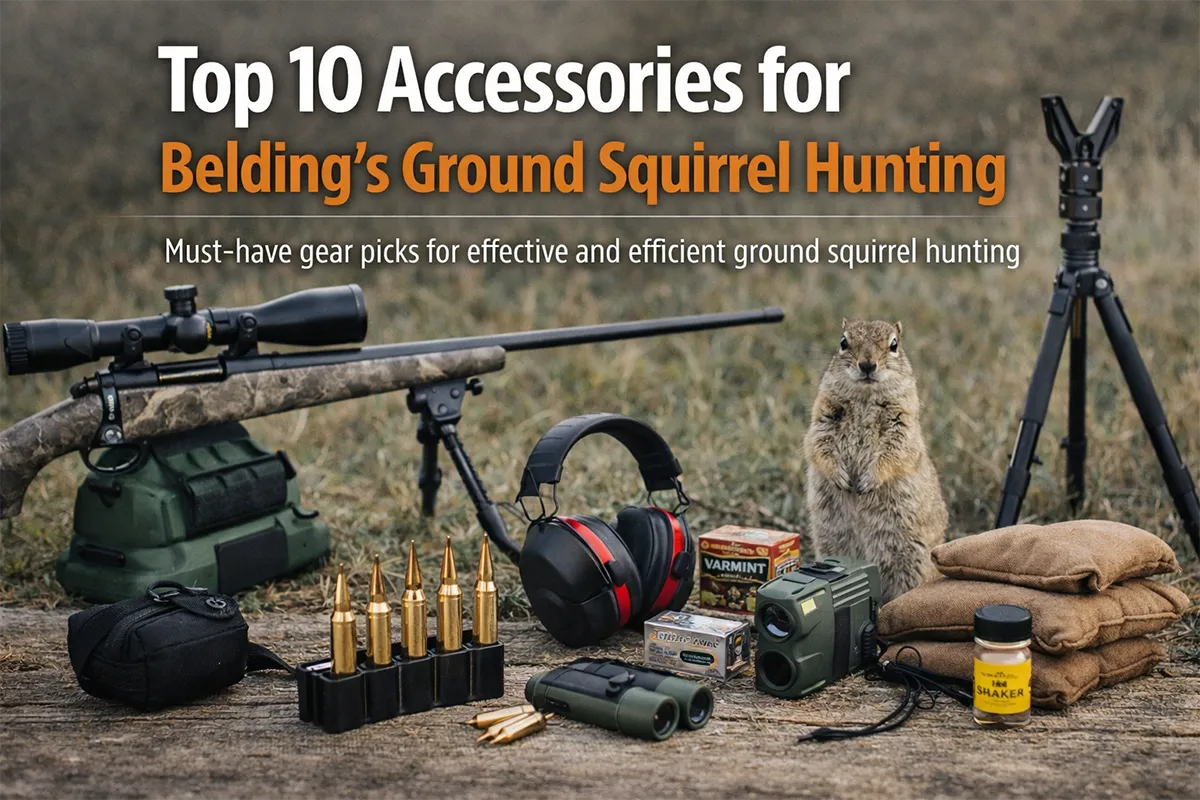
Smart field gear for tiny targets, shifting wind, and long hours in open Western meadows.
The best Belding’s ground squirrel hunting accessories help you solve a very specific set of problems: tiny targets, constant movement, open country, and enough shooting volume that comfort and efficiency matter almost as much as accuracy. This is not a hunt where random gear works well. You want accessories that help you build a steady rest, judge distance fast, see hits clearly, and stay organized during long sessions around pastures, meadow edges, and burrow systems. Safe gun handling, a reliable backstop, and ethical shot placement matter on every stand, and regulations can vary by state, season, access rules, magazine limits, and lead-free ammunition requirements, so always check local laws before heading out.
Where/When: Belding’s ground squirrels are typically found in parts of the interior West in open meadows, hay ground, pastures, alfalfa edges, and similar country with short vegetation and suitable burrowing soil. Hunters commonly spot activity around burrow mouths, green feed, field margins, and short travel lanes between cover and feeding areas. In many areas, the most visible action happens from spring into early summer, with daylight movement often strongest once the ground warms and squirrels settle into feeding patterns. Morning and late-afternoon windows are often productive, though weather, elevation, crop cycles, and local regulations can change the timing considerably.
1. Adjustable-Parallax Riflescope
A good riflescope is the most important accessory on this hunt because Belding’s ground squirrels are small enough that a fuzzy sight picture or bad parallax setting can turn a makeable shot into a miss. A scope with adjustable parallax, dependable turrets, and enough magnification to pick apart meadow edges gives you the clearest accuracy advantage.
Overview
Choose a scope that matches your real distance and shooting style, not just the biggest magnification number on the box. In this role, clear glass, a usable reticle, and side-focus or adjustable-objective parallax matter more than flashy extras. A practical range is usually something like 4-16x, 5-20x, or similar, especially if your shots vary from close burrow work to longer meadow pokes.
Benefits
- Makes tiny targets easier to resolve and aim at cleanly
- Adjustable parallax helps maintain precision at varying distances
- Useful reticles can speed up holdovers in open country
Notable Brands
- Vortex
- Leupold
- Athlon
2. Stable Bipod
A bipod solves the biggest field problem after optics: how to hold steady on a target that may only give you a few seconds. In open grass and uneven pasture ground, a sturdy bipod helps you get prone or seated support without wasting motion.
Overview
Look for a bipod with the right height range for your usual terrain. Short models shine in prone positions on clipped grass or dirt, while taller options help in rougher vegetation. Cant adjustment and solid leg locks matter because you will often be shooting from uneven ground where leveling the rifle quickly is a real advantage.
Benefits
- Adds immediate stability for small-target shooting
- Helps reduce wobble in windy, exposed country
- Speeds up repeat shots from the same position
Notable Brands
- Harris
- Magpul
- Atlas
3. Rear Shooting Bag
A rear bag is one of the cheapest ways to tighten groups on ground squirrels. It solves the fine-control problem that even a good bipod cannot fix by itself, especially when you need small vertical corrections for tiny targets at mixed distances.
Overview
Pick a bag that is compact enough to carry all day but firm enough to hold shape under the stock. Lighter fill saves weight; denser fill often gives more stable support. This accessory matters most when you are shooting prone or from a bench-like improvised setup and want repeatable elevation control without muscling the rifle.
Benefits
- Improves fine aiming control for precise shot placement
- Reduces fatigue from holding the rifle offhand
- Works with bipods, packs, and field rests
Notable Brands
- Caldwell
- Armageddon Gear
- WieBad
4. Laser Rangefinder
Distance estimation gets exposed fast on small varmints. A laser rangefinder removes guesswork when the meadow looks flat but the shot is farther than it seems, helping you choose the right hold and avoid sloppy shooting.
Overview
For this hunt, speed and readability matter more than long-distance bragging rights. A simple rangefinder with fast target acquisition, decent glass, and reliable performance on grass edges, rocks, and burrow areas is usually the smart buy. It matters most when you move between close and moderate shots and do not want to waste ammo checking holds.
Benefits
- Improves first-shot accuracy by removing distance guesswork
- Helps you confirm whether a rimfire or centerfire shot is reasonable
- Speeds up decision-making in changing field setups
Notable Brands
- Leupold
- SIG SAUER
- Vortex
5. Spotting Scope
A spotting scope helps you read the field before you ever touch the rifle. It solves the visibility problem when squirrels are popping in and out of burrows, and it is especially useful if you are hunting with a partner or glassing wide meadows with lots of scattered activity.
Overview
Choose a compact model if you move often, or a full-size optic if you plan to sit and monitor active areas. The sweet spot is usually enough magnification to confirm targets and watch impacts without carrying something so heavy that it stays in the truck. Clear focus and a stable mounting system matter more than maximum zoom.
Benefits
- Lets you scout active burrows and feeding lanes before shooting
- Makes it easier to call hits, misses, and wind effects
- Reduces unnecessary rifle handling between shot opportunities
Notable Brands
- Vortex
- Athlon
- Leupold
6. Optics Tripod
A tripod turns binoculars or a spotting scope into a more useful scouting tool. On long days in open country, it reduces shake, improves glassing comfort, and helps you study tiny movement without hand fatigue.
Overview
Look for a tripod that balances weight and stiffness. Lightweight tripods are easier to carry across meadows, but flimsy legs waste the whole point of the setup in wind. A smooth head, fast leg locks, and enough working height for seated use are often more important than ultra-tall standing capability for this style of varmint hunting.
Benefits
- Stabilizes optics for better target detection
- Improves comfort during long glassing sessions
- Helps partners share the field view efficiently
Notable Brands
- Bog
- Vortex
- Leofoto
7. Electronic Hearing Protection
Long varmint sessions can involve far more rounds than many other hunts, so hearing protection is not optional. Electronic muffs or plugs solve the obvious safety issue while still letting you hear partners, vehicles, and surrounding activity.
Overview
Choose protection you will actually wear all day. Slim earmuffs work well around rifle stocks, while electronic plugs can feel cooler in warm weather. Comfort, battery life, and a consistent seal matter most. This is one accessory that improves safety immediately and keeps you sharper when the shooting pace picks up.
Benefits
- Protects hearing during high-volume shooting
- Allows safer communication with partners
- Reduces fatigue from constant blast exposure
Notable Brands
- Walker’s
- Peltor
- Howard Leight
8. Shooting Mat or Seat Pad
When the best shot angle is prone, a mat or padded seat keeps you in position longer and cleaner. This solves the comfort problem that quietly ruins accuracy after an hour on rocky soil, wet ground, or stubble.
Overview
Pick a mat that rolls small enough to carry but gives enough padding for elbows and knees. In drier, easier terrain, even a compact pad can be enough. The point is not luxury. It is staying stable, reducing movement, and avoiding the distraction that makes careful shot execution harder than it should be.
Benefits
- Improves comfort during long prone shooting sessions
- Keeps clothing and gear cleaner in wet or dusty ground
- Helps maintain steadier body position for precise shots
Notable Brands
- Caldwell
- Allen
- Champion
9. Ammo Carrier or Wallet
An ammo carrier keeps rounds organized, protected, and easy to reach when the action is steady. It solves the simple but common problem of loose ammunition rattling around a pocket, collecting dirt, or slowing down reloads.
Overview
Choose a carrier based on your rifle type and round count. Some hunters prefer compact cartridge wallets for bolt guns, while others want a larger pouch for magazines and bulk boxes. Good access matters because fumbling with gear in the middle of an active field wastes time and adds unnecessary gun handling.
Benefits
- Keeps ammunition clean and easy to access
- Reduces reload delays during active shooting periods
- Helps you stay organized across multiple load types
Notable Brands
- MTM
- Allen
- Butler Creek
10. Compact Day Pack
A small day pack ties the whole system together by carrying optics, ammo, water, hearing protection, and support gear without turning a simple varmint outing into a mess. It matters most when you are walking between meadow sections and need everything accessible but not bulky.
Overview
Look for a pack with enough structure to organize small gear, external pockets for quick-access items, and a size that does not interfere when shooting prone or seated. This is not a backpacking purchase. It is a field-efficiency purchase that helps you move safely, keep essentials separated, and avoid leaving useful equipment behind in the truck.
Benefits
- Keeps essential gear organized and easy to reach
- Makes short moves between shooting spots more efficient
- Helps carry water, tools, and safety items for longer sessions
Notable Brands
- Badlands
- Allen
- Eberlestock