
Massachusetts NICS vs. Economy: What 5 Years of Data Say
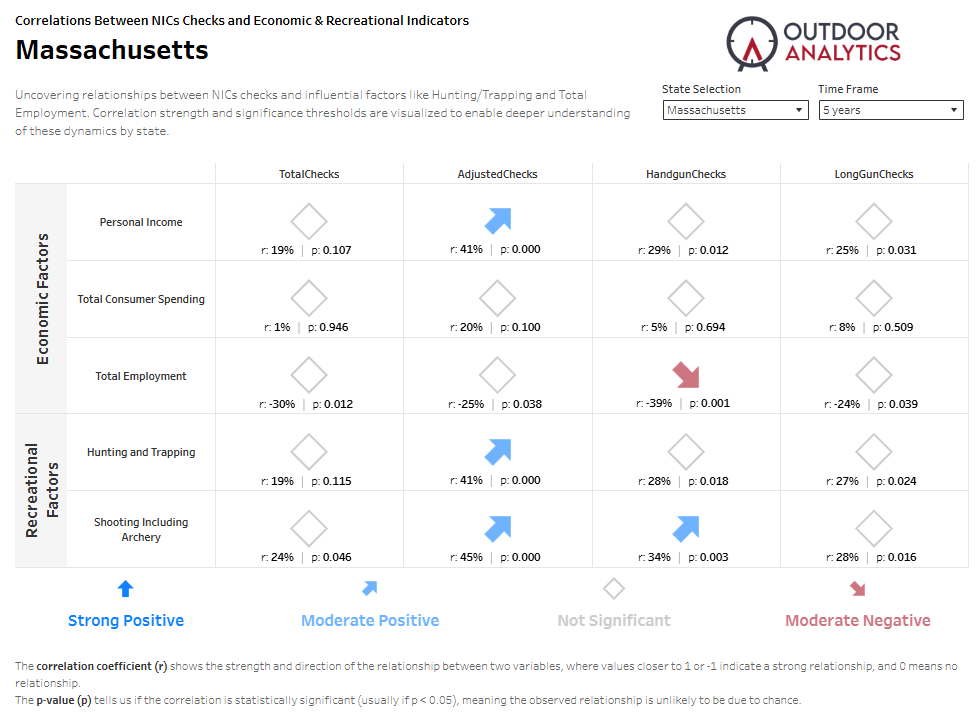
What do gun background checks in Massachusetts have to do with paychecks, jobs, and days spent outdoors? Our latest Tableau snapshot connects the dots. Looking at five years of data, we see clear patterns between NICS checks, the broader economy, and recreational activity like hunting and archery. Below, I’ll break it down in plain English—no spreadsheet headache required.
What This Dashboard Shows
- State: Massachusetts
- Time frame: 5 years
- NICS series: Total Checks, Adjusted Checks, Handgun Checks, Long Gun Checks
- Factors compared: Personal Income, Total Consumer Spending, Total Employment, Hunting & Trapping, Shooting (including Archery)
- How to read it: The “r” value shows direction and strength of the relationship (closer to 1 or -1 is stronger). The “p” value tells us if that pattern is unlikely to be random (p below 0.05 is typically considered meaningful).
Big Takeaways for Bay State Shooters
- Income moves with checks. As personal income rises, Adjusted NICS rise the most, with meaningful, mid-strength relationships across the board. In short: fatter wallets, more buying activity.
- Outdoor participation really matters. Both Hunting & Trapping and Shooting (incl. Archery) show consistent, meaningful positive ties to checks—especially for the adjusted series and handguns.
- Employment pulls the other way. When total employment runs hot, checks tend to cool off, especially for handguns. That inverse pattern is strong and statistically meaningful.
- Consumer spending is a shrug. General spending doesn’t show a dependable tie to checks in this period.
Why the Patterns Make Sense
Income up, checks up: When paychecks grow, folks have more discretionary cash to upgrade gear, start a new discipline, or finally pick up that first range setup.
More days outside, more checks: Participation in hunting, trapping, and target sports drives new purchases, accessories, and transfers—exactly what background checks capture.
Employment inverse: Busy job markets can leave less free time. When hours and commutes eat into weekends, range trips and shopping plans slip—showing up as fewer checks.
What Retailers and Range Owners Can Do
- Lean into participation peaks. When hunting-license activity rises, promote long-gun packages, ammo bundles, and range memberships.
- Target “income windfalls.” Tax refund season or bonus periods align with higher interest—great times for training promos and accessory upsells.
- Mind the time crunch. In tight labor markets, offer shorter classes, evening leagues, and streamlined pickups to fit busy schedules.
Plain-English Read on Significance
When you see p below 0.05, it means the pattern is unlikely to be random. In this dashboard, many of the positive ties with income and participation pass that bar, and so do the negative ties with employment. That’s a strong signal for planners and marketers.
Closing Thoughts
The headline is simple: in Massachusetts, NICS checks tend to rise with income and outdoor participation, and ease off when employment is running hot. If you’re a retailer, range, or club, build your calendar around those rhythms—and if you’re a shooter, you just got a data-backed excuse for your next range day.