
Exploring Firearm Trends in New York: How Economic and Recreational Factors Influence Gun Ownership
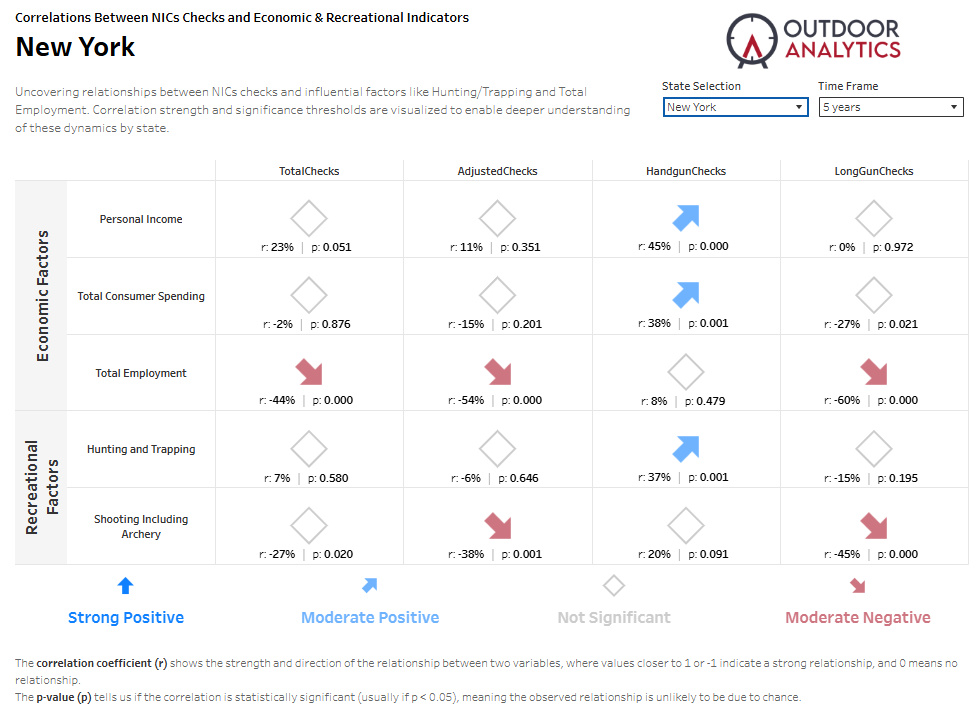
New York, known for its bustling cities and serene outdoor escapes, presents a fascinating case study on how economics and outdoor recreation shape firearm ownership. Recent data analyzed by Outdoor Analytics sheds new light on this intriguing dynamic, highlighting correlations between economic factors, recreational interests, and firearm purchasing trends over the last five years.
The Impact of Economic Factors on Gun Ownership
In the Empire State, economic factors significantly influence trends in firearm checks. Notably, handgun checks have shown a clear relationship with both personal income and consumer spending. Higher personal income correlates with an increased interest in handgun ownership—a moderate but meaningful connection suggesting that as New Yorkers have more disposable income, they may invest more in firearms for sport or personal protection.
Interestingly, employment levels demonstrate a notable inverse relationship with firearm checks overall. This finding implies that when job opportunities decrease, residents might show increased interest in firearms, possibly driven by concerns for personal safety or uncertainty about economic stability.
Outdoor Recreation’s Role in Gun Ownership
Outdoor enthusiasts in New York, from dedicated hunters to archery fans, have their own distinct impact on firearm trends. Hunting and trapping activities, surprisingly, don’t significantly correlate with overall gun ownership, suggesting that other factors beyond traditional hunting might drive firearm purchases statewide.
However, handgun ownership does show a moderate positive link with recreational shooting, including archery. This highlights a vibrant community of shooters in New York who engage in recreational handgun use, possibly for competitive events or leisure at outdoor ranges.
Key Findings at a Glance
- Handgun purchases rise with higher personal income and consumer spending.
- Lower employment levels correlate strongly with increased overall firearm interest.
- Recreational shooting and archery moderately boost handgun purchases.
- Traditional hunting/trapping has little impact on general firearm sales.
Why Does This Matter?
Understanding these connections is crucial for firearm retailers, outdoor event organizers, and policymakers alike. Retailers can better anticipate market demand, while outdoor organizations can tailor their events and training programs to engage more effectively with the community.
Conclusion: What’s Next for New York’s Outdoor Community?
As New York’s economic landscape evolves, so too will the dynamics of firearm ownership. By closely following these trends, outdoor enthusiasts and industry stakeholders can adapt proactively. Are you surprised by these findings, or have you noticed similar trends in your own community?