
Best Gauges for Hunting Clapper Rail: Comparisons & Picks
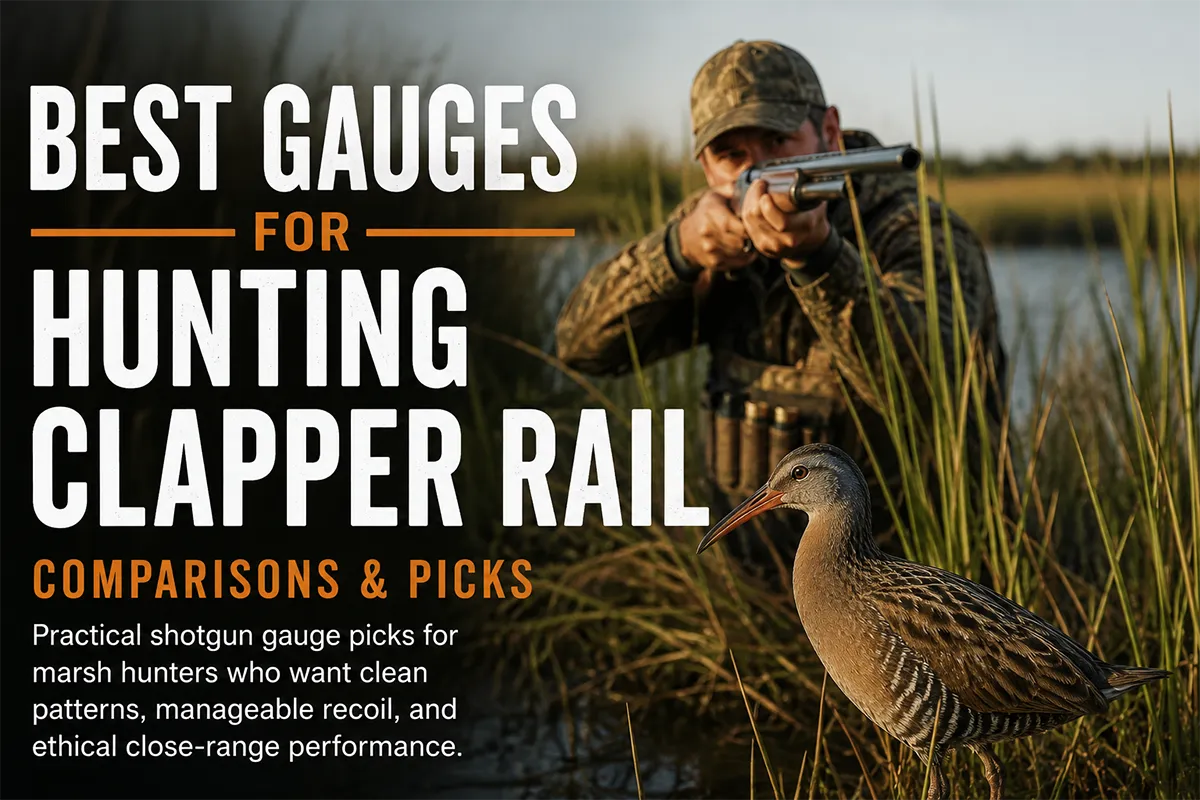
Practical shotgun gauge picks for marsh hunters who want clean patterns, manageable recoil, and ethical close-range performance.
Choosing clapper rail hunting shotgun gauges is about matching pattern density, recoil, carry weight, and legal shot requirements to tight marsh shooting. Clapper rails are small birds, but they can flush low, cross quickly, and vanish into cordgrass or tidal cover. Most hunters are best served by a quick-pointing shotgun, an open choke, and a load that patterns evenly at close range. The right gauge should help you make clean shots without excessive recoil, unnecessary meat damage, or a gun that feels awkward in soft mud, boats, and narrow marsh cuts. Always confirm seasons, bag limits, shooting hours, legal shot material, and magazine restrictions before hunting.
Where/When: Clapper rails are commonly associated with Atlantic and Gulf Coast salt marshes, brackish wetlands, tidal creeks, cordgrass edges, muddy channels, and oyster-flat transitions where hunters often look for tracks, calls, feeding edges, high-tide escape cover, and travel lanes between food, water, and shelter. Rail hunting often centers on legal fall seasons, with birds more visible or easier to flush around higher tides, though timing varies by region, water level, weather, and regulations. In many areas, morning and evening movement can be productive, while wind, storms, and tide cycles may change where birds hold; always check local rules before planning a hunt.
Gauge Comparisons
| Feature | 12 Gauge | 20 Gauge | 16 Gauge | 28 Gauge | .410 Bore |
|---|---|---|---|---|---|
| Recoil How much kick you can expect when firing. |
Moderate to heavy, depending on load | Mild to moderate | Moderate | Light | Very light |
| Effective Range The distance at which the shotgun setup remains accurate and effective. |
About 15–40 yards with proper patterning | About 15–35 yards | About 15–35 yards | About 15–30 yards | Best inside 20–25 yards |
| Typical Load The shell length, payload, and shot size commonly considered for rail hunting. |
2 3/4-inch shells, often #6 to #8 shot | 2 3/4-inch shells, often #6 to #8 shot | 2 3/4-inch shells, often #6 to #8 shot | 2 3/4-inch shells, often #7 1/2 or #8 shot | 2 1/2- or 3-inch shells, often #7 1/2 or #8 shot |
| Versatility How well the gauge or bore performs for other game species besides your primary target. |
Excellent for marsh, upland, turkey, and waterfowl uses | Very versatile for rails, doves, upland birds, and small game | Good upland versatility, but less common today | Great for light upland use and close marsh shooting | Specialized close-range option for skilled shooters |
| Shell Availability How easy it is to find suitable hunting shells. |
Excellent | Excellent | Fair to good | Good | Good, but hunting loads can be limited |
12 Gauge
The 12 gauge is the most forgiving shotgun choice for clapper rail hunting because it throws a dense pattern and gives hunters the widest selection of shells. That matters when birds flush low, quarter away, or appear through broken marsh grass. It also solves the one-gun problem for hunters who use the same shotgun for ducks, doves, rabbits, pheasants, or turkeys. For rails, though, the goal is not maximum power. A lighter 2 3/4-inch field shell, an improved cylinder or skeet choke, and a pattern-tested load are usually more useful than a heavy-recoiling setup. Because rails are small birds, avoid overly stout loads that may be excessive at close range.
PROS
- Excellent shell availability and broad non-toxic shot options
- Dense patterns help on quick, imperfect marsh flushes
- Highly versatile for hunters who own one do-it-all shotgun
CONS
- More recoil than needed for many rail situations
- Heavier guns can be tiring in soft marsh terrain
- Overly heavy loads may be excessive at close range
Interesting Fact: Many rail hunters prefer open chokes because most ethical opportunities happen quickly and relatively close.
Consider this Gauge If…
You want the most common, flexible shotgun option and do not mind carrying a slightly larger gun through mud, spartina, and tidal cuts. It is especially practical if you already own a 12 gauge and want easy access to legal shells.
20 Gauge
The 20 gauge may be the best all-around shotgun gauge for clapper rail hunting because it balances light carry weight, manageable recoil, and enough pattern density for ethical shots. It solves the biggest practical marsh problem: moving efficiently while still carrying a shotgun that handles fast, close birds. A 20 gauge pump, semi-auto, side-by-side, or over-under with an improved cylinder choke can be quick to mount and comfortable during long walks, boat-assisted hunts, or push-pole setups. Look for reliable 2 3/4-inch field shells and confirm whether lead or non-toxic shot is required where you hunt. Patterning is still important because small birds expose weak patterns quickly.
PROS
- Light, handy, and comfortable for marsh walking
- Enough pattern density for typical rail distances
- Common shotgun and shell availability
CONS
- Less forgiving than 12 gauge on longer or rushed shots
- Some small-frame guns can still kick with stout loads
- Non-toxic specialty shells may require more shopping
Interesting Fact: A well-patterned 20 gauge often gives rail hunters all the performance they need without the bulk of many 12 gauge setups.
Consider this Gauge If…
You want a practical marsh shotgun that is easy to carry, fast to swing, and still effective when birds flush at normal rail-hunting distances. It is a strong choice for newer hunters, smaller-framed shooters, and anyone prioritizing mobility.
16 Gauge
The 16 gauge is a classic middle-ground shotgun choice for hunters who like upland-style handling and want more payload than a 20 gauge without stepping up to a 12 gauge. It solves the balance problem well when the gun fits properly: enough pattern to be useful on quick birds, but often less bulk than a full-size 12 gauge. For clapper rails, the 16 gauge works best with modest field shells and an open choke. Its biggest drawback is availability. Guns, shells, and non-toxic options are less common than 12 or 20 gauge choices. Before relying on one, make sure you can source legal shells for the marshes you hunt.
PROS
- Good balance of pattern density and carry weight
- Classic upland feel that suits quick flushing birds
- Effective for rails, doves, rabbits, and many upland birds
CONS
- Shell selection is more limited than 12 or 20 gauge
- Non-toxic loads can be harder to find
- Fewer modern shotgun choices in some markets
Interesting Fact: The 16 gauge has long been valued by upland hunters because it can carry like a lighter gun while patterning with authority.
Consider this Gauge If…
You already own a reliable 16 gauge, enjoy traditional field guns, and can find legal shells for your marsh. It is less ideal if you need the easiest possible shell availability or hunt areas with strict non-toxic shot requirements.
28 Gauge
The 28 gauge is a light, lively option for experienced clapper rail hunters who keep shots close and value a quick-handling shotgun. It solves fatigue and recoil problems better than larger gauges, which matters when you are wading, poling a skiff, or working narrow marsh edges. The tradeoff is pattern margin. A 28 gauge can be very effective on rails, but it asks more from the hunter: closer shots, smooth follow-through, careful choke selection, and proven shells. Use it where birds are expected to flush inside reasonable range, and avoid stretching shots just because a bird is visible. Ethical shot placement and pattern quality matter more than distance.
PROS
- Very light recoil and easy handling
- Excellent for close, deliberate marsh shooting
- Pairs well with compact upland-style shotguns
CONS
- Less forgiving pattern than 12 or 20 gauge
- Shells may cost more or be less available
- Requires discipline on shot distance
Interesting Fact: The 28 gauge often patterns better than many hunters expect, but it still rewards careful load testing.
Consider this Gauge If…
You are a confident wingshooter who wants a low-recoil marsh shotgun and is willing to pass on marginal shots. It is a strong option for close rails, doves, and light upland hunting when suitable shells are available.
.410 Bore
The .410 bore is the lightest practical option on this list and should be treated as a specialized close-range rail tool, not a general-purpose recommendation for every hunter. It solves recoil and carry-weight concerns extremely well, making it pleasant in long marsh walks or tight boat setups. The downside is a small shot payload, which leaves little room for poor range judgment, weak patterns, or rushed swings. The .410 bore works best for skilled shooters, close flushing birds, and carefully patterned shells. A 3-inch shell may offer more payload than a 2 1/2-inch shell, but hunters should still keep shots conservative and pass on marginal angles.
PROS
- Very low recoil and easy carry weight
- Useful for close-range, controlled rail hunting
- Can be a fun challenge for skilled wingshooters
CONS
- Small payload leaves little margin for error
- Not ideal for beginners or longer shots
- Shell selection can be limited for specific regulations
Interesting Fact: The .410 is correctly called a bore, not a gauge, because its naming does not follow the traditional shotgun gauge system.
Consider this Bore If…
You are an experienced shooter hunting close-cover rails and you have already confirmed that your chosen shells are legal and pattern well. It is best for disciplined hunters who value low recoil over forgiveness.
Final Pick for Clapper Rail Hunting
For most hunters, the 20 gauge is the best overall shotgun gauge for clapper rail hunting because it is light, available, effective, and easier to carry through marsh than many 12 gauge setups. The 12 gauge is the most forgiving and versatile option, especially for hunters who want one shotgun for several seasons. The 16 gauge is a fine traditional pick if you can find legal shells, while the 28 gauge and .410 bore are best for close-range hunters who understand their limits. Whatever you choose, safe gun handling comes first in boats, mud, and tight cover. Pattern your shotgun, use legal shot, respect seasons and bag limits, and take only shots that allow clean, ethical hits on small, fast birds.