
Best Gauges for Hunting Virginia Rail: Comparisons & Picks
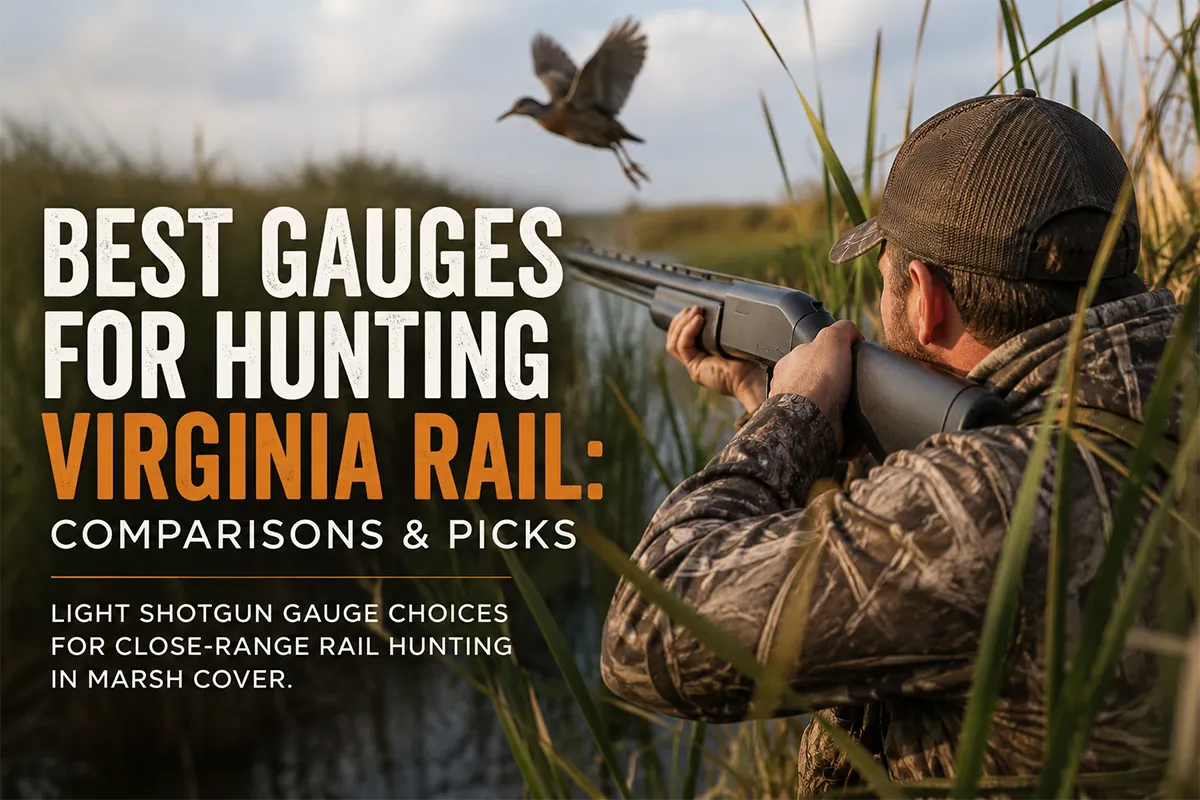
Light shotgun gauge choices for close-range rail hunting in marsh cover.
Virginia rail hunting gauges should be chosen for close shots, light carry weight, open patterns, and legal non-toxic shot. Rails are small, quick-flushing marsh birds, so the best shotgun setup is not the hardest-hitting option. It is the one that patterns evenly at realistic rail distances, swings smoothly in tight grass, and helps you make clean shots without excessive bird damage. For most hunters, that means a 20 gauge or 28 gauge with an open choke. A lightly loaded 12 gauge can also work, while 16 gauge and .410 bore are more specialized picks. Before hunting, check local seasons, bag limits, shooting hours, license requirements, magazine limits, and non-toxic-shot rules, because migratory bird regulations vary by state and year.
Where/When: Virginia rails are commonly associated with freshwater and brackish marshes, wet meadows, cattail edges, sedges, rushes, wild rice, shallow channels, and muddy openings where they can feed while staying close to thick cover. Hunters often find birds along water-level seams, food-rich mud edges, narrow travel corridors, and places where tide, rain, wind, or changing water levels push rails out of heavy vegetation. In many areas, hunting opportunity is tied to fall movement and local season dates, but exact timing varies by region and regulations. Morning and evening activity can be productive, while weather fronts, high water, and steady wind may change where birds hold during the day.
Virginia Rail Gauge Comparisons
| Feature | 20 gauge | 28 gauge | 12 gauge | 16 gauge | .410 bore |
|---|---|---|---|---|---|
|
Recoil How much kick you can expect when firing. |
Low to moderate | Low | Moderate with light field loads | Moderate | Very low |
|
Effective Range The distance where the gauge remains practical for clean hits. |
15-35 yards | 15-30 yards | 15-40 yards with light loads | 15-35 yards | 10-25 yards |
|
Shot Payload Range Common light field or non-toxic shell payloads. |
7/8-1 oz | 3/4-7/8 oz | 1-1 1/8 oz | 1 oz common | 1/2-11/16 oz |
|
Versatility How well the gauge performs for other game species besides your primary target. |
Excellent for rails, doves, woodcock, and snipe | Great for close upland and marsh birds | Most versatile, but easy to overgun rails | Classic upland choice with good balance | Specialized close-range option |
|
Ammo Availability How easy it is to find ammunition for the gauge. |
Very good | Fair to good | Excellent | Fair | Good, but non-toxic loads can be limited |
20 gauge
The 20 gauge is the best all-around Virginia rail gauge for most hunters. It solves the biggest rail-hunting problem: getting enough pattern density for fast, close flushes without carrying a heavy shotgun through mud, ditches, grass, and shallow water. A 20 gauge with a skeet or improved cylinder choke gives a useful pattern window for birds that jump suddenly from cattails or sedges. Look for legal non-toxic shot in small sizes suitable for rails, and pattern your load at 15, 20, and 30 yards. A light 20 gauge is also practical for hunters who may walk long marsh edges or hunt with a dog.
PROS
- Strong balance of pattern density, low recoil, and manageable gun weight.
- Common shotgun choice with good ammunition and choke availability.
- Versatile enough for rails, doves, woodcock, snipe, and other small birds where legal.
CONS
- Very light 20 gauge shotguns can feel quick or whippy on crossing birds.
- Hunters still need to choose modest loads to avoid excessive bird damage.
- Small-shot non-toxic loads may require more planning than common target shells.
Interesting Fact: A 20 gauge with an open choke often handles rail hunting better than a tight-choked waterfowl gun because most shots happen fast and close.
Consider this Gauge If…
You want one dependable shotgun setup for most Virginia rail situations. It is especially useful for hunters who value lighter carry weight but still want a forgiving pattern. Choose a gun that mounts cleanly while wearing waders or a shell vest, and avoid taking long, uncertain shots beyond your pattern-tested range.
28 gauge
The 28 gauge is a strong Virginia rail gauge for skilled wingshooters who keep shots close and value a light, responsive shotgun. It solves the fatigue problem on long walks through marsh edges, especially when birds are scattered and cover is thick. The tradeoff is pattern margin. A 28 gauge can be very effective on rails, but it gives less room for sloppy leads or shots that stretch too far. Choose it when you can source legal non-toxic shells, when your shotgun fits well, and when the hunting area produces close, predictable flushes.
PROS
- Low recoil helps with quick follow-up shots and smooth gun handling.
- Light shotguns are easier to carry in wet, uneven marsh terrain.
- Excellent close-range choice when paired with an open choke and good patterns.
CONS
- Less forgiving than 20 gauge when birds flush farther out.
- Non-toxic hunting shells may be harder to find in some areas.
- Some 28 gauge guns and shells cost more than common 12 or 20 gauge options.
Interesting Fact: Many upland hunters like the 28 gauge because it can throw efficient patterns while keeping recoil and gun weight low.
Consider this Gauge If…
You are confident on close-flushing birds and prefer a lively shotgun over maximum pattern margin. The 28 gauge fits hunters working narrow marsh lanes, small impoundments, and wet meadow edges where shots are typically inside 30 yards. Patterning matters; do not assume a small payload will perform well without testing it.
12 gauge
The 12 gauge is the most available and flexible shotgun gauge, but it should be used carefully for Virginia rails. It solves the ammunition-availability problem and works well for hunters who already own one shotgun for everything. The key is using light, legal non-toxic loads and an open choke rather than heavy waterfowl shells or tight constrictions. For rails, a 12 gauge is often more gun than necessary, but it can be practical when loaded sensibly. It is also useful on legal mixed-bag days, where rails may share marsh habitat with other migratory birds during overlapping seasons.
PROS
- Best overall shell availability and broadest shotgun selection.
- Easy to adapt with light loads and open chokes.
- Useful for mixed-bag marsh hunts when regulations and seasons allow.
CONS
- Can damage small birds if loads are too heavy or patterns are too tight.
- Many 12 gauge shotguns are heavier than needed for rail hunting.
- More recoil and muzzle movement than smaller gauges with similar field loads.
Interesting Fact: A 12 gauge can be made much more rail-friendly by changing the shell and choke, not necessarily the shotgun.
Consider this Gauge If…
You already own a 12 gauge and want the simplest route to finding legal shells. Choose modest payloads, legal non-toxic shot, and an open choke. Skip heavy duck loads for rails, and focus on safe handling in tight cover where partners, dogs, boats, and low bird flight can create risky angles.
16 gauge
The 16 gauge is a classic middle-ground rail option. It solves the balance problem for hunters who want more payload than many 20 gauge loads but do not want the bulk of a typical 12 gauge. A well-fitting 16 gauge upland gun can be a pleasure in wet grass and marsh edges. The challenge is ammunition. Legal non-toxic shells are often less common, so this gauge works best for hunters who plan ahead. It is a solid choice if you already own a 16 gauge and know it patterns well with the shells you can legally use.
PROS
- Good field balance between payload, weight, and swing.
- Comfortable choice for hunters who already shoot a 16 gauge well.
- Useful for rails and other small gamebirds when legal loads are available.
CONS
- Non-toxic shell selection is usually narrower than 12 or 20 gauge.
- Not ideal for last-minute ammunition shopping.
- Older shotguns may need chamber, choke, and load compatibility checks.
Interesting Fact: The 16 gauge has long been favored by some upland hunters for its lively handling and practical field payload.
Consider this Gauge If…
You already have a 16 gauge that fits well and can secure appropriate shells before the season. It is a good choice for hunters who enjoy traditional upland guns and may hunt rails near wet meadow edges or woodcock-style cover. Confirm that your shotgun can safely handle the load you choose.
.410 bore
The .410 bore is the specialist pick for Virginia rail hunting. It solves the recoil and carry-weight problem better than any gauge on this list, but it creates a new challenge: very limited pattern margin. The .410 bore is best for experienced shooters who can keep shots close, identify birds quickly, and pass on anything outside a proven pattern. It is not the best beginner option, and it is not ideal for windy days or uncertain flushes. Use it only with legal non-toxic shells and after careful pattern testing at realistic rail distances.
PROS
- Very low recoil and easy carry in mud, grass, and shallow water.
- Can be effective on close rails with disciplined shooting.
- Light payload helps reduce damage when shots are centered and close.
CONS
- Small patterns leave little room for poor leads or longer shots.
- Non-toxic shell options may be limited or expensive.
- Poor choice for hunters who cannot consistently judge distance and angles.
Interesting Fact: The .410 is properly called a bore, not a gauge, because it is named by bore diameter rather than the traditional shotgun gauge system.
Consider this Bore If…
You are an experienced wingshooter hunting tight cover where most birds flush inside 25 yards. The .410 bore rewards patience and shot discipline. Pattern it carefully, avoid fringe hits, and remember that ethical shot placement on birds means putting the center of a proven pattern on the bird at a distance your setup can handle.
Choosing the Best Virginia Rail Gauge
For most hunters, the 20 gauge is the best Virginia rail gauge because it offers a practical mix of pattern density, low recoil, carry comfort, and ammunition availability. The 28 gauge is excellent for experienced hunters who keep shots close. The 12 gauge is the easiest to feed but should be loaded lightly. The 16 gauge is a classic option for hunters who already own one and plan ammunition ahead. The .410 bore is best reserved for disciplined close-range work. Whatever you carry, handle the shotgun safely, keep the muzzle controlled, know where partners and dogs are, identify every bird before shooting, and take only ethical shots inside your tested pattern range. Always check current local and federal rules for seasons, limits, non-toxic shot, magazine limits, legal methods, and shooting hours before hunting Virginia rails.