
Best Gauges for Hunting Sharp-tailed Grouse: Comparisons & Picks
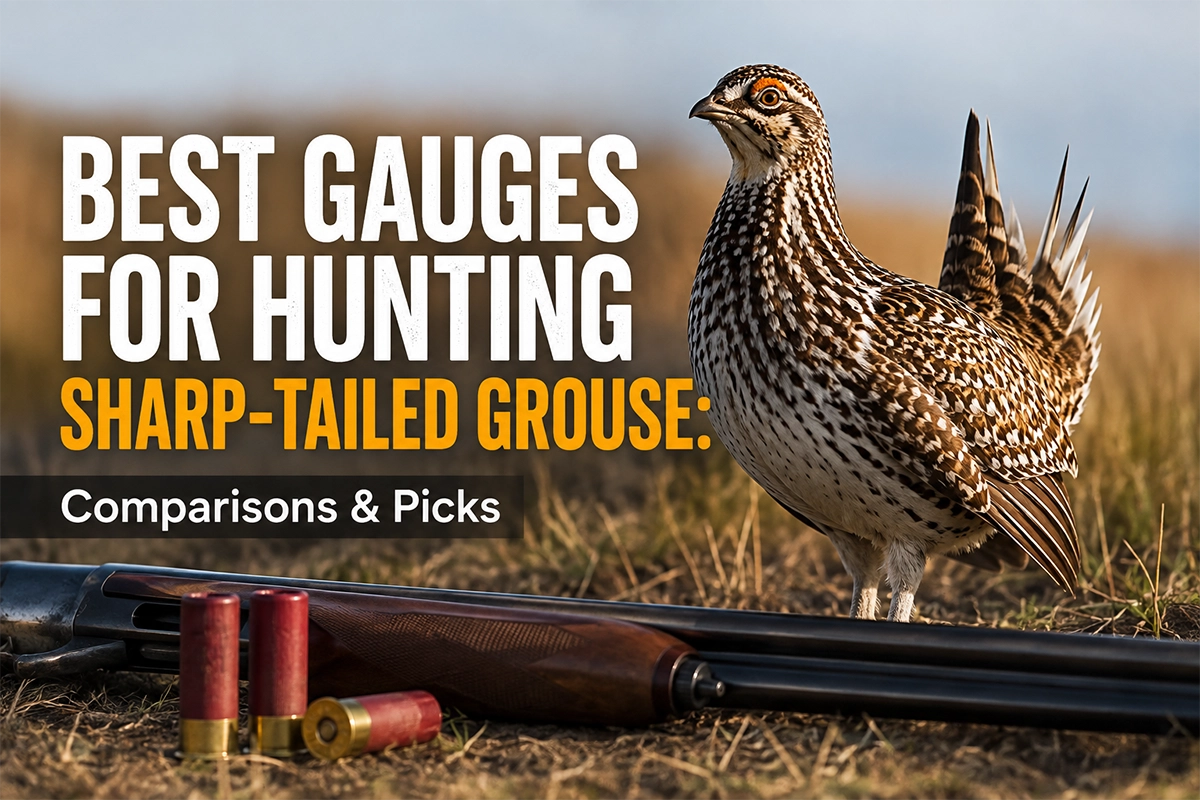
Compare practical shotgun gauges, loads, recoil, and field handling for prairie grouse hunting.
Choosing among the best Sharp-tailed Grouse hunting gauges is less about finding a single perfect shotgun and more about matching gun weight, recoil, pattern density, ammunition, and expected shooting distance to the way you hunt. Sharp-tailed Grouse commonly inhabit open grasslands mixed with brush, shrubs, agricultural edges, and scattered woody cover, so hunters may walk substantial distances before getting a fast flushing shot. :contentReference[oaicite:0]{index=0} A lightweight 20 or 28 gauge can be appealing for long prairie walks, while a 12 gauge offers broad ammunition selection and generous payload capacity. The 16 gauge remains an excellent middle-ground choice, and the .410 bore can work for disciplined hunters who understand its smaller pattern and range limitations.
Where/When: Sharp-tailed Grouse occur across broad portions of the northern Great Plains, northern Rockies, parts of the Upper Midwest, Alaska, and Canada, commonly using mixed-grass prairie, CRP-type grasslands, brushy draws, shrub patches, agricultural margins, and open country near scattered trees. :contentReference[oaicite:1]{index=1} Hunters often focus on food sources, loafing cover, water-adjacent vegetation, sheltered draws, and travel areas connecting feeding and resting habitat. Early in the season, young birds may hold more tightly and offer closer opportunities, while later-season birds can become more wary and may flush farther away; colder weather may also concentrate birds nearer protective shrubs or woody cover. :contentReference[oaicite:2]{index=2} Morning and evening movement around feeding areas can be productive, but wind, temperature, snow, hunting pressure, and local habitat conditions may change daily patterns. Season dates, shooting hours, bag limits, legal methods, and ammunition requirements vary by region, so always confirm current regulations where you hunt.
Gauge Comparisons
| Feature | 12 Gauge | 20 Gauge | 16 Gauge | 28 Gauge | .410 Bore |
|---|---|---|---|---|---|
|
Recoil Relative felt recoil with common upland loads; gun weight and load choice also matter. |
Moderate to high | Low to moderate | Moderate | Low | Very low |
|
Practical Field Range Use only distances at which your chosen gun, choke, and load produce an effective pattern. |
Close to moderate | Close to moderate | Close to moderate | Close to moderate | Primarily close |
|
Typical Load / Shot Options Exact payloads and shot sizes vary by shell length, manufacturer, and shot material. |
Wide selection of lead and non-toxic upland loads | Wide selection of lead and non-toxic upland loads | Moderate selection of upland loads | Growing selection of lead and non-toxic upland loads | Smaller payloads with more limited pattern density |
|
Versatility How readily the option can serve other upland and hunting roles. |
Excellent | Excellent | Very good | Very good for upland hunting | Specialized |
|
Ammo Availability General selection can change by location and season. |
Excellent | Excellent | Moderate | Good | Good |
12 Gauge
The 12 gauge solves the problem of wanting maximum flexibility from one shotgun. It offers generous payload capacity, abundant ammunition choices, and the ability to move between lighter upland loads and heavier hunting loads. GunBroker currently lists a broad range of 12 gauge hunting ammunition, reinforcing its strong market availability. :contentReference[oaicite:3]{index=3} For Sharp-tailed Grouse, that versatility matters most when late-season birds flush farther out or when a hunter also wants the same shotgun for pheasants, waterfowl, or other game. The tradeoff is that many 12 gauge shotguns are heavier to carry and can produce more recoil than smaller gauges. Choose a gun that balances comfortably and pattern-test the exact shell and choke combination you intend to use.
PROS
- Broad ammunition and non-toxic shot selection.
- Strong pattern density with appropriate upland loads.
- Highly versatile for other bird and small-game hunting.
CONS
- Can be heavier during long prairie walks.
- Typically produces more recoil than smaller gauges.
- Heavy loads are unnecessary for many close grouse shots.
Interesting Fact: Modern 12 gauge ammunition spans everything from light upland shells to specialized non-toxic loads, making it one of the easiest shotgun options to tailor to changing regulations and field conditions. :contentReference[oaicite:4]{index=4}
Consider This Gauge If…
Choose a 12 gauge if you value ammunition availability, already own a well-fitting 12 gauge, expect occasional longer flushing opportunities, or want one shotgun for several hunting applications. A lighter 12 gauge field gun can reduce the carry-weight disadvantage.
20 Gauge
The 20 gauge is arguably the most balanced choice for hunters who cover miles of prairie on foot. Its primary advantage is combining useful pattern density with lighter, quicker-handling shotguns and generally milder recoil. Experienced Sharp-tailed Grouse hunters commonly favor 20 and 28 gauge shotguns partly because their reduced gun weight is valuable in open-country hunting. :contentReference[oaicite:5]{index=5} The 20 gauge also retains substantial ammunition variety, including upland and non-toxic options. :contentReference[oaicite:6]{index=6} Choose a stock configuration that fits naturally, then select choke and shot according to your demonstrated pattern rather than assuming every 20 gauge load performs alike.
PROS
- Excellent balance of gun weight and pattern capability.
- Usually easier on recoil-sensitive hunters than a 12 gauge.
- Good selection of upland and non-toxic shells.
CONS
- Less payload capacity than a comparable 12 gauge.
- Extremely light guns can still feel sharp with heavy loads.
- Pattern quality must be confirmed with the chosen shell.
Interesting Fact: A long-time North Dakota Sharp-tailed Grouse hunter interviewed by Project Upland described the 20 gauge as one of his preferred options, with gun weight playing a major role in that preference. :contentReference[oaicite:7]{index=7}
Consider This Gauge If…
Choose a 20 gauge if you want a practical all-day upland gun with manageable recoil and enough flexibility for both early-season close flushes and more cautious late-season birds.
16 Gauge
The 16 gauge fills the gap between the 12 and 20 gauge for hunters who appreciate traditional upland shotguns. It can provide useful payload capacity without requiring the larger frame and carrying weight associated with some 12 gauge guns. That makes it especially attractive when you want a responsive field gun but still appreciate a little additional payload margin. Ammunition selection is generally narrower than for 12 or 20 gauge, so availability and cost deserve attention before choosing one as your primary prairie shotgun. Pattern-testing is particularly important if only a few suitable hunting loads are readily available to you.
PROS
- Useful middle ground between 12 and 20 gauge.
- Can be exceptionally well balanced in dedicated field guns.
- Capable choice for mixed upland hunting.
CONS
- Ammunition choices are often more limited.
- Non-toxic load selection may require more planning.
- Some guns offer little weight advantage over a light 12 gauge.
Interesting Fact: The 16 gauge remains a viable Sharp-tailed Grouse option even though 12 and 20 gauge shells generally dominate current shotgun-ammunition selection.
Consider This Gauge If…
Choose a 16 gauge if you already own a well-fitting field gun, enjoy traditional upland shotguns, and have reliable access to suitable lead or legally required non-toxic ammunition before the season begins.
28 Gauge
The 28 gauge addresses one of the biggest practical challenges in Sharp-tailed Grouse country: carrying a shotgun comfortably through miles of open terrain. Properly fitted 28 gauge field guns can be exceptionally light, fast, and pleasant to shoot. The smaller payload puts more emphasis on pattern quality and sensible range discipline, but experienced grouse hunters can use the 28 gauge very effectively. Project Upland’s Sharp-tailed Grouse guidance specifically notes a preference for 20 and 28 gauge shotguns for their lighter weight. :contentReference[oaicite:8]{index=8} Current ammunition listings also show both lead upland and specialized 28 gauge hunting loads. :contentReference[oaicite:9]{index=9}
PROS
- Lightweight and quick handling for walking hunts.
- Low recoil encourages comfortable shooting practice.
- Well suited to close and moderate upland opportunities.
CONS
- Lower payload leaves less margin for poor patterning.
- Shells may cost more or be less available locally.
- Long flushing birds demand disciplined range judgment.
Interesting Fact: Advances in premium and non-toxic shotshells have expanded the practical hunting choices available to smaller-gauge users. :contentReference[oaicite:10]{index=10}
Consider This Gauge If…
Choose a 28 gauge if low carrying weight and fast handling are priorities, you routinely practice with your shotgun, and you are willing to limit shots to distances where your tested pattern remains dense and effective.
.410 Bore
The .410 bore is the most specialized option here. Its advantage is very light recoil and potentially very light gun weight, but the smaller shot charge generally provides fewer pellets and less pattern forgiveness than larger shotgun gauges. That means the .410 bore does not solve poor shooting technique; instead, it rewards hunters who pattern carefully, shoot within conservative distances, and pass marginal opportunities. Current upland and non-toxic .410 bore loads are available, but load selection should be evaluated against your shotgun’s chamber length and actual pattern performance. :contentReference[oaicite:11]{index=11}
PROS
- Very light recoil.
- Light guns can be comfortable on long walks.
- Rewarding choice for skilled, disciplined wingshooters.
CONS
- Smaller payload provides less pattern margin.
- Requires conservative shot selection and reliable range judgment.
- Not ideal when late-season birds consistently flush far away.
Interesting Fact: The .410 is properly called a bore rather than a gauge, even though it is commonly grouped with shotgun gauges in ammunition catalogs.
Consider This Option If…
Choose a .410 bore only if you are an experienced shotgunner prepared to pattern the gun thoroughly and keep shots comfortably inside the effective range demonstrated by that pattern.
Choosing the Best Sharp-tailed Grouse Hunting Gauge
For many hunters, the 20 gauge offers the strongest balance of light weight, mild recoil, ammunition choice, and practical upland performance. The 12 gauge makes sense when ammunition availability and all-around versatility matter most, while the 28 gauge is especially appealing for hunters who value a lightweight walking gun. The 16 gauge remains a capable traditional choice, and the .410 bore is best reserved for experienced hunters who accept its tighter limits. Regardless of shotgun, pattern your chosen shell and choke before hunting. Early-season Sharp-tailed Grouse may present closer opportunities, while later-season birds commonly become more cautious, making pattern quality and realistic range judgment increasingly important. :contentReference[oaicite:12]{index=12} Keep the muzzle pointed in a safe direction, positively identify the bird and what lies beyond it, avoid low shots around partners and dogs, and take only shots that your patterning shows can cleanly harvest the bird. Always check current local regulations for seasons, bag limits, shooting hours, legal methods, magazine restrictions where applicable, and lead or non-toxic shot requirements before entering the field.