
Best Gauges for Hunting Scaled Quail: Comparisons & Picks
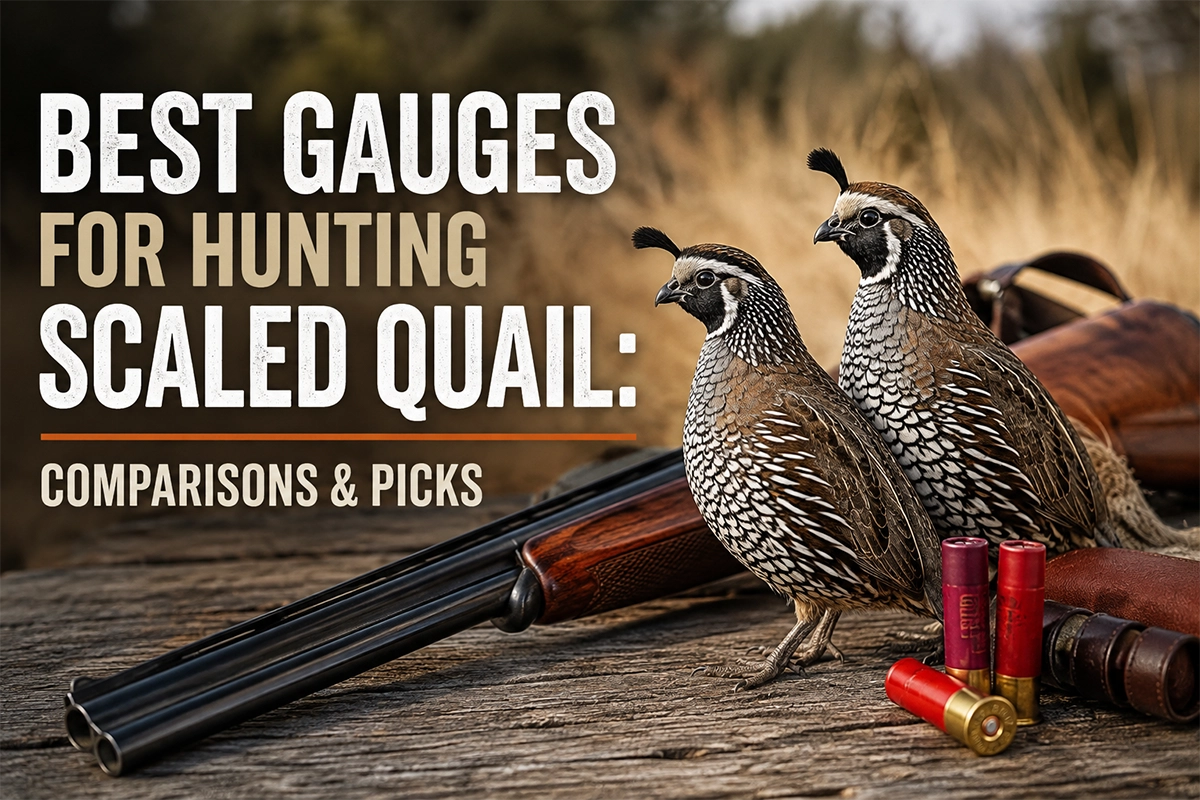
Compare practical shotgun options for fast-flushing scaled quail in open, rugged country.
Choosing among scaled quail hunting gauges comes down to balancing pattern performance, recoil, gun weight, ammunition availability, and the distances at which you realistically shoot. Scaled quail often favor open country where birds can run before flushing, so hunters may encounter anything from a close surprise over a dog to a longer crossing shot at a departing covey. The 12 gauge, 20 gauge, and 28 gauge are all practical choices, while the .410 bore can suit disciplined hunters who consistently keep shots close. Whichever shotgun you carry, pattern it with the exact shell and choke combination you plan to hunt with, confirm that your firearm is compatible with the ammunition, and stay within a range where your pattern remains effective.
Where/When: Scaled quail are commonly associated with arid and semi-arid country across parts of the Southwest and southern Great Plains, including open grasslands, desert scrub, brushy flats, foothills, and broken ranch country. Hunters often look for birds near feeding areas, weed-seed patches, grain or agricultural edges where available, water sources, brushy loafing cover, and travel corridors connecting feeding and escape cover. Seasons generally occur during fall and winter, although exact dates vary by state and region. Early in the season, coveys may be encountered near productive food and water areas, while late-season birds can become more inclined to run and seek heavier escape cover after repeated pressure. Morning and evening periods often produce more movement, with birds commonly using protective cover during warmer midday hours. Wind, cold fronts, drought, rainfall, and temperature can all influence daily patterns and habitat use, so hunters should adapt to current conditions and always confirm local seasons, bag limits, shooting hours, legal methods, and other regulations before hunting.
Gauge Comparisons
| Feature | 12 Gauge | 20 Gauge | 28 Gauge | .410 Bore |
|---|---|---|---|---|
|
Recoil How much kick you can expect when firing. |
Moderate to heavy, depending on gun and load | Mild to moderate | Generally mild | Generally very mild |
|
Effective Range The practical distance depends on your verified pattern, load, choke, and shooting ability. |
Often suitable for close to moderately long upland shots | Well suited to typical close and moderate quail distances | Effective at common upland distances with good patterning | Best reserved for closer shots with a proven pattern |
|
Shot Charge Range Common upland payload ranges vary by shell length and manufacturer. |
About 7/8 to 1 1/4 oz in many upland loads | About 3/4 to 1 oz in many upland loads | About 3/4 to 1 oz in many upland loads | About 1/2 to 11/16 oz in many loads |
|
Versatility How well the gauge or bore adapts to other hunting uses. |
Excellent | Excellent | Good for upland hunting | More specialized |
|
Ammo Availability How easy ammunition is generally to find. |
Usually excellent | Usually excellent | More limited and sometimes costlier | Common, but hunting-load selection can vary |
12 Gauge
The 12 gauge solves the problem of needing generous pattern capacity and broad ammunition selection when scaled quail are flushing unpredictably in open terrain. It can be especially useful for hunters who also use one shotgun for dove, pheasant, waterfowl, turkey, or other pursuits. Its larger payload options can provide flexibility when shots vary from close covey rises to birds departing across open grassland. For quail, however, heavier is not automatically better. A lighter upland load can reduce recoil and unnecessary gun weight while still producing an effective pattern. Choose a shotgun that mounts naturally, consider open or moderate choke constrictions for typical upland work, and verify the result on paper before hunting. Also make sure shell length matches the chamber marking and that your firearm and choke are compatible with the shot material you intend to use.
PROS
- Wide selection of upland ammunition and shot sizes
- Flexible pattern and payload options for varying field conditions
- Highly versatile for hunters who pursue several game species
CONS
- Typically produces more recoil than smaller gauges
- Some 12 gauge shotguns are heavier during long walking hunts
- Heavy loads may be unnecessary for close quail shooting
Interesting Fact: The 12 gauge remains popular partly because hunters can choose from a very broad range of shotgun weights, actions, chokes, and load configurations.
Consider this Gauge If…
Choose a 12 gauge if you want maximum versatility, readily available ammunition, and enough pattern capacity to handle changing shot opportunities. It makes particular sense for hunters who already own a well-fitting 12 gauge and shoot it confidently. If recoil or carrying weight is a concern, look for sensible upland loads and avoid choosing a gun so light that recoil becomes uncomfortable.
20 Gauge
The 20 gauge is often the strongest all-around choice for scaled quail because it combines useful pattern performance with lighter recoil and manageable shotgun weight. That matters when a hunt involves miles of walking through grasslands, sandy flats, cactus, or broken foothill terrain. A well-balanced 20 gauge can come to the shoulder quickly when running birds suddenly flush. Common upland loads provide enough flexibility for many normal quail situations without the bulk of heavier 12 gauge combinations. When choosing a load, focus on how it patterns rather than simply selecting the heaviest payload available. Shotguns also vary considerably in fit, so check length of pull, balance, sight picture, and how smoothly the gun mounts while wearing your normal hunting clothing.
PROS
- Good balance of recoil, payload, and field performance
- Often available in lighter shotguns that carry comfortably
- Widely available ammunition with many upland choices
CONS
- Offers less payload capacity than many 12 gauge loads
- Very light guns can still feel sharp with heavier shells
- Pattern quality still depends heavily on choke and ammunition
Interesting Fact: Many upland hunters favor the 20 gauge because modern shotguns can be notably light and lively without giving up the practical versatility needed for a wide range of bird hunting.
Consider this Gauge If…
Consider a 20 gauge if you expect to walk extensively and want a lighter, quicker-handling shotgun without moving to a more specialized option. It is also a practical choice for recoil-sensitive hunters, provided the gun fits properly. Compare ammunition cost and availability locally, and pattern your preferred shell through the choke you will actually carry in the field.
28 Gauge
The 28 gauge addresses a different priority: carrying a light, responsive upland shotgun while retaining more pattern capacity than a .410 bore. In open scaled quail country, that can make a long day behind dogs or through uneven brush considerably more comfortable. Recoil is generally mild, and quality 28 gauge shotguns often feel exceptionally quick between the hands. The tradeoff is that ammunition may cost more and may not be stocked as widely as 12 or 20 gauge shells. Hunters should select loads that pattern evenly in their individual shotgun and resist assuming that a smaller gauge automatically requires the tightest available choke. A pattern board provides a much better answer than guesswork.
PROS
- Light, responsive handling for active upland hunting
- Generally comfortable recoil with appropriate field loads
- Capable quail option when paired with a well-proven pattern
CONS
- Ammunition can be less available than 12 or 20 gauge shells
- Shell prices may be higher depending on location and brand
- Less payload flexibility than a 12 gauge
Interesting Fact: The 28 gauge has long maintained a dedicated following among upland hunters who value light guns, smooth handling, and moderate recoil.
Consider this Gauge If…
Choose a 28 gauge if carrying comfort and fast handling are high priorities and you are willing to plan ahead for ammunition. It works best for hunters who know their realistic shooting distance and have confirmed that their chosen load and choke maintain an effective pattern at that distance.
.410 Bore
The .410 bore is the most specialized option here. It solves the problem of wanting very light recoil and a compact, easy-carrying shotgun, but its relatively small shot payload gives hunters less margin for pattern gaps and shooting errors. That makes range discipline especially important. For scaled quail, a .410 bore is best suited to experienced wingshooters who consistently take controlled, close opportunities rather than stretching shots at running or rapidly departing birds. Before hunting, pattern several appropriate shells and determine the maximum distance at which your shotgun produces dependable coverage. Check chamber length carefully because .410 bore firearms and shells are commonly offered in more than one length.
PROS
- Very mild recoil in many shotgun configurations
- Light firearms can be comfortable on long walking hunts
- Rewards disciplined shooting and close-range opportunities
CONS
- Small shot payload provides less pattern margin
- Requires especially careful range and pattern evaluation
- Not ideal for hunters who frequently face longer flushing shots
Interesting Fact: Despite sometimes being incorrectly called a gauge, the .410 is properly described as a bore because its designation refers to approximate barrel diameter rather than the traditional shotgun gauge system.
Consider this Bore If…
Consider the .410 bore if low recoil and minimal carrying weight matter more than versatility and you are committed to keeping shots within your verified pattern range. It is a less forgiving choice than the larger gauges, so hunters should be particularly selective about shot opportunities.
Choosing the Best Shotgun Option for Scaled Quail
For many hunters, the 20 gauge offers the most useful balance of light carrying weight, manageable recoil, ammunition availability, and effective upland performance. The 12 gauge provides greater versatility and a wider range of loads, while the 28 gauge appeals to hunters who prioritize lively handling and mild recoil. The .410 bore is a capable but more demanding close-range choice. Regardless of what you carry, safe firearm handling comes first: keep the muzzle controlled, keep your finger off the trigger until you are ready to shoot, and positively identify the bird and what lies beyond it before firing. Pattern your shotgun with the exact ammunition and choke combination you intend to use, and do not shoot beyond the distance where that combination provides an effective, ethical pattern. Regulations are not universal, so check current local rules covering seasons, bag and possession limits, shooting hours, legal hunting methods, magazine restrictions where applicable, and any non-toxic shot requirements. If non-toxic ammunition is required or preferred, verify that the shot material is compatible with your shotgun and choke before heading afield.