
Best Gauges for Hunting Purple Gallinule: Comparisons & Picks
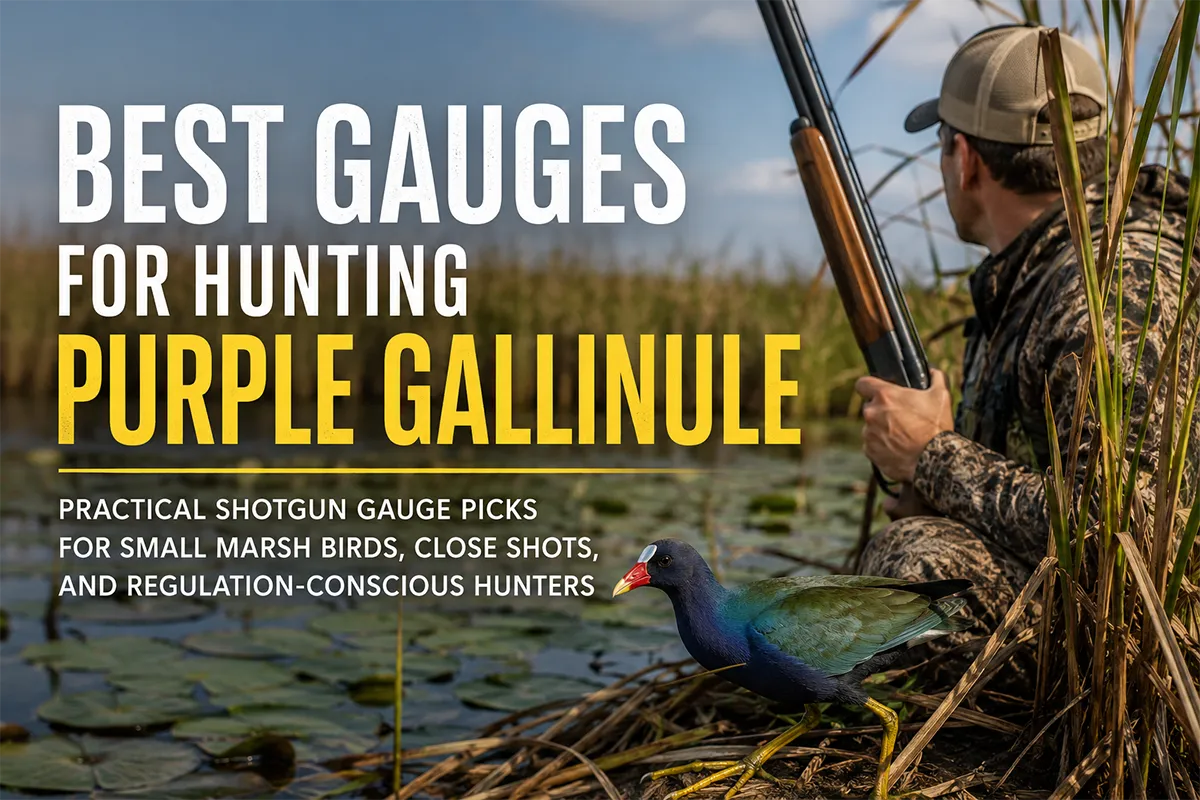
Practical shotgun gauge picks for small marsh birds, close shots, and regulation-conscious hunters.
Choosing the best purple gallinule hunting gauges is mostly about restraint. Purple gallinules are small, wetland birds, so the goal is not maximum payload; it is a clean pattern, manageable recoil, safe shooting angles, and legal ammunition for the place you hunt. In the U.S., gallinules are treated within migratory game bird frameworks, and seasons, limits, shooting hours, and allowable methods can vary by flyway and state. Some states may also restrict or prohibit take in certain years or areas, so always check current local regulations before planning a hunt.
Where/When: Purple gallinules are most often associated with the extreme southeastern U.S. and broader warm wetland regions, especially freshwater marshes, swamps, ponds, and shallow still or slow-moving water with dense cover and floating vegetation. Hunters and birders commonly look for sign and movement around lily pads, pickerelweed, cattails, marsh edges, food sources, water openings, and travel lanes between feeding and cover. Timing varies by region and regulation, but activity is often best around morning and evening movement windows, while weather, water level, migration timing, and local pressure can shift patterns. Early and late season conditions may change where birds concentrate, so scout conservatively and confirm legal dates locally.
Gauge Comparisons
| Feature | 20 gauge | 28 gauge | .410 bore | 16 gauge | 12 gauge |
|---|---|---|---|---|---|
| Recoil How much kick you can expect when firing. |
Low to moderate | Low | Very low | Moderate | Moderate to heavy |
| Effective Range The distance at which the gauge remains accurate and lethal. |
Best inside typical marsh-bird range | Best at close to moderate distances | Close-range only for careful shooters | Useful at close to moderate distances | Most forgiving, but easy to overgun |
| Bullet Weight Range The range of shot payloads typically available for the gauge. |
Common light field and non-toxic loads | Light payloads with efficient patterns | Small payloads, limited pellet count | Medium field payloads | Broadest payload selection |
| Versatility How well the gauge performs for other game species besides your primary target. |
Excellent for small game, upland birds, and some waterfowl roles | Excellent for upland birds and light marsh use | Niche small-game option | Good classic field option | Most versatile overall |
| Ammo Availability How easy it is to find ammunition for the gauge. |
Very good | Fair to good | Good, but non-toxic loads may be limited | Fair | Excellent |
20 gauge
For most hunters, 20 gauge is the most balanced purple gallinule gauge. It solves the main problem of small-marsh-bird hunting: getting enough pattern density without carrying too much recoil, weight, or pellet energy for a delicate bird. It matters when shots are quick, lanes are narrow, and birds flush or move through vegetation at close to moderate distances. Choose light, legal non-toxic shot where required, an improved-cylinder or modified choke depending on pattern testing, and a shotgun that swings easily in marsh cover.
PROS
- Great balance of pattern density and low recoil
- Common ammunition and shotgun availability
- Works well for mixed small-game and upland use
CONS
- Still requires careful shot selection on small birds
- Non-toxic specialty loads can cost more
- Too-tight chokes can damage birds at close range
Interesting Fact: The 20 gauge often patterns efficiently with lighter loads, making it a practical choice for hunters who walk muddy levees, paddle marsh edges, or hunt from small boats.
Consider this Gauge If…
Choose 20 gauge if you want one shotgun for purple gallinule hunting plus doves, quail, rabbits, squirrels, and light waterfowl work where legal. It is especially useful for newer hunters, smaller-framed shooters, and anyone who values quick handling over maximum payload. Pattern your chosen shell before hunting and verify whether non-toxic shot, plug limits, stamps, permits, or other migratory bird rules apply.
28 gauge
The 28 gauge is a refined option for experienced wingshooters who want light recoil and excellent handling. It solves fatigue and overgunning problems, especially during long walks through wet grass, mud, and marsh edges. It matters most when shots are close, hunters can identify targets clearly, and a smooth swing is more important than payload size. Choose quality shells, pattern them carefully, and avoid stretching the range just because the gun feels easy to shoot.
PROS
- Low recoil encourages clean follow-through
- Light shotguns carry well in marsh terrain
- Excellent fit for close-range small-bird work
CONS
- Ammunition selection is smaller than 20 gauge
- Non-toxic loads may be harder to find
- Less forgiving if range estimation is poor
Interesting Fact: Many hunters like the 28 gauge because it points naturally and rewards disciplined shooting rather than heavy payloads.
Consider this Gauge If…
Consider 28 gauge if you are a confident shotgunner hunting tight marsh cover, small openings, and short flushing opportunities. It is not the best pick for marginal shots or unknown ranges, but it is excellent when you can keep shots close and ethical. Pay attention to ammunition availability before the season, because suitable legal loads may not be on every local shelf.
.410 bore
The .410 bore is a specialist’s choice, not a shortcut for beginners. It solves recoil and weight concerns better than any gauge in this list, but it also creates the problem of a small shot payload and limited pattern density. It matters only when birds are close, targets are positively identified, and the shooter understands the limits of the shell. Choose the best legal load available, use a pattern board, and keep shots conservative.
PROS
- Very low recoil and easy carry weight
- Useful for disciplined close-range shooting
- Can reduce excess damage when used properly
CONS
- Small payload leaves little room for error
- Non-toxic options may be limited or expensive
- Poor choice for longer or rushed shots
Interesting Fact: The .410 is correctly called a bore, not a gauge, because its naming follows bore diameter rather than the traditional gauge system.
Consider this Gauge If…
Consider .410 bore only if you are skilled, patient, and committed to close-range ethical shot placement. It can work around small ponds, narrow cuts, and carefully scouted marsh edges, but it is unforgiving if birds are moving fast or partially screened by cover. Check local rules closely, because migratory bird regulations can include ammunition type, shotgun capacity, open season, and area-specific restrictions.
16 gauge
The 16 gauge is a classic middle-ground option. It solves the desire for more payload than 20 gauge without moving all the way to a heavier 12 gauge setup. For purple gallinule hunting, that extra capability is useful only if loads are chosen carefully and shots remain ethical. It matters for hunters who already own a well-fitting 16 gauge and want a versatile marsh and upland gun. Choose lighter field-style loads where legal and avoid heavy payloads that are unnecessary for small birds.
PROS
- Good balance of payload and handling
- Useful for hunters who prefer classic field guns
- More versatile than smaller-bore options
CONS
- Ammunition availability is less consistent
- Non-toxic hunting loads may be limited
- Can be more gun than needed for close birds
Interesting Fact: The 16 gauge has long been valued as a “sweet sixteen” field option because it can bridge light upland guns and heavier general-purpose shotguns.
Consider this Gauge If…
Choose 16 gauge if you already shoot one well and can find legal shells before the hunt. It is less convenient than 12 or 20 gauge from an ammunition standpoint, but a properly patterned 16 gauge can be effective in marsh edges and mixed-cover situations. For purple gallinules, the key is not more power; it is matching pattern, choke, and range to a small target.
12 gauge
The 12 gauge is the most available and versatile option, but it is not automatically the best purple gallinule gauge. It solves ammunition availability, non-toxic load selection, and multi-species flexibility, especially for hunters who may also pursue ducks or other legal marsh birds. It matters when you need easy access to legal shells and a shotgun already set up for wetland hunting. Choose light loads, open to moderate chokes, and avoid excessive payloads that can damage small birds at close range.
PROS
- Best ammunition availability overall
- Many non-toxic shotshell options
- Highly versatile for broader marsh hunting
CONS
- Easy to overgun small birds
- More recoil than lighter gauges
- Heavier guns can be tiring in wet terrain
Interesting Fact: The 12 gauge remains popular largely because hunters can tailor it with many shell, choke, and gun-weight combinations.
Consider this Gauge If…
Pick 12 gauge if you want the broadest shell selection or already own a reliable marsh shotgun. It is the practical choice when legal non-toxic loads are easiest to find in 12 gauge, but it requires discipline. Use safe gun handling, respect shooting lanes around partners and dogs, and pass shots that do not allow clean identification and ethical placement.
Best Overall Pick for Purple Gallinule Hunting
The best overall choice for most purple gallinule hunters is 20 gauge because it offers enough pattern, manageable recoil, good ammunition availability, and a forgiving learning curve without feeling excessive for a small marsh bird. The 28 gauge is excellent for experienced close-range shooters, while 12 gauge makes sense when non-toxic shell availability and broader wetland versatility matter most. The .410 bore and 16 gauge can work, but both require more planning around range, pattern density, and ammunition supply. Whatever shotgun you choose, pattern it before the season, use legal ammunition, handle every firearm safely, and prioritize ethical shot placement. Regulations for gallinules, migratory birds, non-toxic shot, magazine limits, licenses, stamps, seasons, and closed areas vary widely, so confirm current federal, state, and local rules before hunting.