
Best Gauges for Hunting Northern Bobwhite: Comparisons & Picks
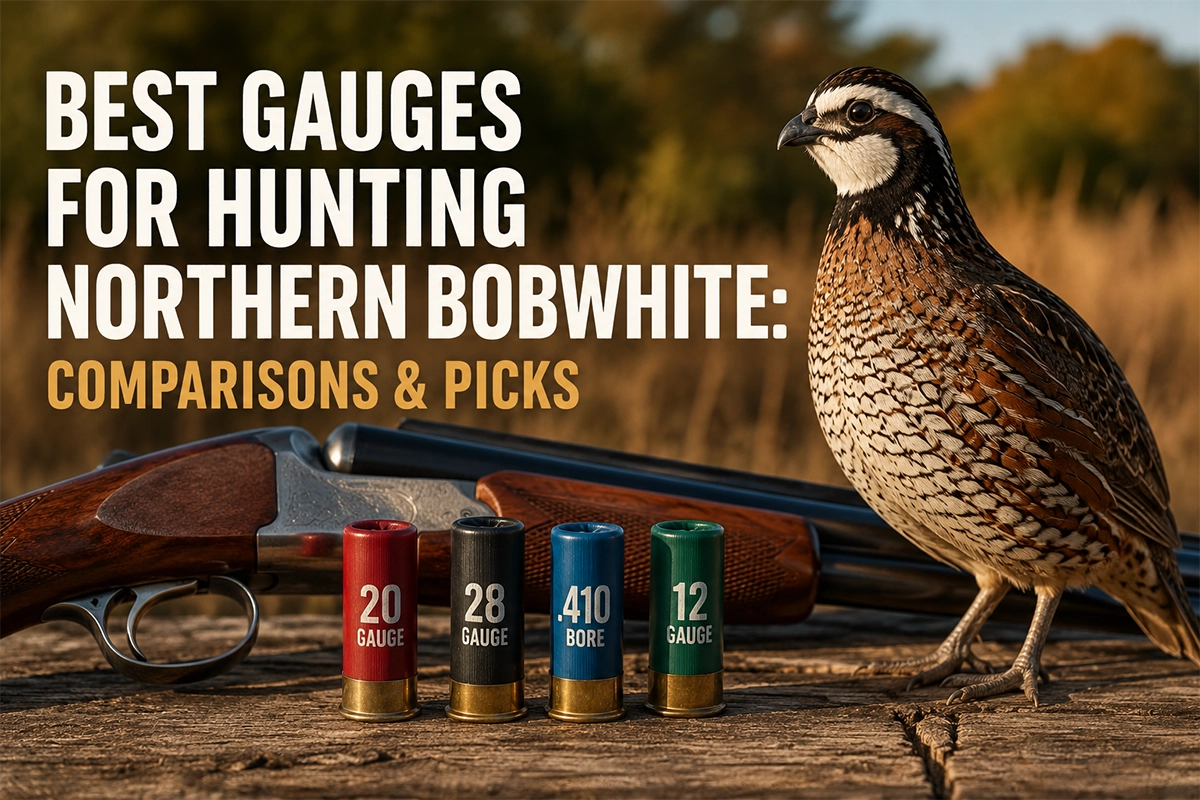
Compare shotgun choices for fast-flushing quail, from versatile 12 and 20 gauge options to light 28 gauge and .410 bore setups.
The best Northern bobwhite hunting gauges balance quick handling, manageable recoil, useful pattern density, and a shotgun you can comfortably carry through grass, brush, field edges, and open pine country. Bobwhites flush suddenly at close to moderate upland distances, so fit and pointability matter as much as shell capacity. For many hunters, 20 gauge is the easiest all-around choice; 12 gauge offers broad ammunition selection, while 28 gauge favors light carry. The .410 bore can work in skilled hands but leaves less pattern margin. Pattern the exact load and choke before hunting and keep shots inside your proven distance.
Where/When: Northern bobwhite commonly occupy open, early-successional habitat across much of the Southeast, parts of the Midwest, and southern Great Plains, including weedy field borders, brushy fencerows, native grass, open pine woods, cropland margins, and shrubby draws. Coveys often use places where food, escape cover, loafing cover, and travel corridors are close together. Seasons generally occur in autumn and winter, though dates vary by region. Early-season birds may use lighter grass and edges; later coveys can favor thicker shelter after pressure or cold weather. Feeding is often strongest in morning and toward evening, with midday birds more likely to loaf in cover. Wind, rain, heat, cold, and snow may shift where birds hold and how readily they flush. These are general tendencies, so check current seasons, bag limits, shooting hours, legal methods, and land-specific rules.
Gauge Comparisons
| Feature | 12 Gauge | 16 Gauge | 20 Gauge | 28 Gauge | .410 Bore |
|---|---|---|---|---|---|
|
Recoil How much kick you can expect when firing a typical upland load. |
Moderate; varies widely with gun weight and load | Moderate | Light to moderate | Generally light | Generally light |
|
Effective Pattern Range Practical bobwhite distance depends on load, choke, pattern density, and shooter skill. |
Often about 15–35 yards | Often about 15–35 yards | Often about 15–35 yards | Often about 15–30 yards | Usually best kept close, often about 15–25 yards |
|
Common Shot Charge Typical payloads used in light field loads. |
About 1 to 1 1/8 oz | About 1 oz | About 7/8 to 1 oz | About 3/4 to 7/8 oz | About 1/2 to 11/16 oz |
|
Versatility How well the gauge or bore can cover other small-game and upland uses. |
Excellent | Good | Excellent | Very good for upland use | Best for close-range, specialized use |
|
Ammo Availability How easy it is to find suitable field ammunition. |
Typically excellent | More limited | Typically excellent | Moderate | Moderate |
12 Gauge
A 12 gauge solves the problem of wanting maximum load flexibility. Light upland shells are common, including No. 7 1/2 or No. 8 lead where legal. For bobwhites, a lighter field load often gives all the pattern needed while reducing recoil compared with heavier hunting shells. Gun fit still matters because a heavy or poorly balanced 12 gauge can become tiring on long walks. Improved Cylinder is a sensible starting choke for close cover, but pattern your exact shell because barrels, chokes, and loads can behave differently.
PROS
- Broad ammunition and shotgun selection
- Strong pattern density with light upland loads
- Highly versatile beyond bobwhite hunting
CONS
- Can be heavier to carry all day
- Recoil rises quickly with heavier loads
- May feel bulky for smaller-framed hunters
Interesting Fact: The 12 gauge name comes from a traditional bore-sizing system based on lead-ball weight.
Consider this Gauge If…
Choose 12 gauge if you want one shotgun for bobwhites and broader hunting use, or if ammunition availability matters. Compare weight, length of pull, balance, and recoil pad fit rather than judging only by gauge.
16 Gauge
The 16 gauge is a middle-ground for hunters who want a capable upland payload in a trim-handling shotgun. A roughly 1-ounce field load can suit bobwhite when paired with an open or moderate choke and verified on paper. Its main tradeoff is ammunition choice: shells and some compatible parts may be less common than 12 or 20 gauge options. Check chamber length, choke system, and local shell availability before committing. It makes the most sense for hunters who value traditional upland handling or already own a well-fitted 16 gauge.
PROS
- Useful balance of payload and handling
- Well suited to traditional upland shotguns
- Can be lighter than some comparable 12 gauge guns
CONS
- Shell selection is often narrower
- Fewer new shotgun choices than 12 or 20 gauge
- Specialty loads can be harder to source locally
Interesting Fact: The 16 gauge has a long upland tradition because it pairs useful payloads with trim-handling shotguns.
Consider this Gauge If…
Consider 16 gauge if you shoot one well, prefer classic upland guns, and can reliably obtain shells. Confirm chamber length and choke compatibility before buying ammunition.
20 Gauge
For many hunters, 20 gauge is the most balanced bobwhite option. It provides a light, lively shotgun without giving up much pattern margin for ordinary quail shots. Typical 7/8- or 1-ounce field loads offer useful coverage at close to moderate distances when matched with the right choke. Recoil is often milder than a comparable 12 gauge, although very light guns can still kick sharply. Check length of pull and comb height because some compact 20 gauge shotguns use youth-size stocks that may not fit adults.
PROS
- Excellent balance of recoil, payload, and carry weight
- Common ammunition and shotgun availability
- Fast handling in brush and field edges
CONS
- Very light guns can still produce noticeable recoil
- Less payload flexibility than 12 gauge
- Compact stocks may not fit larger adults well
Interesting Fact: Twenty gauge shotguns are widely offered in break-actions, pumps, semiautomatics, and over-unders.
Consider this Gauge If…
Choose 20 gauge if you want mild recoil, useful pattern density, manageable firearm weight, and broad ammunition access. It is especially attractive for long walks or frequent shooting.
28 Gauge
A 28 gauge prioritizes light, responsive handling while still throwing a useful quail pattern. Common 3/4-ounce loads can work well on bobwhite at sensible distances, and some shells offer heavier payloads. The smaller shot charge means pattern quality deserves careful attention. Pattern at the ranges you expect to shoot and choose a shell that distributes pellets evenly. This gauge matters most on long walks or over pointing dogs, where a trim gun and close, controlled opportunities can be valuable.
PROS
- Light, lively handling for long upland walks
- Generally mild recoil with standard field loads
- Well matched to close and moderate bobwhite shots
CONS
- Less shot payload than 20 or 12 gauge
- Shells may be less available or cost more
- Requires disciplined range and pattern evaluation
Interesting Fact: The 28 gauge has a strong upland following because well-balanced guns can be exceptionally easy to carry and point.
Consider this Gauge If…
Consider 28 gauge if gun weight and smooth handling are priorities and you are willing to pattern carefully. Check ammunition cost and local availability before making it your only upland shotgun.
.410 Bore
The .410 bore offers a light, low-recoil setup but gives up substantial shot payload, making it less forgiving than the gauges above. It best suits experienced wingshooters who wait for close opportunities and have verified adequate pattern density. Many field loads carry about 1/2 to 11/16 ounce of shot, so choke, shell, and distance matter. It is not automatically the best beginner choice simply because recoil is low; the smaller payload gives less margin on a fast-moving bird.
PROS
- Very light shotguns are available
- Generally mild recoil
- Enjoyable challenge for skilled close-range shooters
CONS
- Small payload provides less pattern margin
- More demanding on moving birds
- Not ideal when flushes are consistently long
Interesting Fact: The .410 bore is named for its approximate bore diameter in inches, not by the gauge system.
Consider this Bore If…
Choose .410 bore if you value minimal weight and recoil, shoot moving targets well, and can keep shots inside your tested pattern. A 20 or 28 gauge generally gives newer hunters more pellet-count margin.
Choosing the Best Gauge for Northern Bobwhite
For most hunters, 20 gauge is the strongest all-around bobwhite choice, combining useful payload, mild recoil, common ammunition, and easy carrying. A light 12 gauge favors maximum versatility, while 28 gauge rewards hunters who prioritize a trim upland gun. The 16 gauge remains capable when ammunition access is acceptable, and .410 bore is best treated as a specialized close-range option. Before hunting, pattern your exact shotgun, choke, and load at realistic distances and stay inside the range where coverage is dependable. Keep the muzzle controlled around partners and dogs, positively identify the bird and a safe background before firing, and avoid low shots. Check current local rules for seasons, bag limits, shooting hours, magazine restrictions, legal methods, and any non-toxic-shot requirements. Safe handling, clean shot selection, and proven pattern performance matter more than choosing a larger shotgun.