
Best Gauges for Hunting Muscovy Duck: Comparisons & Picks
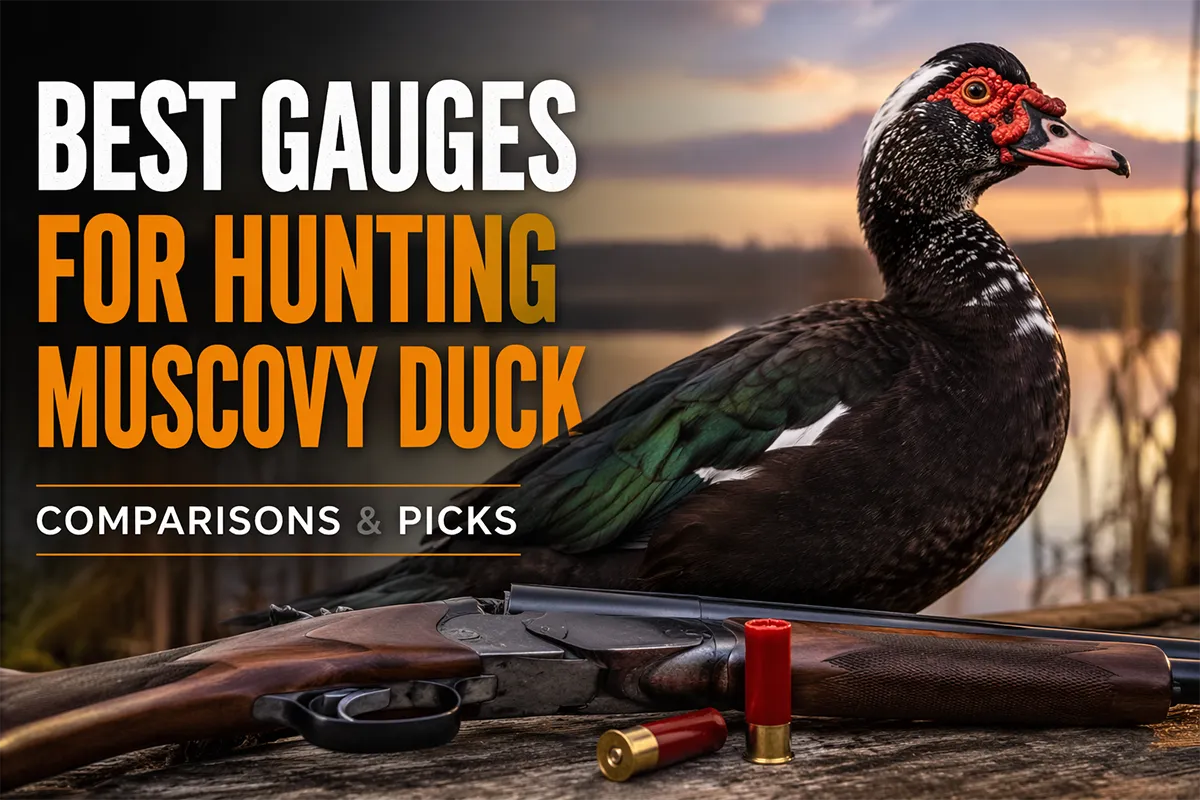
The right shotgun gauge for Muscovy ducks depends on your range, terrain, recoil tolerance, and how disciplined you are about shot selection.
When hunters search for Muscovy duck hunting gauges, the real decision is choosing the right shotgun gauge for the terrain, distance, and style of hunt. Muscovy ducks are bigger and tougher than many small puddle ducks, so a setup that patterns well, carries enough pellets, and still fits your shooting style matters more than chasing raw power alone. The best pick depends on whether you hunt farm ponds, canals, marsh edges, or larger open water; whether your shots are mostly decoying birds inside 30 yards or crossing shots that stretch farther; and whether you value light recoil, lighter guns, or maximum pattern density. In most cases, 12 gauge is the safest all-around answer, 20 gauge is the most practical balance, and 28 gauge, .410 bore, and 10 gauge fill more specialized roles.
Where/When: Muscovy ducks are commonly found in tropical and subtropical regions, and in many hunting conversations they come up around south Florida, parts of the Gulf Coast, canal systems, farm ponds, retention ponds, slow rivers, wooded wetland edges, and agricultural areas with nearby water. Hunters often locate them by watching loafing banks, roost trees, travel lanes between water and feeding areas, and places with steady food, shallow shoreline access, or quiet backwater cover. Timing varies by region and regulations, but activity is often strongest around first light and the last few hours before dark, especially when birds move between roosts and feeding areas. Early-season conditions can mean more foliage and shorter sight lines, while cooler weather, wind shifts, and changing water levels often influence where birds gather and how consistently they fly. Always match your plans to local seasons, access rules, and legal classification in your area.
Gauge Comparisons
| Feature | 12 Gauge | 20 Gauge | 28 Gauge | .410 Bore | 10 Gauge |
|---|---|---|---|---|---|
| Recoil How much kick you can expect when firing. |
Moderate to heavy | Mild to moderate | Light | Very light | Heavy |
| Effective Range The distance at which the gauge remains accurate and lethal. |
20-45 yards | 20-40 yards | 15-35 yards | 15-30 yards | 25-50 yards |
| Shot Payload Range The range of payload weights typically available for the gauge. |
1 to 1 1/2 oz payloads | 7/8 to 1 1/4 oz payloads | 3/4 to 1 oz payloads | 1/2 to 11/16 oz payloads | 1 1/4 to 1 5/8 oz payloads |
| Versatility How well the gauge performs for other game species besides your primary target. |
Excellent | Very good | Good | Limited | Niche but strong |
| Ammo Availability How easy it is to find ammunition for the gauge. |
Excellent | Excellent | Fair | Good | Limited |
12 Gauge
For most hunters, 12 gauge is the best all-around Muscovy duck option because it solves the biggest field problem: maintaining dense, forgiving patterns on a relatively large bird without boxing yourself into perfect conditions. It gives you the broadest mix of steel, bismuth, and other waterfowl loads, plus the widest choke and shotgun compatibility. That matters when you may hunt one morning over a pond at 25 yards and the next evening take longer crossing shots in wind. A 12 gauge also makes sense for budget-minded hunters because shells, guns, and spare chokes are commonly available. The tradeoff is recoil, especially in lighter guns and heavier duck loads, so it is best for hunters who want maximum flexibility and do not mind a bit more kick.
PROS
- Best overall pellet count and pattern margin for Muscovy-sized birds
- Wide selection of duck loads, choke options, and shotgun models
- Handles decoying shots and moderate pass-shooting well
CONS
- More recoil than smaller gauges
- Heavier shells and often heavier guns to carry all day
- Can be more gun than needed for close, controlled shots
Interesting Fact: The 12 gauge remains the default waterfowl gauge largely because it can be loaded for everything from light practice to heavy hunting use.
Consider this Gauge If…
Choose 12 gauge if you want the safest recommendation for mixed terrain, mixed shot distances, and uncertain conditions. It is especially strong for hunters using decoys on larger ponds, marsh edges, or open water where birds may not finish quite as close as expected. It is also the easiest gauge to shop for when you want reliable non-toxic loads, affordable practice ammo, and proven choke compatibility. Pattern your shotgun before the season, keep shots inside your verified range, and remember that regulations on non-toxic shot, magazine limits, and season structure vary by location.
20 Gauge
The 20 gauge is the practical sweet spot for many Muscovy duck hunters because it solves a different problem than 12 gauge: carrying a lighter, faster-handling gun without giving up too much real-world effectiveness. In ponds, canals, timber edges, and shorter walk-in hunts, that lighter feel matters. Modern 20 gauge duck loads can be very capable inside normal decoy distances, and the softer recoil helps many hunters shoot more cleanly and recover faster for a second shot. It is a strong choice for smaller-framed shooters, hunters who dislike punishment from heavy duck loads, or anyone who values mobility. The key is discipline: it rewards good setups and realistic ranges rather than long, low-percentage shooting.
PROS
- Balanced mix of usable power, lower recoil, and lighter shotguns
- Excellent choice for decoying birds and moderate-range work
- Common ammo availability compared with more niche gauges
CONS
- Less pellet cushion than 12 gauge on longer shots
- Heavy non-toxic loads can still recoil sharply in ultralight guns
- Requires more range discipline in wind or tough angles
Interesting Fact: Many modern 20 gauge duck guns are built on trimmer frames, which is one reason they feel so lively in tight cover and on quick mounts.
Consider this Gauge If…
Pick 20 gauge if you want a highly usable do-most-things duck setup that is easier on the shoulder and easier to carry than a 12. It fits hunters who usually shoot inside 35 to 40 yards, call birds into controlled setups, or cover ground along levees, farm ponds, and narrow marsh corridors. For Muscovy ducks, it is often enough when your pattern is good and your shot selection is ethical. Safe handling still comes first, and because Muscovy ducks may be regulated differently from native migratory waterfowl in some areas, always verify local classification, legal methods, and shot requirements before hunting.
28 Gauge
The 28 gauge is a specialist’s choice for Muscovy ducks, and what it solves is shootability. Hunters who flinch with larger gauges or simply shoot lighter, smoother guns better may find they hit more consistently with a well-patterned 28. It shines when birds are working close over decoys and when the hunter is intentional about range, choke, and load selection. It is not the best budget option and not the most forgiving one, but it can be surprisingly effective in disciplined hands. This is the gauge for hunters who want a refined, low-recoil setup and are willing to pass on marginal shots instead of forcing the gauge to do work it was not chosen for.
PROS
- Light recoil encourages clean shooting and better follow-through
- Fast-handling guns are pleasant in tight, brushy, or walk-in spots
- Works well on close decoying birds with a tested pattern
CONS
- Less room for error on longer or quartering shots
- Ammo choices are usually narrower and often pricier
- Not ideal for hunters who routinely stretch range
Interesting Fact: The 28 gauge has earned a loyal following because many shooters feel its light recoil makes them more precise than with harder-kicking guns.
Consider this Gauge If…
Go with 28 gauge if you hunt Muscovy ducks over tight decoy spreads, from concealed banks, or in smaller waters where birds commonly finish close. It also makes sense for experienced wingshooters who know exactly how their gun patterns and who are comfortable letting birds come into a high-percentage window. This is not a gauge for careless range estimation. Keep your shots ethical, avoid sky-busting, and remember that local laws may dictate non-toxic shot even where Muscovy management rules differ from standard duck seasons.
.410 Bore
.410 bore is the challenge option. Its main value for Muscovy ducks is not power bragging rights but ultra-light recoil and extremely handy guns for skilled shooters who can control distance and angles. With modern loads, .410 bore can work, but it demands tight range limits, thoughtful choke selection, and strong shot discipline. On a bird as substantial as a Muscovy duck, there is little reason to choose .410 bore unless you already shoot it very well or you specifically want a minimalist setup for close birds over decoys. It is best understood as a precision tool, not a universal answer.
PROS
- Very light recoil and easy handling
- Can be effective on close birds with premium loads and good patterns
- Appeals to experienced hunters who value precision over margin
CONS
- Small payload leaves little forgiveness on tough ducks
- Short effective range compared with larger gauges
- Demands excellent shot selection and pattern testing
Interesting Fact: Even though .410 bore is often called a beginner gun, in the field it frequently rewards experienced shooters more than casual ones.
Consider this Gauge If…
Choose .410 bore only if your Muscovy duck hunts are built around very close opportunities and you are willing to pass anything outside your proven pattern range. It may fit expert decoy hunters, land managers controlling birds at short distance where legal, or shooters who simply perform best with the smallest bore. Because wounded-waterfowl risk rises when hunters push small payloads too far, ethical shot placement and restraint matter even more here. Check local regulations carefully before hunting, especially rules about shot material, bag limits, and whether a feral Muscovy population is treated differently in your area.
10 Gauge
10 gauge is the heavyweight specialist in this lineup. What it solves is pattern density and retained pellet count when hunters face bigger water, tougher weather, or longer waterfowl-style shots where a lighter payload can start to thin out. For Muscovy ducks specifically, that usually makes it more niche than necessary, but it still has a place for experienced hunters who already own a 10 gauge and hunt exposed places where wind, bigger decoy spreads, or larger birds make a dense pattern appealing. The downsides are obvious: more gun weight, more recoil, fewer ammo options, and less everyday practicality than a 12 gauge.
PROS
- Heavy payload potential for dense patterns in difficult conditions
- Strong option for open-water specialists and experienced duck hunters
- Can help when wind and range stretch normal setups
CONS
- Heavy guns and stout recoil reduce comfort for many hunters
- Ammo and gun availability are more limited
- Often unnecessary for typical Muscovy duck scenarios
Interesting Fact: The 10 gauge keeps a loyal niche following among waterfowl hunters who prioritize large payloads and dense patterns over convenience.
Consider this Gauge If…
Consider 10 gauge if you already hunt ducks seriously, understand pattern performance, and want a purpose-built option for large open areas where shots may be tougher than average. It is not the first recommendation for most Muscovy duck hunters, but it can be a useful specialty tool where legal and appropriate. For nearly everyone else, a 12 or 20 gauge will be easier to live with. Whatever you choose, handle firearms safely, confirm your backstop and shooting lanes, and follow local laws on seasons, magazine capacity, non-toxic shot, and species identification.
Final Thoughts on the Best Muscovy Duck Gauge
If you want the simplest recommendation, start with 12 gauge. It gives you the most flexibility, the widest ammo selection, and the most forgiveness when conditions are less than perfect. If you prefer lighter recoil and a handier gun, 20 gauge is often the smartest real-world choice for hunters who keep shots reasonable. Choose 28 gauge only when you prioritize low recoil and close-range discipline, use .410 bore only as a true specialist option, and reserve 10 gauge for niche situations where heavier payloads genuinely matter. No matter which gauge you carry, success on Muscovy ducks comes down to patterning your shotgun, using legal loads, waiting for ethical shots, and checking local regulations carefully because Muscovy status and hunting rules can vary by region.