
Best Gauges for Hunting Mottled Duck: Comparisons & Picks
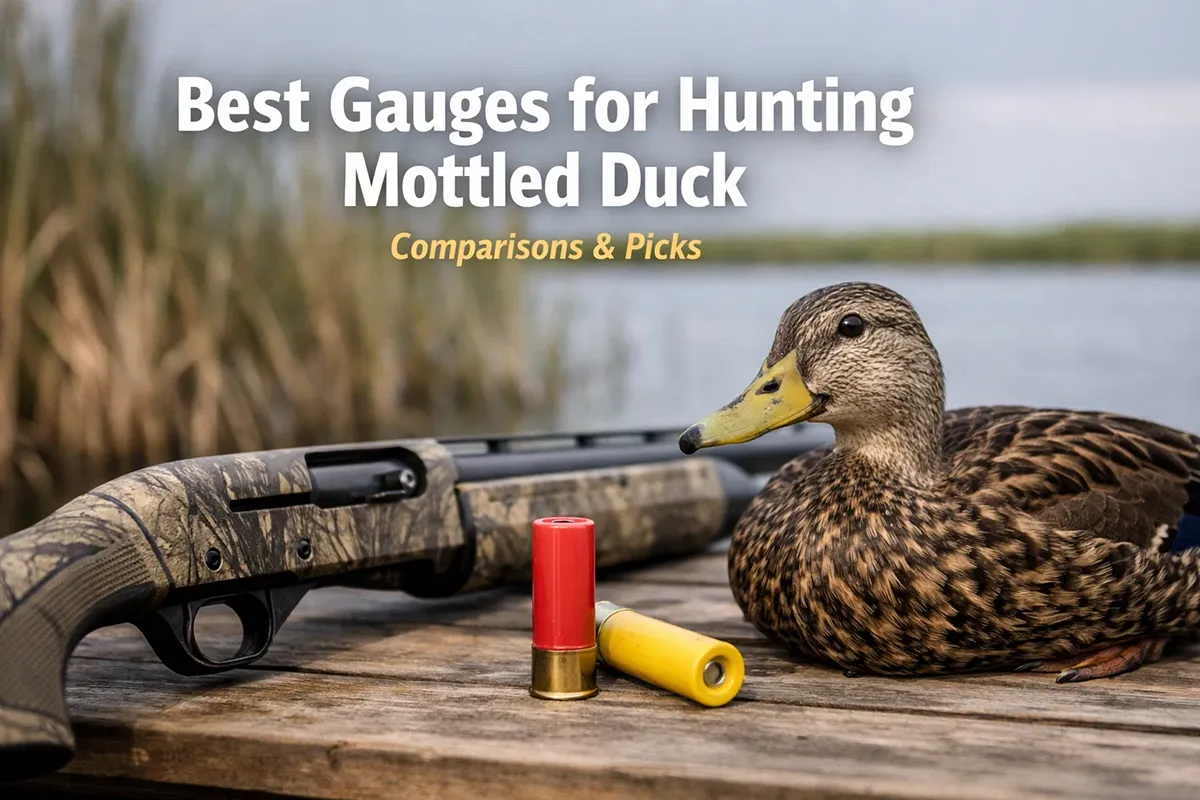
Practical gauge picks for marsh, pond, and coastal flyway hunts—built around non-toxic shot performance and real-world recoil.
Choosing the right mottled duck hunting gauge is about matching your typical shots—tight decoying over flooded grass, longer pass-shooting edges, or windy open marsh—with a non-toxic load you can shoot well. Since waterfowl hunting requires non-toxic shot in the U.S., patterning your chosen load and choke is just as important as the gauge itself. Below are the most practical gauges for mottled ducks, plus quick comparisons and field-ready pros/cons.
Gauge Comparisons
| Gauge | 12 gauge | 20 gauge | 28 gauge | .410 bore | 10 gauge |
|---|---|---|---|---|---|
| Versatility How well it adapts to different hunting scenarios. |
Best all-around waterfowl workhorse | Lighter gun with plenty of duck-killing payload | Decoying specialist—smooth, fast handling | Close-range, discipline-only option | Big marsh hammer for heavy non-toxic payloads |
| Payload / Shot Sizes Common shot charges and shot sizes used for ducks. |
1 1/8–1 1/2 oz steel; heavier in bismuth/tungsten | 7/8–1 1/4 oz steel; strong bismuth options | 5/8–3/4 oz steel; bismuth for better reach | 1/2–11/16 oz non-toxic (varies by brand) | 1 1/2–1 3/4+ oz steel; strong 3.5″ loads |
| Recoil How much kick you can expect when firing. |
Moderate to heavy (3–3.5″ loads) | Light to moderate | Very light | Minimal | Heavy |
| Effective Range Typical ethical distances with well-patterned loads. |
25–45+ yd (load/choke dependent) | 20–40 yd sweet spot | 15–30 yd (best up close) | 10–25 yd (tight limits) | 30–50+ yd potential (with dense shot) |
| Ammo Availability How easy it is to find quality non-toxic duck loads. |
Excellent | Very good | Fair (more seasonal) | Good, but non-toxic can be pricey | Good (niche, but available) |
12 Gauge for Mottled Duck Hunting
If you want one do-it-all setup for mottled ducks—over decoys at first light, then pass-shooting marsh edges later—the 12 gauge is the safest bet. It patterns a wide range of non-toxic loads well, from economical steel to denser bismuth and tungsten blends, and it gives you the payload to keep pellets in the vital zone when the wind is up.
PROS
- Huge selection of non-toxic duck loads and shot sizes
- Easy to tune with chokes for close or mid-range setups
- Best “all conditions” option when shots vary
CONS
- Heavier guns can feel sluggish in tight cover
- Magnum loads can wear you out on long hunts
- More recoil than smaller gauges if the gun is light
Interesting Fact: With steel, many duck hunters lean on #2 or #3 shot; with denser bismuth or tungsten blends, you can often size down and still keep penetration.
Consider this Gauge If…
You want maximum versatility, you hunt mixed water (marsh + open ponds), or you use one shotgun for ducks, geese, and clays.
20 Gauge for Mottled Duck Hunting
A 20 gauge is a great fit for mottled ducks when most shots are inside normal decoy ranges. You get a lighter, quicker shotgun that’s easier to swing in brushy marsh lanes, with enough payload to cleanly take ducks when you pick your shots and pattern a good steel or bismuth load.
PROS
- Light, fast-handling gun for quick crossing shots
- Plenty of effective non-toxic options for ducks
- Lower recoil helps on doubles and follow-ups
CONS
- Less payload margin for longer, windier shots
- Patterns can be pickier—pattern testing matters
- Premium non-toxic loads can be expensive
Interesting Fact: Many shooters find their 20 gauge likes a slightly tighter choke than their 12 gauge—another reason to pattern before opening day.
Consider this Gauge If…
You hunt from a pirogue, kayak, or walk-in marsh, prefer lighter guns, and keep most shots inside 40 yards.
28 Gauge for Mottled Duck Hunting
The 28 gauge shines when mottled ducks are finishing close over decoys and you value a smooth, quick swing more than raw payload. With quality non-toxic loads—and strict shot selection—it’s deadly in the first 20–30 yards, especially from tight blinds or small boats where a lighter gun is a joy to handle.
PROS
- Very light recoil and fast handling
- Excellent for tight decoying where speed matters
- Encourages disciplined, close-range shooting
CONS
- Limited payload makes range judgment critical
- Fewer non-toxic load choices in some areas
- Ammo can be tougher to find during peak season
Interesting Fact: Switching from steel to bismuth in a 28 gauge often boosts downrange pattern density without adding recoil or gun weight.
Consider this Gauge If…
You primarily hunt decoying setups, shoot well instinctively, and are happy passing on anything that isn’t truly in range.
.410 Bore for Mottled Duck Hunting
The .410 bore can take mottled ducks cleanly, but only when you hunt it like a bow: close, controlled, and patient. It’s best for calm mornings over tight decoy spreads or small potholes where you can wait for a perfect finish. Pattern it carefully, choose a non-toxic load that holds together, and keep your range limits honest.
PROS
- Minimal recoil—easy to shoot accurately
- Compact guns are handy in cramped blinds
- Great training tool for shot discipline and ethics
CONS
- Small payload leaves very little room for error
- Non-toxic .410 loads can be expensive
- Not ideal for wind or longer pass-shooting
Interesting Fact: Many .410 hunters choose denser non-toxic pellets (like tungsten blends) to hold energy and pattern density with the smaller shot charge.
Consider this Bore If…
You’re an experienced shotgunner who wants a close-range challenge, or you’re hunting tight ponds where shots are consistently inside 25 yards.
10 Gauge for Mottled Duck Hunting
A 10 gauge is a specialty tool that can make sense when you regularly face bigger water, heavier wind, and longer shots—and you’re willing to carry a larger shotgun. Its advantage is payload: heavy non-toxic charges can keep patterns dense farther out, which can matter on open marsh ponds and wide bay edges.
PROS
- Heavy non-toxic payloads can improve pattern density
- Good fit for open-water setups and strong wind
- Excels when you need the most pellets on target
CONS
- Heavy guns are tiring on walk-in marsh hunts
- Recoil is stout, especially with 3.5″ loads
- Unnecessary for typical close decoy shooting
Interesting Fact: Modern 3.5″ 12 gauge loads close much of the gap, so the 10 gauge is most useful when you truly want maximum payload and don’t mind the weight.
Consider this Gauge If…
You hunt big, open marsh or bays where birds often hang up, and you prioritize payload and patterns over carrying comfort.
Final Thoughts on Gauges for Mottled Duck Hunting
Start with the gauge you can shoot accurately under pressure, then let your ammo choice do the heavy lifting: quality steel for most decoy work, bismuth for better downrange performance, and denser tungsten blends when you truly need reach. Whatever you pick, pattern your shotgun, handle firearms safely, follow all local waterfowl regulations (seasons, shot types, and plug limits vary), and keep shots ethical—clean kills beat long guesses every time.