
Best Gauges for Hunting Green Pheasant: Comparisons & Picks
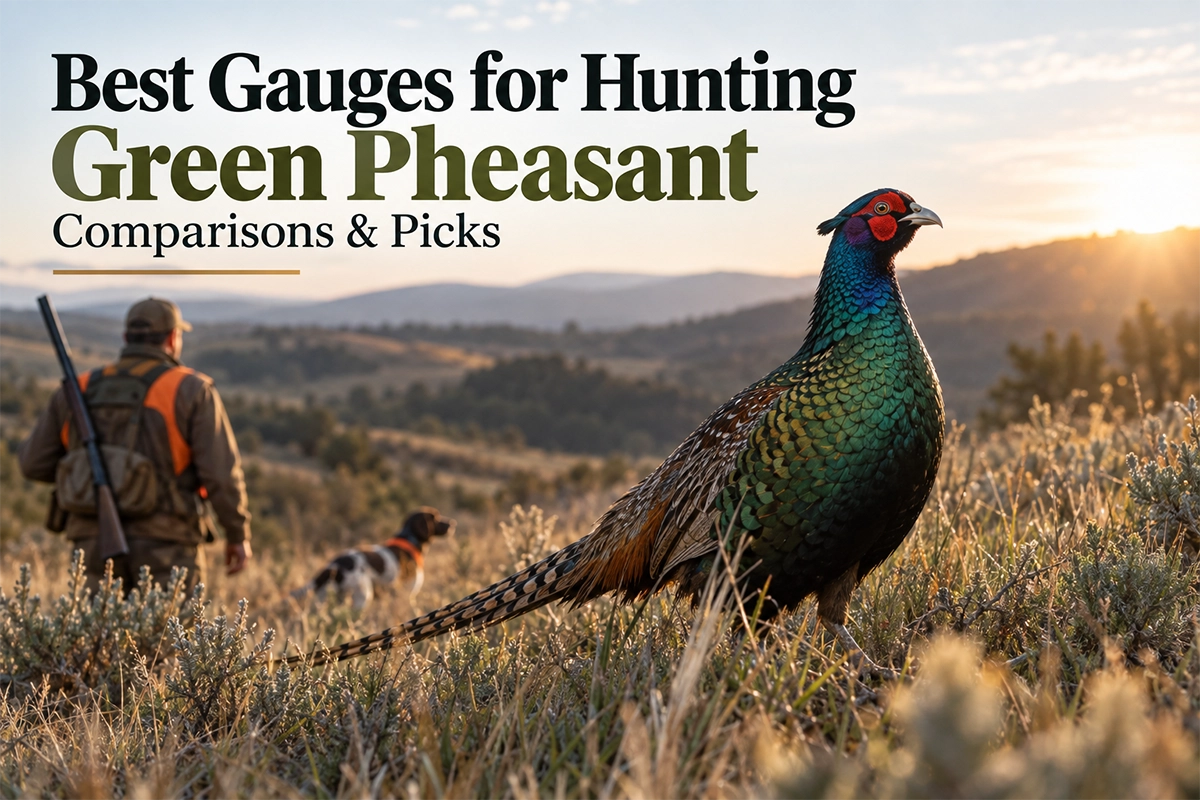
Compare practical shotgun options for recoil, handling, pattern density, realistic range, and field conditions.
Green pheasant hunting usually rewards a quick-handling shotgun, dependable field load, and disciplined range judgment more than maximum payload. These birds often use agricultural edges, grassland, brush, and open woodland, so shooting opportunities may develop quickly when a pheasant flushes from cover. The best green pheasant hunting gauges balance pattern density, recoil, firearm weight, ammunition availability, budget, and the hunter’s ability to mount and swing smoothly. For many hunters, 12 gauge and 20 gauge offer the broadest flexibility, while 28 gauge and .410 bore can work well when distances are controlled and the exact hunting load has been patterned.
Where/When: Green pheasants are native to Japan and commonly occupy bright woodland, grassland, agricultural fields, hedgerows, brushy margins, and similar habitat from lowlands into hill country. Hunters often concentrate on feeding areas, field edges, water-adjacent cover where hunting is legal, loafing cover, and travel corridors between food and thicker shelter. Morning and late-afternoon movement can make edges productive, while midday birds may hold more tightly in vegetation. Earlier in a legal season, pheasants may hold more predictably; later-season birds can become wary and flush farther ahead. Wind, rain, cold, and snow may alter feeding and shelter patterns. Japan’s general hunting period outside Hokkaido typically runs from November 15 through February 15, but species, area, method, and prefectural restrictions can differ, so always verify the current rules for the exact location.
Gauge Comparisons
| Feature | 12 Gauge | 20 Gauge | 28 Gauge | .410 Bore |
|---|---|---|---|---|
| Recoil How much felt kick you can expect with typical field loads. |
Moderate to heavy | Mild to moderate | Mild | Very mild |
| Practical Pheasant Range A conservative distance when the load produces a proven hunting pattern. |
Often 25–40 yards | Often 20–35 yards | Often 20–35 yards | Generally best inside 25–30 yards |
| Common Shot Charge Typical field-load payload range; individual ammunition varies. |
Often 1 to 1 1/4 oz | Often 7/8 to 1 oz | Often 3/4 to 1 oz | Often 1/2 to 11/16 oz |
| Versatility How broadly the gauge or bore works for other upland hunting. |
Excellent general-purpose choice | Very good upland versatility | Excellent specialized upland option | Best for controlled close-range use |
| Ammo Availability Relative ease of finding suitable hunting ammunition. |
Usually the broadest | Generally strong | More limited | Available, but hunting-load selection may be narrower |
12 Gauge
The 12 gauge is a flexible all-around choice for green pheasant hunting because it combines substantial pattern density with extensive ammunition and choke options. It helps when flush distances vary between close brush and more open agricultural edges. Hunters can choose lighter field loads for easier shooting or somewhat heavier upland loads when conditions call for additional pattern density.
PROS
- Broad selection of upland loads, shot sizes, and shotgun configurations
- Dense patterns can provide useful margin at ordinary pheasant distances
- Easy to match with different chokes as terrain and flush distance change
CONS
- Heavier field guns may become tiring during long walking hunts
- Full-power hunting loads can produce substantial recoil
- Extra payload does not compensate for poor patterning or excessive range
Interesting Fact: One of the 12 gauge’s biggest advantages is the number of gun, choke, and ammunition combinations available for tailoring a field pattern.
Consider this Gauge If…
Choose 12 gauge if you expect mixed cover, variable flush distances, or want one shotgun for several types of upland hunting. Very light 12-gauge guns carry easily but may increase felt recoil, so gun weight should match your recoil tolerance. No. 5 or No. 6 shot can be sensible starting points for pattern testing on pheasant-sized game. Test the actual load through your hunting choke at realistic distances, and confirm chamber length, choke compatibility, and legal shot material before use.
20 Gauge
The 20 gauge offers an appealing balance of lighter firearm weight, manageable recoil, and effective upland patterns. It addresses a common pheasant-hunting challenge: carrying a shotgun through fields, slopes, grass, and brush for hours while remaining ready for a sudden flush. Hunters who shoot lighter guns comfortably may find a well-fitted 20 gauge easier to mount and control consistently.
PROS
- Lighter shotguns are comfortable for extended walking hunts
- Moderate recoil can encourage frequent practice and smooth follow-through
- Common upland loads cover many realistic green pheasant situations
CONS
- Provides less payload margin than 12 gauge on difficult presentations
- Extremely light guns can still feel sharp with heavier hunting loads
- Pattern performance becomes increasingly important as distance grows
Interesting Fact: The 20 gauge is popular in upland settings partly because a lighter shotgun may be easier to carry, mount, and swing during a long day afield.
Consider this Gauge If…
Choose 20 gauge if most shots should occur at moderate distances and you value a nimble, lighter shotgun. Loads around 7/8 to 1 ounce with No. 5 or No. 6 shot are practical places to begin pattern testing. Dense cover and close dog-assisted flushes may favor a more open choke, while more open ground can call for additional pattern concentration. Pay close attention to stock fit and balance because fast pheasant shooting depends heavily on a repeatable mount.
28 Gauge
The 28 gauge is a refined upland option for hunters who prioritize light carry weight, responsive handling, and low recoil. It can solve fatigue and handling problems in situations where pheasants are expected to flush at controlled, moderate distances. Its smaller payload means the hunter should be more selective about range and should verify the pattern instead of relying on assumptions about ammunition performance.
PROS
- Light, responsive shotguns are pleasant to carry through upland terrain
- Low recoil can support smooth shooting and frequent practice
- Quality upland loads can produce effective patterns at moderate range
CONS
- Ammunition is generally less common than 12 or 20 gauge
- Lower payloads provide less forgiveness as distance increases
- Specialized loads may cost more or be harder to locate
Interesting Fact: The 28 gauge has a long upland following because it can pair low recoil with lively handling rather than depending on a particularly large shot charge.
Consider this Gauge If…
Choose 28 gauge if your hunting style emphasizes moderate ranges, a light shotgun, and deliberate shot selection. Payloads around 3/4 to 1 ounce can provide useful pheasant patterns depending on ammunition and choke. No. 6 shot is a common starting point for pattern testing. Because ammunition choices may be narrower, check availability and cost before committing to a shotgun. Verify that the gun and choke are compatible with the shot material required in your hunting area.
.410 Bore
The .410 bore is the most specialized option in this comparison. It offers very light recoil and lightweight firearms, but its smaller shot payload creates a narrower margin for error. It can suit experienced hunters taking close, controlled shots, but it demands more discipline with range, angles, pattern testing, and target presentation than the larger gauges.
PROS
- Very low recoil makes extended practice comfortable
- Light shotguns are easy to carry through thick upland cover
- Can work on close pheasants with a proven pattern and disciplined shooting
CONS
- Small payload provides fewer pellets and less pattern forgiveness
- Long or difficult quartering shots should be passed readily
- Hunting-load selection may be narrower than for common gauges
Interesting Fact: .410 is a bore designation, not a gauge, which is why it should not be described as “.410 gauge.”
Consider .410 Bore If…
Choose .410 bore if you already understand its pattern limitations and expect close opportunities. Pattern the exact shell and choke combination at roughly 20, 25, and 30 yards before establishing a personal maximum distance. Different pellet materials can affect pellet count and downrange performance, but cost, compatibility, and local shot restrictions matter. Pass birds already moving beyond the effective pattern or presenting poor angles. For most hunters, .410 bore is better treated as a specialized close-range choice than a general-purpose green pheasant setup.
Choosing Your Green Pheasant Shotgun Setup
For many green pheasant hunters, 12 gauge provides the widest flexibility, while 20 gauge combines useful pattern capability with comfortable field weight and recoil. The 28 gauge is attractive when opportunities are moderate and predictable, while .410 bore requires the most restraint. Regardless of the shotgun, pattern it with the exact hunting load and choke, and establish an ethical maximum range from actual pellet distribution rather than advertising claims. Keep the muzzle pointed safely, maintain positive target identification, know where partners and dogs are, and avoid low shots toward roads, buildings, vehicles, people, or animals. In Japan, hunters generally need the appropriate hunting license and registration in the prefecture where they hunt, and regulations can control hunting areas, seasons, methods, bag limits, shotgun magazine configuration, and the use of lead or non-toxic shot. Always check current national and prefectural requirements before selecting ammunition or hunting.