
Best Gauges for Hunting Greater White-fronted Goose: Comparisons & Picks
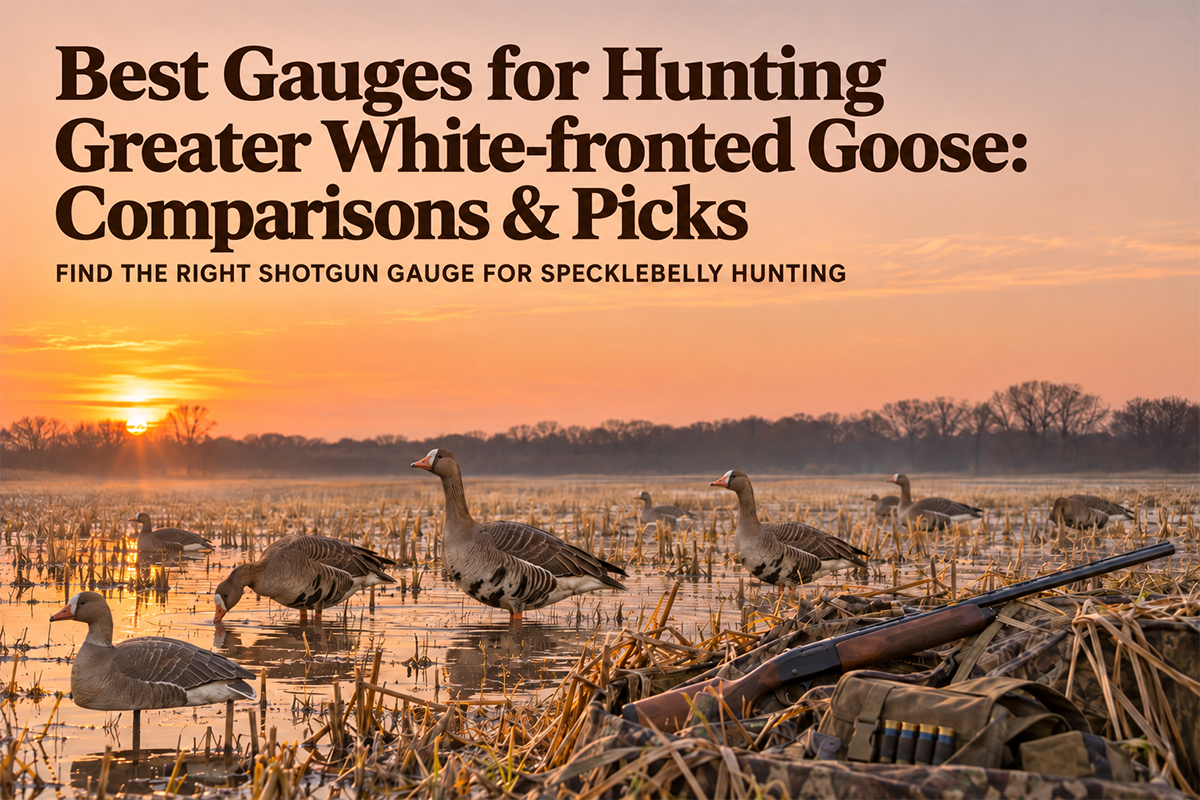
Find the Right Shotgun Gauge for Specklebelly Hunting
Choosing among greater white-fronted goose hunting gauges means balancing pattern density, recoil, shotgun weight, ammunition selection, and realistic shooting distance. Also called specklebellies, these medium-sized geese are popular targets for North American waterfowl hunters. The dependable 12 gauge leads most recommendations, but the 20, 16, 28, and 10 gauges each offer advantages. Whether you’re hunting flooded rice fields, agricultural land, or marsh edges, the best choice is a shotgun you handle confidently with properly patterned, federally approved nontoxic ammunition.
Where/When: Greater white-fronted geese migrate from northern breeding areas through the Canadian Prairies into wintering regions that include Arkansas, Louisiana, Texas, California, and Mexico. Hunters typically encounter them in harvested rice fields, grain stubble, flooded agricultural ground, marshes, and wetland feeding areas. Listen for their distinctive high-pitched calls and scout flight routes between nighttime roosts and daytime feeding locations. Morning flights often provide opportunities, while afternoon feeding movements may improve as weather changes. Early migrants can be responsive to decoys, whereas pressured late-season birds may approach more cautiously. Cold fronts, wind, and available food often influence movement. Regional seasons, shooting hours, bag limits, and access restrictions vary. Always consult current wildlife regulations before hunting.
Greater White-fronted Goose Hunting Gauges Compared
| Feature | 12 Gauge | 20 Gauge | 16 Gauge | 28 Gauge | 10 Gauge |
|---|---|---|---|---|---|
| RecoilVaries with firearm weight and load. | Moderate to heavy | Light to moderate | Moderate | Usually light | Substantial, tempered by gun weight |
| Practical Shooting DistanceApproximate working windows, requiring pattern verification. | 20–40 yards | 20–35 yards | 20–35 yards | 15–30 yards | 25–40 yards |
| Suggested Nontoxic LoadsExamples only; verify individual load performance. | Steel BB, No. 1, No. 2 | Steel No. 1–2; bismuth | Bismuth No. 2–4; steel | Bismuth or approved tungsten loads | Steel BB or No. 1 |
| VersatilitySuitability for other hunting applications. | Excellent | Excellent | Very good | Good for close-range hunting | Specialized |
| Ammunition AvailabilityRelative market selection, subject to change. | Excellent | Very good | Limited | Moderate | Limited |
These distances are planning guidelines, not automatic effective-range ratings. Pattern density, pellet material, choke selection, and individual shooting skill determine responsible limits. Before hunting, test your intended ammunition against large paper targets at realistic distances. Confirm your shotgun’s chamber length and choke compatibility, particularly when using steel or dense tungsten-based loads.
1. 12 Gauge — Best Overall for Greater White-fronted Geese
The 12 gauge offers the strongest combination of ammunition selection, useful payload capacity, and versatility. Common 3-inch steel loads provide practical options for decoying specklebellies, while appropriate bismuth or approved tungsten loads offer alternatives. It performs well in flooded fields, pit blinds, and agricultural setups. Semi-automatic shotguns can also help manage perceived recoil during long hunting days.
PROS
- Excellent selection of compatible nontoxic shotshells
- Versatile for ducks and other geese
- Numerous shotgun models across different budgets
CONS
- Heavy loads can produce noticeable recoil
- Some models are bulky for smaller hunters
- Premium ammunition increases operating costs
Interesting Fact: Modern 12 gauge waterfowl shotguns commonly accept 3-inch shells, while some models also accommodate 3½-inch ammunition. Chamber markings determine compatibility.
Consider This Gauge If…
You want one shotgun for multiple waterfowl species. Start with properly matched 3-inch steel loads and compare patterns from manufacturer-approved chokes. A reliable 12 gauge often provides better overall value than buying specialized equipment. Choose a stock that fits your shoulder and face consistently rather than selecting a shotgun solely for maximum payload.
2. 20 Gauge — Best Lightweight, Low-Recoil Option
The 20 gauge is an attractive choice for hunters prioritizing manageable firearm weight and comfortable shooting. It works particularly well when specklebellies commit to decoys and present close, clear opportunities. Appropriate 3-inch nontoxic loads can deliver useful patterns, although payload capacity is generally lower than comparable 12 gauge offerings. Shot selection and pattern testing are especially important.
PROS
- Lightweight shotguns are easier to carry
- Generally comfortable with moderate hunting loads
- Useful for ducks and upland birds
CONS
- Smaller payloads limit patterning flexibility
- Less forgiving at longer distances
- Premium loads may cost more
Interesting Fact: The lighter weight of some 20 gauge shotguns can partially offset their recoil advantage compared with heavier 12 gauge models.
Consider This Gauge If…
You hunt over convincing decoy spreads, walk considerable distances, or prefer a more compact firearm. Look for appropriately sized steel pellets or approved denser nontoxic alternatives. Confirm whether your shotgun accepts 3-inch shells; many older models do not. Favor patient, close-range shooting over attempting to compensate for limited payload capacity with excessive distance.
3. 16 Gauge — Best Traditional All-Around Alternative
The 16 gauge occupies an appealing middle ground between 12 and 20 gauge shotguns. It combines comfortable handling with useful shotshell capacity, especially in classic upland-style firearms. For specklebelly hunting, bismuth loads can be particularly appealing in compatible older shotguns, while modern steel loads provide another option where appropriate. The biggest drawback is ammunition availability.
PROS
- Good balance of weight and payload
- Enjoyable handling in traditional firearms
- Suitable for varied bird hunting
CONS
- Fewer nontoxic ammunition choices
- Specialty loads can be expensive
- Older shotguns require careful compatibility checks
Interesting Fact: Many traditional 16 gauge shotguns have 2¾-inch chambers, making shell-length verification particularly important when purchasing ammunition.
Consider This Gauge If…
You already own a well-fitting 16 gauge and want to use it for controlled-distance goose hunting. Select compatible nontoxic shells and verify pattern performance before the season. In older firearms, consult a qualified gunsmith about barrel and choke suitability. Because local ammunition inventories can be inconsistent, buying suitable shells before a trip may prevent frustration.
4. 28 Gauge — Best for Close-Range Decoy Hunting
The 28 gauge appeals to experienced hunters who enjoy lightweight shotguns and carefully controlled shooting opportunities. Modern approved high-density nontoxic ammunition makes this smaller gauge more capable than its size suggests. However, limited payload capacity demands careful ammunition selection, consistently accurate shooting, and well-patterned equipment. It is best treated as a specialized close-range choice rather than an all-purpose goose gun.
PROS
- Lightweight and easy to maneuver
- Generally pleasant recoil characteristics
- Excellent handling in compact blinds
CONS
- Limited payload and pattern margin
- Premium nontoxic ammunition can be costly
- Requires disciplined distance selection
Interesting Fact: Unlike the .410 bore, the 28 gauge uses the traditional shotgun gauge designation based on bore diameter.
Consider This Gauge If…
You consistently attract specklebellies within close decoy range and prioritize lightweight handling. Consider compatible bismuth or approved tungsten-based loads, testing several combinations before choosing one. Some 28 gauge shotguns accept 3-inch shells, but many are chambered only for 2¾-inch ammunition. Avoid using this gauge as an excuse to attempt marginal shots.
5. 10 Gauge — Best Specialized Heavy-Payload Choice
The 10 gauge offers substantial shotshell capacity in purpose-built waterfowl shotguns. Its heavy construction and large ammunition payloads suit hunters who prefer specialized goose equipment, particularly when hunting exposed agricultural fields. However, greater white-fronted geese rarely require this level of capacity. A properly patterned 12 gauge usually provides comparable practical opportunities with less inconvenience.
PROS
- Generous capacity for larger shot payloads
- Heavy firearms can moderate perceived recoil
- Purpose-built for demanding goose hunting
CONS
- Heavy and cumbersome to transport
- Limited firearm and ammunition selection
- Unnecessary capacity for many specklebelly hunts
Interesting Fact: The 10 gauge is the largest shotgun gauge generally permitted under standard federal migratory game bird hunting rules in the United States.
Consider This Gauge If…
You already own a suitable 10 gauge, primarily hunt from stationary blinds, and appreciate its substantial payload options. Select approved nontoxic loads, verify your choke and chamber specifications, and establish a responsible range through pattern testing. Remember that greater payload capacity does not authorize longer or riskier shots.
Which Shotgun Gauge Should You Choose for Specklebelly Hunting?
For most hunters, the 12 gauge is the best overall choice because it combines ammunition availability, adaptable payloads, and broad firearm selection. The 20 gauge suits hunters seeking lighter equipment and manageable recoil. The 16 gauge appeals to traditionalists, while the 28 gauge rewards disciplined close-range hunting. The 10 gauge remains an option for enthusiasts who value specialized heavy-payload shotguns.
Regardless of gauge, choose federally approved nontoxic shot, such as appropriate steel, bismuth, or approved tungsten-based ammunition. Lead shot is prohibited for waterfowl hunting in the United States. Pattern your shotgun, positively identify individual birds, avoid shooting indiscriminately into flocks, and limit attempts to distances at which you can consistently produce effective patterns. Maintain safe muzzle direction, keep your finger off the trigger until ready to fire, and retrieve downed birds promptly.
Check current federal, state, provincial, or local regulations covering licenses, migratory bird stamps, HIP registration where applicable, seasons, bag limits, shooting hours, legal methods, and access permits. Standard U.S. migratory bird rules generally restrict shotguns to three-shell capacity. Restrictions also differ by location: Arkansas has established 2026–27 white-fronted goose seasons and limits, while California’s Sacramento Valley Special Management Area has additional restrictions intended to protect tule geese. Review the U.S. Fish and Wildlife Service regulations and approved nontoxic shot guidance before heading afield. Responsible selection, reliable patterning, and accurate shooting matter far more than simply choosing the largest gauge.