
Best Gauges for Hunting Gould’s Wild Turkey: Comparisons & Picks
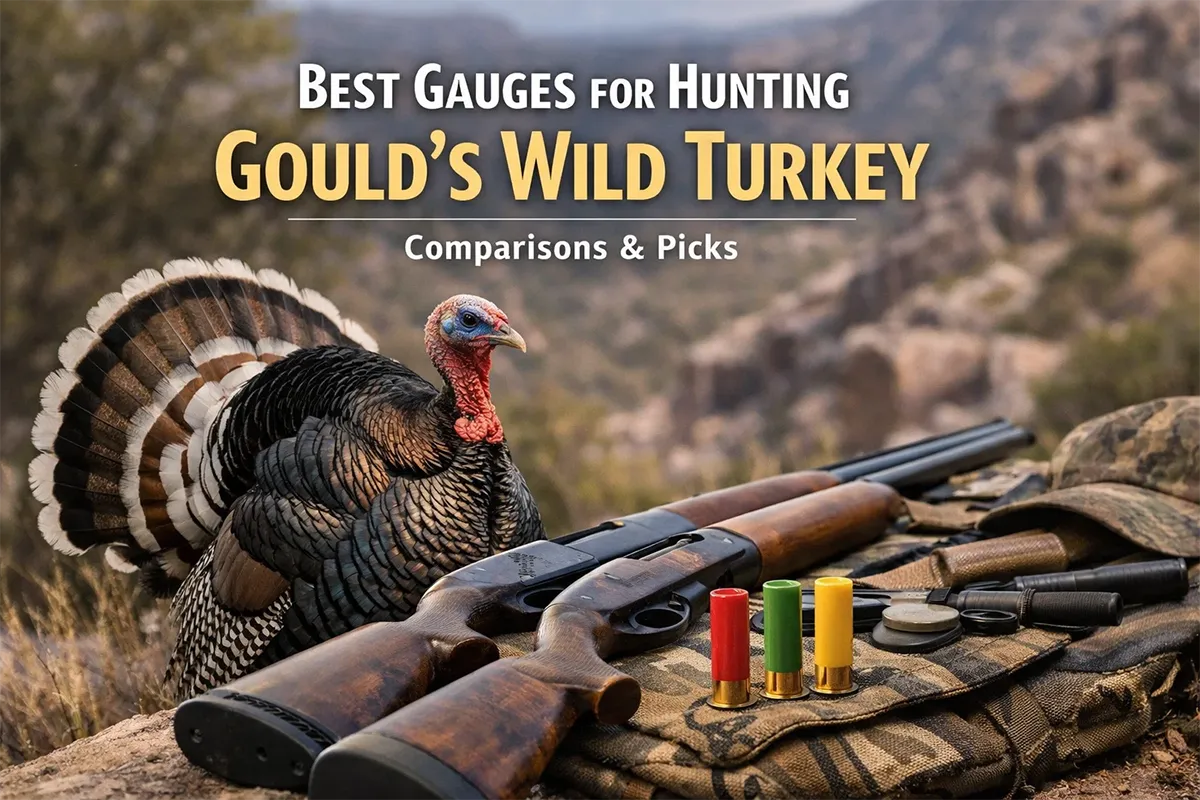
For Gould’s wild turkey, the best choice is usually a shotgun gauge or bore that patterns well in your gun, fits your recoil tolerance, and matches the terrain and shot distances you actually hunt.
When hunters look for Gould’s wild turkey hunting gauges, they usually are not asking for theory—they want a practical answer they can carry into the field. Gould’s birds are often hunted in big country where elevation, broken ridges, open pine-oak slopes, and long walks can influence what shotgun feels best after several hours on the move. At the same time, turkeys are small-vital-zone game, so pellet density, pattern consistency, and honest range limits matter far more than hype. For most hunters, that makes 12 gauge the most versatile starting point, while 20 gauge is an excellent lighter-recoiling alternative. The 28 gauge and .410 bore can work in disciplined hands at tighter distances, and 10 gauge still has niche value for hunters who want maximum payload and do not mind a heavier gun. Safe firearm handling, ethical head-and-neck shot placement, and checking local regulations on legal equipment, shot materials, seasons, and bag limits should always guide your final choice.
Where/When: Gould’s wild turkey is most often associated with northern and western Mexico, especially mountain ranges with pine-oak forest, canyon systems, foothill cover, and nearby openings where birds can feed and travel. In many areas, hunters commonly locate sign around roosting areas, water, dusting sites, feeding edges, saddles, benches, and travel corridors that connect timbered slopes with more open ground. Seasonal timing varies by region and regulations, but turkey activity is often strongest around fly-down, midmorning movement, and late-day travel toward roost sites. Early periods can involve flocked-up behavior, while breeding activity often changes gobbler responsiveness as the season progresses. Weather, hunting pressure, and terrain can all shift movement patterns, so hunters should treat timing as local rather than universal and always confirm current rules where they plan to hunt.
Gauge Comparisons
| Feature | 12 gauge | 20 gauge | 28 gauge | .410 bore | 10 gauge |
|---|---|---|---|---|---|
| Recoil How much kick you can expect from typical turkey loads. |
Moderate to heavy | Moderate | Light | Very light | Heavy |
| Practical Turkey Range The distance where a well-patterned setup often remains effective and ethical. |
30–50 yards | 25–45 yards | 20–35 yards | 15–30 yards | 35–55 yards |
| Typical Payload Range The shot charge weights commonly seen in turkey loads. |
1 3/4 to 2 1/4 oz | 1 1/4 to 1 5/8 oz | 3/4 to 1 1/4 oz | 1/2 to 13/16 oz | 2 to 2 1/4 oz |
| Carry Comfort How manageable the shotgun tends to feel during long hunts in steep terrain. |
Good | Very good | Excellent | Excellent | Fair |
| Ammo Availability How easy it is to find suitable turkey shells. |
Excellent | Very good | Moderate | Moderate | Limited |
12 gauge
The 12 gauge is the best all-around choice for most Gould’s wild turkey hunters because it solves the main field problem better than anything else: delivering dense, forgiving patterns with widely available turkey loads. That matters when a gobbler hangs up on an open slope, when wind or angle makes the shot less than perfect, or when you want flexibility across several shell types and choke options. In practical terms, the 12 gauge gives you the broadest room to fine-tune your setup. Hunters can choose lighter loads for comfort or heavier magnum options when they want more pellet count, and there are usually plenty of gun and choke combinations to test. The main downside is recoil and overall weight, especially in a gun carried across ridges or canyons all morning. A smart 12 gauge choice is a shotgun you can carry comfortably, shoulder smoothly from a seated position, and pattern confidently with your chosen turkey shell. Pattern testing matters because even the best gauge is only as ethical as the exact load, choke, and point of impact in your gun.
PROS
- Best overall mix of pattern density, range, and shell selection
- Usually the easiest gauge to tune with turkey chokes and specialty loads
- Gives most hunters the widest ethical margin when birds stop farther out
CONS
- Recoil can be sharp, especially with heavy turkey shells
- Many 12 gauge guns are heavier than smaller-gauge alternatives
- Some hunters become too confident and push shots beyond proven pattern range
Interesting Fact: The 12 gauge remains the default turkey recommendation not because it is fashionable, but because it offers the broadest patterning flexibility across the most real-world hunting situations.
Consider this Gauge If…
Choose 12 gauge if you want the safest starting point, expect mixed shot distances, or simply want the easiest path to finding shells, chokes, and field-proven setups. It is often the best fit for hunters who want maximum versatility without overcomplicating the decision.
20 gauge
The 20 gauge is one of the best options for hunters who want real turkey capability in a lighter, easier-carrying package. For Gould’s wild turkey, that matters because hunts often involve hiking, climbing, repositioning, and setting up in rugged country rather than sitting a few steps from a vehicle. A good 20 gauge solves the fatigue and recoil problem without giving up too much in practical performance, especially when paired with modern turkey loads and a choke that patterns well. It is not as forgiving as a strong 12 gauge pattern once shots stretch, but inside sensible distances it is a serious, practical hunting tool. Hunters should pay attention to gun fit, sighting system, and pattern testing, because a lighter gun that shoots exactly where you aim is often better than a heavier setup you do not enjoy carrying or practicing with. For many hunters, especially smaller-framed shooters or those who dislike heavy recoil, 20 gauge is the sweet spot between field comfort and turkey-killing effectiveness.
PROS
- Lighter carry weight for mountain and canyon hunting
- Moderate recoil helps many hunters shoot more accurately
- Highly effective at normal turkey distances with the right shell and choke
CONS
- Less forgiving than 12 gauge as distance increases
- Some premium turkey shells can be less common than 12 gauge loads
- Still requires disciplined range limits and careful pattern verification
Interesting Fact: The 20 gauge has earned a strong turkey reputation because modern shells narrowed the performance gap while preserving much of the advantage in carry comfort.
Consider this Gauge If…
Pick 20 gauge if you cover a lot of country, want less recoil, or prefer a shotgun that feels livelier in the hands without becoming a specialty-only option. For many active turkey hunters, it is the smartest balance on the list.
28 gauge
The 28 gauge is a lighter, more specialized turkey option that appeals to hunters who prioritize handling and low recoil over maximum pellet count. For Gould’s wild turkey, it can be a good fit in steep country where every pound matters and the hunter is confident about calling birds into close, controlled distances. What the 28 gauge solves is not raw power, but efficiency: a trim shotgun that is pleasant to carry, quick to mount, and easy to shoot well. The tradeoff is reduced margin for error. With fewer pellets than the larger gauges, pattern density becomes more sensitive to shell choice, choke performance, and distance discipline. That means the 28 gauge should be chosen by hunters who actually enjoy pattern testing and who are willing to pass shots that do not meet their proven limit. It can be very effective in the right hands, but it is still a precision-minded turkey gauge rather than the broadest recommendation.
PROS
- Light recoil and easy handling in rough terrain
- Comfortable to carry during long, mobile hunts
- Can be very effective for close-range turkey setups
CONS
- Thinner pattern margin than 12 or 20 gauge
- Fewer shell and choke choices in many markets
- Requires strict attention to range and pattern quality
Interesting Fact: The 28 gauge has become more relevant to turkey hunters because modern shell technology made this small gauge more capable than many hunters once assumed.
Consider this Gauge If…
Use 28 gauge if you are an experienced turkey hunter, want a very light field gun, and are comfortable limiting shots to ranges your setup has clearly proven on paper. It rewards discipline more than optimism.
.410 bore
The .410 bore is the most specialized option here, and it should be treated that way. It solves recoil concerns extremely well and allows very compact, easy-carrying shotguns, but it also gives hunters the smallest cushion for pattern density and shot placement. For Gould’s wild turkey, that means the .410 bore only makes sense when the hunter is committed to close-range opportunities, careful pattern work, and a willingness to pass birds that do not offer a clean shot inside a proven distance. It is not a general-purpose recommendation for most turkey hunters, especially in terrain where birds may hang up beyond ideal range. The .410 bore can work, and in the right hands it can work well, but it demands honesty. Hunters choosing it should pay particular attention to shell availability, choke compatibility, and precise aiming systems, because small-bores often benefit from exact shot placement rather than rough bead alignment. This is a disciplined hunter’s option, not the easiest answer.
PROS
- Very light recoil for recoil-sensitive shooters
- Usually found in compact, easy-carrying shotguns
- Can be effective at close range with a proven turkey setup
CONS
- Shortest practical range on the list for most hunters
- Least forgiving option when pattern or aim is imperfect
- Not ideal for hunters who struggle with distance judgment or field steadiness
Interesting Fact: Much of the debate around .410 bore for turkeys is really a debate about discipline, because the bore can work, but it offers far less room for error than larger gauges.
Consider this Gauge If…
Consider .410 bore only if recoil is your main concern or you deliberately want a close-range turkey setup and are prepared to hold yourself to narrow ethical limits. For most hunters, it is not the best first choice for Gould’s birds.
10 gauge
The 10 gauge remains a niche but capable turkey choice for hunters who want maximum payload and dense patterns, and who are willing to accept extra bulk to get there. In a pure performance sense, it solves the pellet-count question very well, which can be appealing when you want every possible advantage in a dedicated turkey gun. For Gould’s wild turkey, however, the question is not just what works on the range, but what makes sense on the mountain. A heavy 10 gauge may be less enjoyable to carry in steep terrain, slower to maneuver in hurried setups, and more punishing to shoot from awkward positions. Ammo selection is also typically narrower than 12 gauge. That does not make it a bad option—it just makes it a purpose-driven one. Hunters who already own a 10 gauge, shoot it confidently, and hunt from more fixed setups may still appreciate what it offers. For the average hunter, though, its advantages are often offset by practical drawbacks in the field.
PROS
- High payload potential and strong pattern density
- Works well in a dedicated turkey hunting role
- Appeals to hunters who want maximum pellet volume
CONS
- Heavy guns can be a burden in steep, mobile hunts
- Recoil is substantial for many shooters
- Shell selection is often narrower than 12 gauge
Interesting Fact: The 10 gauge still commands respect among turkey hunters, but many modern hunters reach similar practical results with lighter 12 gauge setups that are easier to carry and feed.
Consider this Gauge If…
Choose 10 gauge if you already own one, handle recoil well, and prefer a dedicated turkey rig over an all-day carry gun. It makes the most sense for hunters who know exactly why they want it and who can live with the extra weight.
Final Pick for Gould’s Wild Turkey Hunters
For most hunters, the best gauge for Gould’s wild turkey is still 12 gauge because it offers the widest shell selection, the most forgiving patterns, and the easiest path to building an ethical turkey setup. The strongest alternative is 20 gauge, especially for hunters who value lighter recoil and better carry comfort in steep country. The 28 gauge is a good specialist’s tool for close, disciplined work, while .410 bore belongs mainly in the hands of hunters who understand its narrow margin for error. The 10 gauge still brings serious payload potential, but many hunters will find its extra recoil and weight harder to justify. Whatever gauge or bore you choose, the real key is patterning your shotgun, confirming point of impact, matching shell and choke correctly, and limiting shots to distances your setup has actually proven. Always handle firearms safely, aim for ethical head-and-neck shots, and check local laws because regulations on seasons, legal shot, magazine limits, and hunting methods can vary by area.