
Best Gauges for Hunting Erckel’s Francolin: Comparisons & Picks
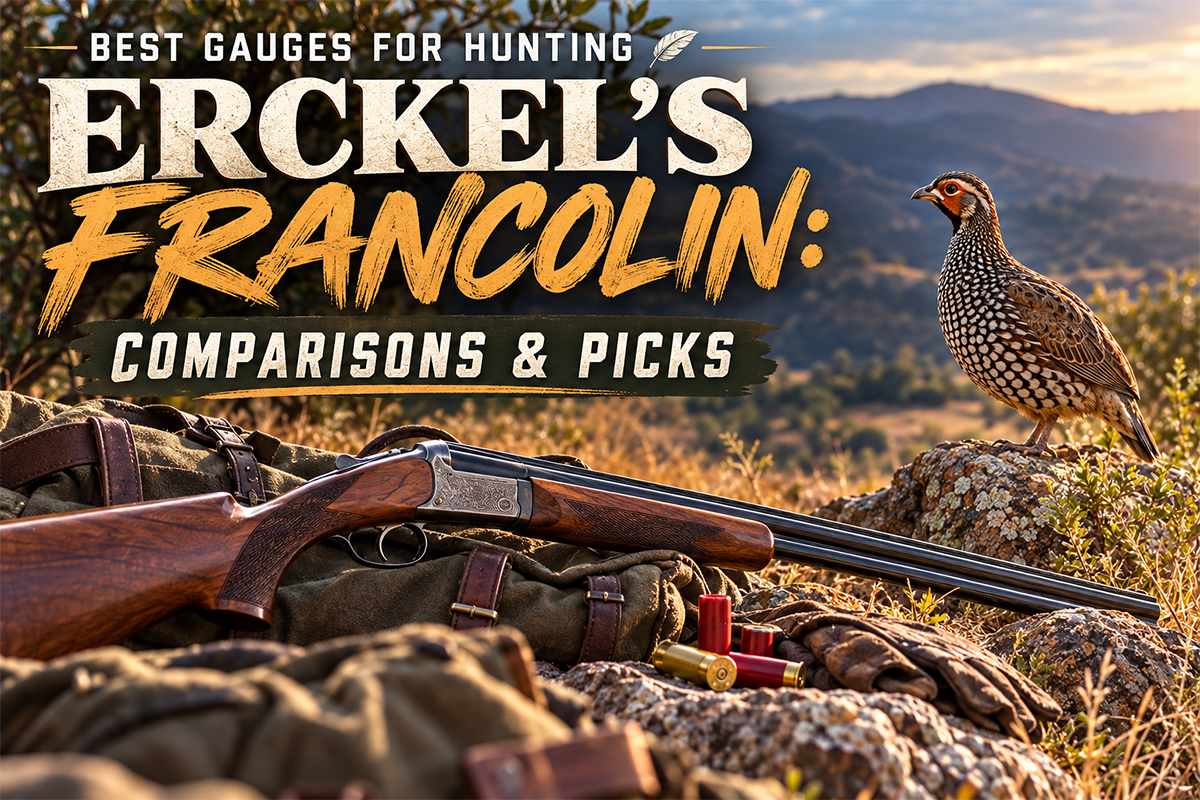
Compare recoil, carry weight, patterns, and ammunition for Hawaiʻi upland bird hunting.
The most useful Erckel’s francolin hunting gauges are those that produce an even upland pattern without making a steep-country hunt unnecessarily tiring. Hawaiʻi classifies Erckel’s francolin as an introduced game bird and currently lists legal hunting opportunities on Hawaiʻi Island, Lānaʻi, Oʻahu, and Kauaʻi. A 20 gauge is a strong all-around choice, while 12 gauge, 28 gauge, and .410 bore can also fit particular hunters and conditions.
Where/When: Erckel’s francolin often occupies dry upland grasslands, open slopes, brush edges, and broken volcanic country, and birds may run through cover before flushing; their loud calls can be especially noticeable in the morning. Game-bird hunting commonly falls in late fall and winter in some Hawaiʻi areas, but exact seasons, hunting days, units, bag limits, access rules, and closures vary. Early outings may find birds near grass-and-cover transitions, while later hunting pressure can move them toward thicker or steeper escape cover. Wind can complicate flushes and shot angles. Always confirm current DLNR rules for the island and property you plan to hunt.
Erckel’s Francolin Hunting Gauge & Bore Comparisons
| Feature | 20 Gauge | 12 Gauge | 28 Gauge | .410 Bore |
|---|---|---|---|---|
| Recoil How much kick you can expect when firing. | Low to moderate | Moderate; load dependent | Low | Very low |
| Practical Patterned Range The distance where your tested load and choke retain reliable coverage. | Often 20–40 yards | Often 20–40+ yards | Often 20–35 yards | Often 15–30 yards |
| Typical Upland Load Common starting points to verify on a pattern board. | 7/8–1 oz; No. 6–8 shot | 1–1 1/8 oz; No. 6–8 shot | 3/4–1 oz; No. 6–8 shot | 1/2–3/4 oz; No. 6–8 shot |
| Versatility Usefulness for other upland and small-game hunting. | Excellent | Very broad | Good upland specialist | Best for close, disciplined shooting |
| Ammo Availability How easy suitable hunting ammunition is to find. | Generally very good | Usually widest | More limited | Common, but selection varies |
20 Gauge
For many hunters, 20 gauge gives the best balance of gun weight, recoil, and pattern density for francolin. It solves a practical problem in Hawaiʻi: a shotgun carried over steep or uneven ground should mount quickly without feeling burdensome after hours of walking. Field guns around 5.5 to 7 pounds are common. Start by patterning 7/8- or 1-ounce loads with No. 6, 7.5, or 8 shot through improved-cylinder and modified chokes. Choose the load that gives even coverage at your real shooting distances rather than assuming the choke marking tells the whole story.
PROS
- Good balance of pattern density and recoil
- Light enough for long upland walks
- Broad shotgun and ammunition selection
CONS
- Less payload than comparable 12 gauge loads
- Very light guns can still recoil sharply
- Performance depends on load and choke compatibility
Interesting Fact: Gauge numbers come from an old bore-sizing system based on how many bore-diameter lead balls equal one pound.
Consider this Gauge If…
Choose 20 gauge if you want one practical upland shotgun with manageable recoil, easy handling, and enough payload for dependable francolin patterns. It also suits hunters who expect plenty of walking and want ammunition that is usually easy to source.
12 Gauge
A 12 gauge offers the broadest ammunition selection and makes sense when the same shotgun will cover several bird-hunting roles. For francolin, its advantage is flexibility rather than maximum power. Light 1- or 1 1/8-ounce upland loads can provide useful patterns without the recoil of heavier shells. The main drawback is weight: many 12 gauge guns are heavier than comparable 20 or 28 gauge models. If you already shoot a well-fitting 12 gauge confidently, focus on smooth mounting and load selection rather than downsizing simply because the quarry is small.
PROS
- Very broad ammunition availability
- Many choke and load combinations
- Useful across multiple hunting roles
CONS
- Often heavier for steep walking hunts
- Full-power loads can add unnecessary recoil
- Large payloads may be excessive at close range
Interesting Fact: The 12 gauge’s popularity gives hunters an unusually wide range of load, shot-material, and velocity choices.
Consider this Gauge If…
Choose 12 gauge if you already own a field gun that fits well, want maximum ammunition choice, or need one shotgun for several types of hunting. Budget-minded buyers may also find more used-gun options and competitively priced shells in this gauge.
28 Gauge
The 28 gauge is attractive for hunters who value a light, lively shotgun and low recoil. It can work well on francolin inside sensible patterned distances, especially when birds flush from moderate cover rather than crossing far out. Its smaller payload gives fewer pellets than typical 12 or 20 gauge loads, so pattern testing matters. A 3/4-ounce load is common, though heavier field loads are available. Select ammunition by the consistency of its pattern in your gun, not by payload weight alone.
PROS
- Light, quick-handling field guns
- Low recoil supports frequent practice
- Efficient performance at moderate distances
CONS
- Ammunition can cost more
- Smaller payload leaves less pattern margin
- Selection is narrower than 12 or 20 gauge
Interesting Fact: The 28 gauge is valued for efficiency and handling rather than heavy payload, especially in lightweight upland guns.
Consider this Gauge If…
Choose 28 gauge if you shoot one confidently, want minimal carry weight, and are willing to pattern several loads before hunting. It best fits disciplined shots at moderate distances and hunters who prioritize handling over ammunition price.
.410 Bore
The .410 bore is the lowest-recoiling option here, but it is also the least forgiving. Its smaller shot payload puts fewer pellets in the pattern, so marginal range and poor patterning become more consequential. It can still suit experienced shooters who keep shots close and know exactly how their gun performs. Pattern several hunting loads and establish a personal maximum distance where coverage remains even enough for clean kills. Low recoil should never substitute for careful pattern testing or disciplined shot selection.
PROS
- Very low recoil
- Light guns are easy to carry
- Useful for experienced close-range shooters
CONS
- Small payload makes pattern gaps important
- Requires stricter range discipline
- Less forgiving for beginners or windy shooting
Interesting Fact: Unlike 12, 20, and 28 gauge, .410 bore is named for its approximate bore diameter in inches rather than the gauge system.
Consider .410 Bore If…
Choose .410 bore if you are an experienced wingshooter, expect close flushes, and have verified your pattern at every distance you intend to shoot. Its light recoil and low carry weight are appealing, but its limited pellet count demands restraint.
Choosing a Francolin Shotgun Safely and Legally
Your choice should reflect gun fit, recoil tolerance, carry weight, budget, ammunition access, and the distance where your shotgun actually patterns well. Keep the muzzle controlled, keep your finger off the trigger until ready to fire, positively identify the bird and a safe background before shooting, and never stretch beyond your tested pattern range. Hawaiʻi rules identify shotguns as a legal means of take for game birds in public hunting areas, while licenses, stamps, permits, check-in procedures, safety zones, and hunt-specific restrictions can also apply. The state also requires a game-bird hunting stamp for hunters pursuing game birds. Confirm the current island exhibit, season announcement, bag limit, shooting hours, firearm-capacity restrictions, and any non-toxic-shot requirement before hunting. Local property rules can be stricter than statewide minimums.