
Best Gauges for Hunting Common Merganser: Comparisons & Picks
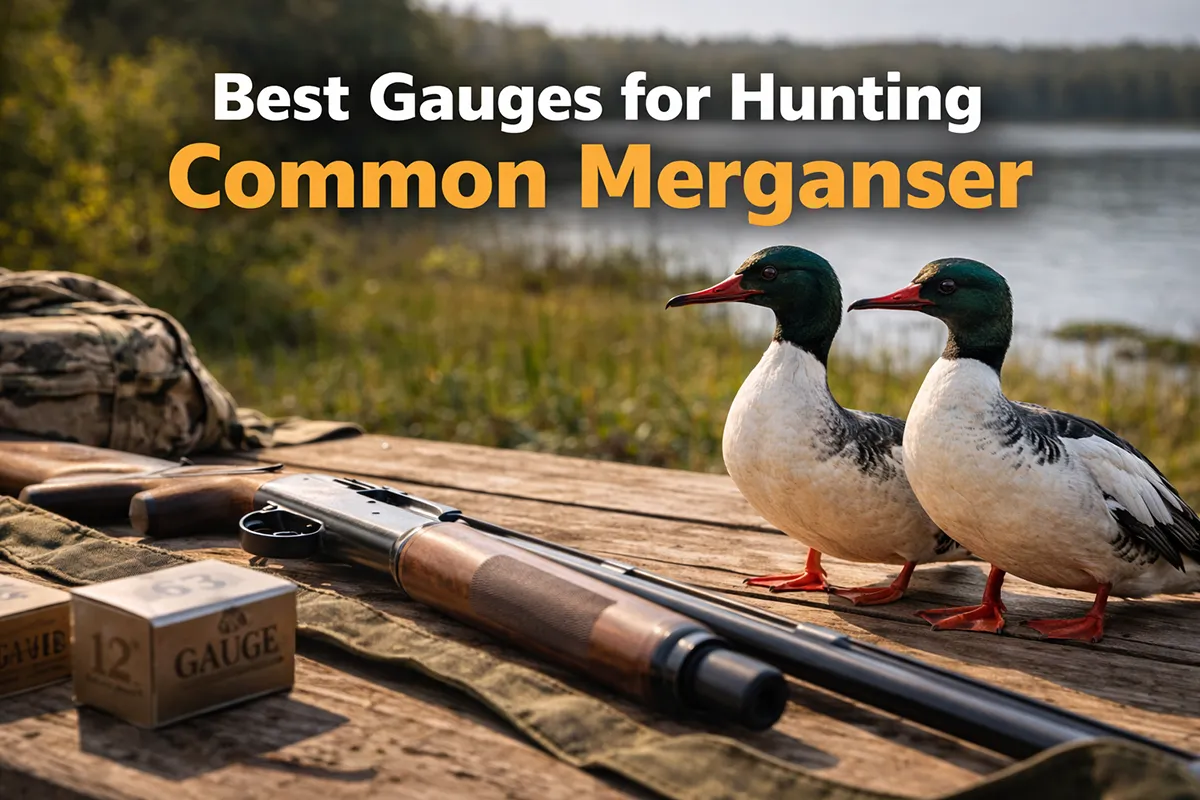
Shotgun gauge picks, non-toxic load tips, and practical range guidance for fast-flying sawbills.
If you’re searching for common merganser hunting gauges, focus on the shotgun you handle best, a choke/load combo you’ve patterned, and a non-toxic shotshell that keeps your effective range realistic. Mergansers are quick and often cross hard over open water—so the “best” gauge is the one you shoot confidently with a pattern you’ve verified on paper.
Gauge Comparisons
| Factor | 12 gauge | 20 gauge | 28 gauge | .410 bore | 10 gauge |
|---|---|---|---|---|---|
| Effective Range The distance where your pattern stays dense enough for clean kills. |
0–50 yd (pattern-dependent) | 0–45 yd (pattern-dependent) | 0–40 yd (pattern-dependent) | 0–30 yd (pattern-dependent) | 0–55 yd (pattern-dependent) |
| Typical Payload Range Common shot charges you’ll see in hunting loads. |
1–1⅜ oz (2¾–3½ in) | ⅞–1¼ oz (2¾–3 in) | ¾–1 oz (2¾ in) | ½–¾ oz (2½–3 in) | 1⅜–1¾ oz (3½ in) |
| Recoil Level Subjective recoil with typical hunting loads. |
Medium–High | Low–Medium | Low | Very low | High |
| Versatility How well it adapts across different waterfowl setups. |
Excellent | Very good | Good (close-range) | Fair (specialist) | Good (big water) |
| Ammo Availability General ease of finding non-toxic hunting loads. |
Excellent | Excellent | Good | Good | Fair |
12 gauge (shotgun gauge)
The most practical all-around choice for common merganser hunting: broad non-toxic load selection, great pattern potential, and plenty of payload for fast crossers over open water.
PROS
- Widest selection of non-toxic waterfowl loads
- Easy to tune patterns with choke options
- Most forgiving in wind and on longer crossers
CONS
- Heavier guns can be tiring on long days
- Hotter loads can feel snappy without good fit
- Easy to push range too far if you don’t pattern
Interesting Fact: Common mergansers are fish-eating “sawbills,” and their speed can make lead and follow-through more important than payload size.
Consider this Gauge If…
You want one do-it-all waterfowl setup for decoying birds and pass-shooting on bigger water.
20 gauge (shotgun gauge)
A great balance of handling and effectiveness: lighter to swing, easier on the shoulder, and fully capable on mergansers within sane, patterned distances.
PROS
- Lighter, quicker-handling guns for fast birds
- Lower recoil for smoother follow-through
- Excellent performance with quality non-toxic loads
CONS
- Less payload than 12 gauge at the far edge
- Pattern density can drop faster with poor load choice
- Premium non-toxic shells may cost more per round
Interesting Fact: A tight, even pattern beats “bigger gauge” every time—pattern your exact choke and load before the season.
Consider this Gauge If…
You want a lighter gun for mobile hunts but still need reliable performance on quick crossers.
28 gauge (shotgun gauge)
A low-recoil, close-range option that can work well when birds commit. Keep shots disciplined, choose a proven non-toxic load, and prioritize pattern testing.
PROS
- Soft recoil encourages smooth, controlled swings
- Light guns for long walks or boat-hops
- Great choice when birds finish close
CONS
- Fewer non-toxic load options than 12/20 gauge
- Smaller payload demands better shot selection
- Some loads are premium-priced and harder to find
Interesting Fact: On fast mergansers, a consistent lead and solid follow-through matter more than trying to “outrun” the bird with speed.
Consider this Gauge If…
Your hunt setups produce close shots and you want minimal recoil without stepping down to .410 bore.
.410 bore (shotgun bore)
A specialist’s tool for common merganser hunting. It can be effective up close, but it’s far less forgiving—treat it like a short-range option and be strict about angles and distance.
PROS
- Very low recoil and light, handy guns
- Encourages disciplined, ethical shot selection
- Fun challenge for experienced wingshooters
CONS
- Least forgiving on marginal range or hard angles
- Smaller patterns require precise leads and follow-through
- Non-toxic load selection can be limited
Interesting Fact: With .410 bore, pattern density is everything—paper testing will quickly show you your true maximum range.
Consider this Gauge If…
You hunt close shots and want a challenge while staying committed to clean, ethical kills.
10 gauge (shotgun gauge)
Maximum payload for big water and stiff wind. It can throw dense patterns, but it’s heavier and more punishing than most merganser hunts require.
PROS
- Heavy payloads can produce very dense patterns
- Can help in wind and on high, long crossers
- Solid choice from a blind or stable boat setup
CONS
- Heaviest guns with stout recoil
- Less common loads and firearm availability
- Overkill for many close-to-midrange situations
Interesting Fact: More payload doesn’t replace fundamentals—good leads, controlled swing, and verified patterns still decide clean kills.
Consider this Gauge If…
You regularly hunt big, open water in heavy wind and want maximum pattern density.
Final Picks for Common Merganser Hunting
For most hunters, a 12 gauge or 20 gauge with a proven pattern is the most practical answer—pair it with a quality non-toxic waterfowl load and keep shots inside the distance where your pattern stays dense. If your birds finish close, a 28 gauge can be a joy; if you want a challenge, a .410 bore demands strict range discipline. A 10 gauge can help on big water in heavy wind, but it’s rarely necessary. Whatever you choose, prioritize safe gun handling, clean shot angles, and ethical shot placement—and always confirm local regulations (non-toxic shot rules, seasons, limits, and any equipment restrictions) before you hunt.