
Best Gauges for Hunting Chestnut-bellied Sandgrouse: Comparisons & Picks
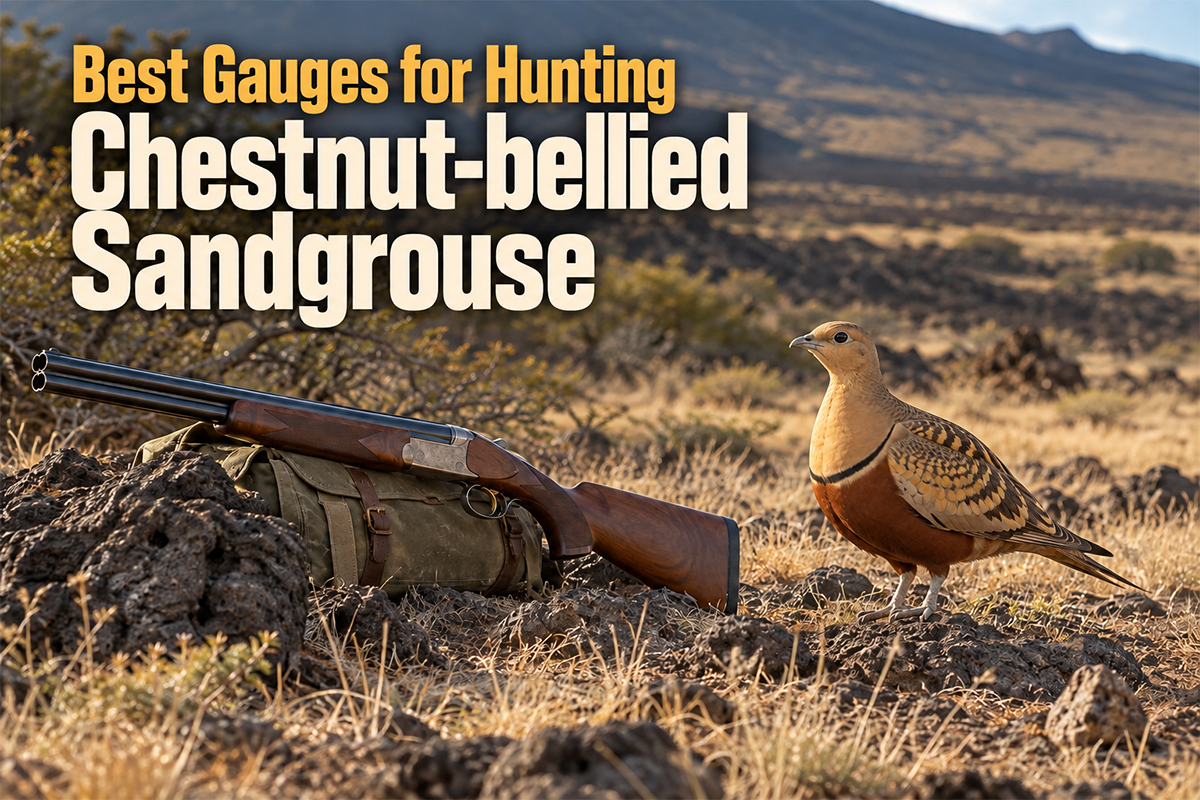
Three practical shotgun choices for fast-flying sandgrouse in Hawaiʻi’s open country.
For hunters comparing Chestnut-bellied Sandgrouse hunting gauges, the practical choices are 12, 20, and 28 gauge shotguns. This introduced game bird has an established hunting context on Hawaiʻi Island, where the state currently lists it among legal game birds during announced seasons. Because the bird is compact, fast, and often encountered in open country, the best setup balances pattern density, swing speed, recoil, and carry weight. A well-fitting shotgun matters more than simply choosing the largest gauge. Always confirm current Hawaiʻi season, unit, license, stamp, bag-limit, shooting-hour, and ammunition rules before hunting.
Where/When: On Hawaiʻi Island, Chestnut-bellied Sandgrouse are associated with dry pastures, grasslands, open country, and travel routes between feeding areas and dependable water. They often forage during cooler morning and afternoon periods and may make regular water flights, so watch grazed pasture, seed-rich ground, and established flight lines. Wind can make crossings faster and harder to judge. Seasonal access and legal hunting days vary by unit and annual announcement, so use current Hawaiʻi regulations rather than prior-year dates.
Chestnut-bellied Sandgrouse Hunting Gauge Comparisons
| Feature | 12 Gauge | 20 Gauge | 28 Gauge |
|---|---|---|---|
| Recoil How much kick you can expect with typical field loads. |
Moderate; varies widely with gun weight and load. | Light to moderate in a well-fitted field gun. | Generally light with standard upland loads. |
| Practical Pattern Range Use your own pattern board to establish an ethical limit. |
Often the easiest choice for consistent patterns from close to moderate upland distances. | Very capable at normal sandgrouse ranges when load and choke are matched. | Best kept to distances where your gun still prints a dense, even pattern. |
| Common Field Load Examples only; confirm chambering and local shot rules. |
About 1 to 1 1/8 oz of suitable upland shot. | About 7/8 to 1 oz of suitable upland shot. | About 3/4 to 1 oz, depending on the shell and gun. |
| Versatility How useful the gauge is for other game-bird hunting. |
Excellent; broad load and shotgun selection. | Excellent for many upland birds with less gun weight. | Very good for light upland use, but more specialized. |
| Ammo Availability How easy suitable ammunition is to find. |
Usually the broadest selection and often the best budget value. | Common and easy to source in standard field loads. | Typically less common and often more expensive. |
12 Gauge
The 12 gauge is the easiest all-around recommendation because it offers the widest choice of gun weights, chokes, and upland loads. That flexibility helps in Hawaiʻi’s open, windy terrain, where crossing distance can change quickly. A 6.5- to 7.5-pound field gun is a useful middle ground for carry, swing, and recoil. Standard 2 3/4-inch upland shells are generally sufficient for this pigeon-sized bird; heavy magnum loads usually add more recoil than benefit. Pattern improved-cylinder and modified chokes with suitable small upland shot, then keep the combination that prints evenly at your real shooting distances.
PROS
- Broadest selection of shotguns, shells, payloads, and choke options.
- Forgiving pattern density when birds stretch toward the edge of normal upland range.
- Often the most economical choice for hunters who practice frequently.
CONS
- Can be heavier to carry during long walks through open pasture.
- Recoil rises quickly with light guns or unnecessarily heavy loads.
- May feel slower than a trim 20 or 28 gauge to hunters who prefer very lively guns.
Interesting Fact: The 12 gauge’s main advantage here is not raw power; it is the ability to tune gun weight, choke, and payload to the exact type of wingshooting you expect.
Consider this Gauge If…
Choose a 12 gauge if you want the most flexible setup for wind, mixed angles, and variable distances. It also makes sense as one shotgun for sandgrouse and other game birds. Verify fit, point of impact, and your exact hunting load on paper, then keep shots inside the distance where the pattern remains even enough for a clean kill.
20 Gauge
The 20 gauge is a strong balance of light carry weight, manageable recoil, and practical sandgrouse performance. Many field guns run roughly 5.5 to 7 pounds, making them comfortable in dry grassland while still swinging smoothly. A 7/8- or 1-ounce upland load is a sensible starting point, with shot size chosen for pattern quality and legal requirements. Because the payload is smaller than comparable 12 gauge loads, pattern testing matters as distance grows. Improved-cylinder suits closer shots, while light-modified or modified may help on more open-country crossings if the pattern board confirms it.
PROS
- Excellent balance of low gun weight, manageable recoil, and useful pattern density.
- Fast handling can help on sudden crossing shots and birds changing direction.
- Common ammunition makes it easier to practice with the same gun you hunt.
CONS
- Offers less pellet count than comparable 12 gauge field loads.
- Very light guns can still recoil sharply with heavy shells.
- Longer shots demand more discipline about pattern quality and range.
Interesting Fact: A light 20 gauge can feel quicker than a 12 gauge, but the best handling comes from proper fit and balance rather than gauge alone.
Consider this Gauge If…
Pick a 20 gauge if you walk a lot, prefer less recoil, or simply shoot lighter guns better. It excels at ordinary upland distances when you are willing to pass on birds beyond the gun’s proven pattern. Avoid going ultralight just to save ounces; a slightly heavier 20 may swing more smoothly in wind.
28 Gauge
The 28 gauge is best for experienced wingshooters who expect controlled, reasonably close shots and want a light, quick-handling gun. Its smaller payload rewards precise shooting, careful choke selection, and strict range discipline. A trim 28 is excellent in open walking country, but it is not a tool for stretching marginal shots. Test standard upland loads through improved-cylinder to modified chokes and keep the combination that produces the most uniform pattern. Ammunition cost and local availability should also factor into the purchase.
PROS
- Light, responsive shotguns are comfortable for long days on foot.
- Low recoil encourages frequent practice and smooth follow-through.
- Well suited to disciplined hunters who keep shots inside proven pattern distance.
CONS
- Lower pellet payload leaves less margin for range-estimation or lead errors.
- Ammunition is usually less common and may cost more than 12 or 20 gauge shells.
- Not the ideal choice when wind or terrain consistently produces longer crossing shots.
Interesting Fact: The 28 gauge can be very effective on small game birds when its pattern is respected, which is why many experienced upland hunters value it despite the smaller payload.
Consider this Gauge If…
Choose a 28 gauge if you already shoot one well, value light carry weight, and are comfortable refusing marginal shots. It makes the most sense at predictable close-to-moderate distances rather than on long wind-driven passes. Budget for practice ammunition and confirm you can source the shells you plan to use.
Which Gauge Is Best for Chestnut-bellied Sandgrouse?
For most hunters, the 20 gauge offers the best blend of carry weight, recoil, and practical pattern performance; the 12 gauge is the strongest all-around choice when wind, distance, or ammunition availability matter most. The 28 gauge suits experienced shooters who keep conservative shot limits. Verify chamber length, pattern the exact load and choke, and use only legal ammunition. Keep the muzzle in a safe direction, keep your finger outside the trigger guard until on target, positively identify the bird and what lies beyond it, and avoid low shots around hunters, livestock, roads, or buildings. Ethical wingshooting means staying inside your demonstrated pattern range. Hawaiʻi currently lists Chestnut-bellied Sandgrouse as a game bird on Hawaiʻi Island, and current Hawaiʻi Island adaptive hunting rules are in effect through May 18, 2028; still check the latest season announcement and unit conditions before hunting.