
Best Gauges for Hunting Black-bellied Whistling-Duck: Comparisons & Picks
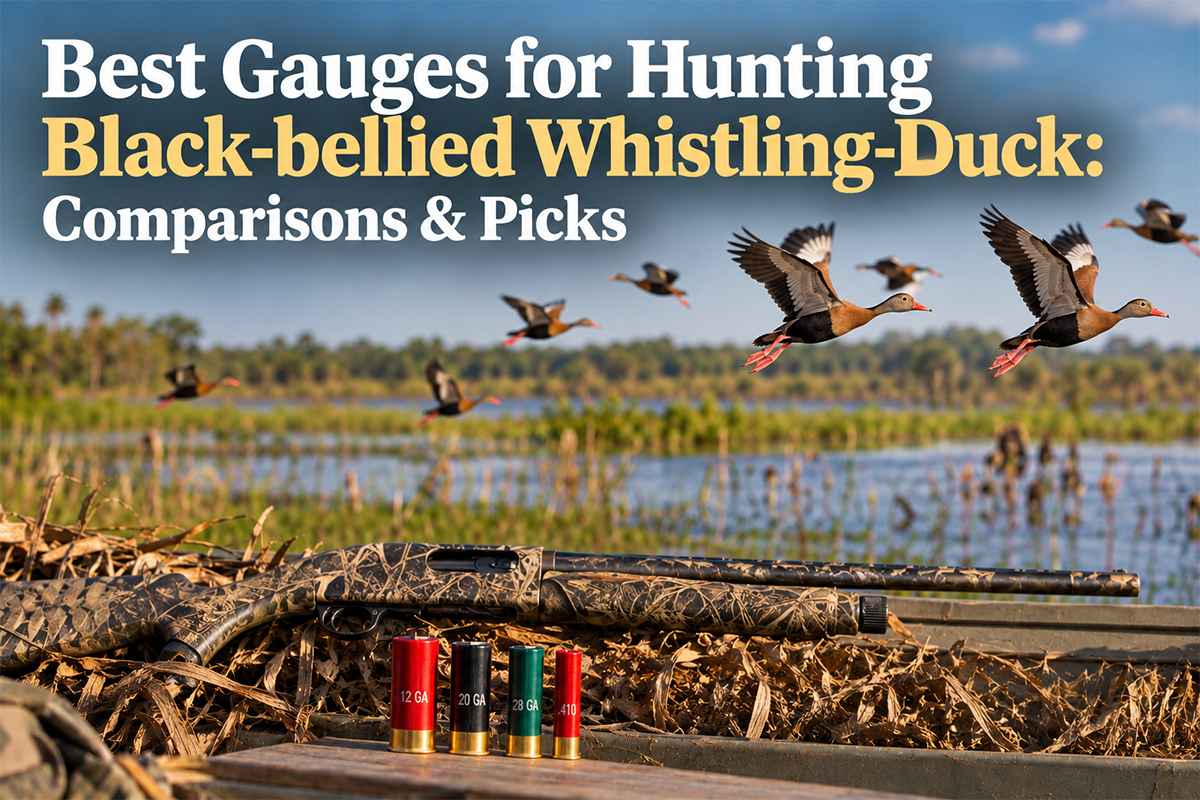
Compare 12 gauge, 20 gauge, 28 gauge, and .410 bore shotguns to find the right combination of pattern performance, recoil, and versatility.
Choosing the best black-bellied whistling-duck hunting gauges starts with understanding these distinctive waterfowl and the conditions in which hunters encounter them. Black-bellied whistling-ducks are relatively compact ducks that frequently travel between shallow wetlands, agricultural fields, and wooded ponds. Unlike rifle hunting, successful duck hunting depends on selecting a shotgun and ammunition combination that delivers reliable patterns at realistic shooting distances. The 12 gauge remains the most versatile option, while the 20 gauge offers an appealing balance of recoil and handling. Smaller options, including the 28 gauge and .410 bore, require greater attention to pattern density and distance. This guide compares four practical shotgun choices, explains their advantages and limitations, and helps hunters select appropriate ammunition without overlooking safety or waterfowl regulations.
Where/When: Black-bellied whistling-ducks inhabit parts of the southern United States, particularly Texas, Louisiana, and Florida, with populations extending into additional southeastern states. Hunters may encounter them around freshwater marshes, shallow ponds, flooded agricultural fields, rice-growing areas, and wooded waterways. Scouting typically focuses on feeding locations, recognizable whistling calls, established flight paths, and movement between roosting and feeding areas. Birds often feed during low-light periods, although activity may continue throughout the day. Early-season opportunities can coincide with local concentrations of birds, while cooler weather and changing water conditions may shift their distribution later in the season. Unlike some other ducks, their movements are not necessarily driven by a sharply defined autumn migration. Weather, food availability, and regional populations influence daily activity. Legal seasons, shooting hours, and harvest limits vary by jurisdiction, so always confirm current regulations before hunting.
Black-bellied Whistling-Duck Hunting Gauge Comparisons
| Feature | 12 Gauge | 20 Gauge | 28 Gauge | .410 Bore |
|---|---|---|---|---|
| RecoilRelative felt recoil with comparable hunting setups. | Moderate to substantial | Generally moderate | Generally light | Generally light |
| Practical Hunting RangeConservative starting distances; verify actual patterns. | 20–40 yards | 20–35 yards | 20–30 yards | 15–25 yards |
| Typical Hunting ShellsExamples, not universal recommendations. | 2¾- or 3-inch, steel No. 3–4 | 2¾- or 3-inch, steel No. 3–4 | 2¾-inch, approved nontoxic shot | 2½- or 3-inch, approved nontoxic shot |
| Versatility | Excellent for varied waterfowl | Excellent for ducks and upland hunting | Good for close-range birds | Specialized close-range option |
| Ammunition Availability | Generally excellent | Generally very good | More limited | Limited nontoxic waterfowl selection |
1. 12 Gauge: Best Overall for Black-bellied Whistling-Duck Hunting
The 12 gauge is the most flexible choice for hunters who want one shotgun suitable for black-bellied whistling-ducks and other waterfowl. Its broad ammunition selection makes it easier to find approved nontoxic loads and adjust patterns for changing hunting conditions.
PROS
- Excellent selection of waterfowl ammunition and compatible shotguns.
- Generous shot payload options support consistent pattern density.
- Versatile across marshes, agricultural fields, and mixed duck hunting.
CONS
- Heavier loads can produce substantial felt recoil.
- Some hunting configurations are relatively heavy.
- Magnum ammunition is unnecessary for many close-range opportunities.
Interesting Fact: A well-patterned 2¾-inch 12 gauge shell can provide excellent waterfowl performance without requiring a 3½-inch magnum chamber.
Consider This Gauge If…
You hunt several duck species, encounter changing distances, or prefer widely available ammunition. A 12 gauge with a modified or improved-cylinder choke is a useful starting point for pattern testing, although the best constriction depends on ammunition and barrel characteristics. Steel No. 3 or No. 4 shot is worth evaluating for typical duck hunting conditions. Check patterns at 20, 30, and 40 yards rather than assuming every combination performs identically. A properly fitted shotgun with manageable recoil will generally provide better practical results than an uncomfortable heavy-recoiling setup.
2. 20 Gauge: Best Balance of Recoil and Handling
The 20 gauge offers strong practical utility for hunters who value maneuverability and comfortable shooting. Modern nontoxic ammunition makes it a capable waterfowl option when hunters select appropriate loads and remain within distances supported by their patterns.
PROS
- Often lighter and more comfortable to carry than a comparable 12 gauge.
- Generally manageable recoil with suitable ammunition.
- Useful for both waterfowl and upland bird hunting.
CONS
- Typically carries fewer pellets than comparable 12 gauge loads.
- Heavy 3-inch loads can still produce noticeable recoil.
- Requires attention to effective pattern density at longer distances.
Interesting Fact: Shotgun fit, firearm weight, and ammunition choice can influence perceived recoil as much as the difference between gauges.
Consider This Gauge If…
You prefer a lighter shotgun for walking pond edges, carrying equipment through marsh vegetation, or hunting from compact blinds. The 20 gauge is especially appealing when most opportunities occur inside approximately 35 yards. Steel No. 3 and No. 4 loads are common starting choices, while approved bismuth and tungsten-based alternatives may offer different pattern characteristics. Confirm chamber length, choke compatibility, and the manufacturer’s ammunition restrictions. The 20 gauge is also worth considering for hunters who prioritize smooth gun mounting and consistent practice over maximum payload size.
3. 28 Gauge: Best Lightweight Specialty Option
The 28 gauge appeals to experienced hunters who appreciate lightweight shotguns and modest recoil. It can serve as a specialized choice for black-bellied whistling-ducks when shooting opportunities are close and the selected ammunition delivers adequate patterns.
PROS
- Compact shotgun configurations are convenient in dense cover.
- Often provides comfortable recoil characteristics.
- Suitable for hunters who also pursue upland birds.
CONS
- Approved nontoxic waterfowl loads can be harder to locate.
- Smaller payloads limit pattern flexibility.
- Specialty ammunition may cost more than common alternatives.
Interesting Fact: The 28 gauge has a longstanding reputation among upland hunters, but waterfowl applications demand particular care in choosing legally approved shot materials.
Consider This Gauge If…
You already own a 28 gauge and regularly encounter birds at modest distances. Start by identifying approved nontoxic loads compatible with your chamber and choke system. Bismuth or appropriate tungsten-alloy ammunition may be worth examining where available. Pattern testing is essential because smaller payloads leave less room for inconsistent pellet distribution. A conservative maximum distance around 30 yards is a reasonable starting point, not a guarantee. Avoid using lead upland loads for waterfowl, even if they perform well on other birds.
4. .410 Bore: Best for Highly Controlled Close-Range Hunting
The .410 bore is the most specialized option in this comparison. Although its light recoil and compact firearms attract interest, its limited payload makes dependable waterfowl patterns more difficult to achieve. It is not the preferred choice for most black-bellied whistling-duck hunters.
PROS
- Typically mild recoil with appropriate lightweight firearms.
- Compact models are convenient to transport.
- Can be practical under carefully controlled close-range conditions.
CONS
- Small pellet payloads make adequate patterns harder to obtain.
- Suitable nontoxic ammunition selection is limited.
- Demands disciplined distance judgment and substantial practice.
Interesting Fact: Despite its familiar numerical designation, the .410 is classified by bore diameter rather than the traditional shotgun gauge system.
Consider This Bore Option If…
You are an experienced shotgun hunter who can consistently recognize close-range opportunities and has verified adequate patterns with approved nontoxic ammunition. A conservative starting distance is approximately 15–25 yards, with the actual limit established through testing. Some dense tungsten-based loads may improve pellet-count considerations, but compatibility and manufacturer guidance remain essential. The .410 bore should not be selected merely because a hunter assumes it makes waterfowl hunting easier for beginners. Its narrow performance margin generally makes a properly fitted 20 gauge the more forgiving alternative.
Choosing the Best Shotgun for Black-bellied Whistling-Duck Hunting
For most hunters, the 12 gauge provides the strongest combination of ammunition selection, pattern flexibility, and versatility. The 20 gauge is an excellent alternative when comfortable handling and moderate recoil take priority. The 28 gauge suits experienced hunters pursuing closer opportunities, while the .410 bore requires particularly careful ammunition selection and conservative distance limits. Budget-conscious shoppers should consider ammunition cost and availability alongside firearm price. Regardless of gauge, choose a shotgun that fits properly, confirm chamber and choke compatibility, and verify pattern performance before hunting. Maintain safe muzzle direction, keep the action open when appropriate, identify every bird positively, and shoot only when an effective pattern and safe background permit an ethical harvest. In the United States, waterfowl hunting generally requires federally approved nontoxic shot and shotguns limited to three shells, subject to applicable regulations. Check current state seasons, daily bag limits, shooting hours, licensing, HIP certification, federal duck stamp requirements, and restrictions on baiting and hunting locations. Consult the appropriate wildlife agency before every season.
Official regulatory references: Florida Fish and Wildlife Conservation Commission, Texas Parks and Wildlife Department, and U.S. Fish and Wildlife Service species information.