
Best Gauges for Hunting Barrow’s Goldeneye: Comparisons & Picks
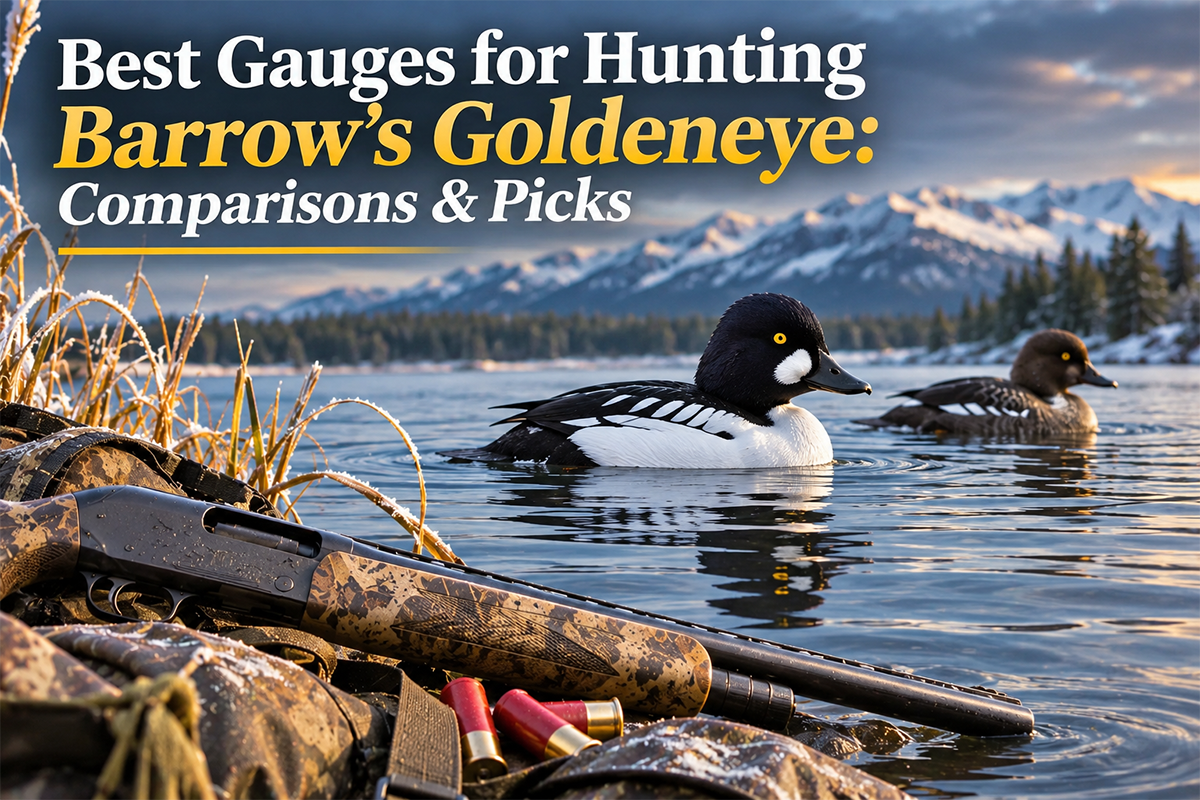
COMPARE SHOTGUN GAUGES, NONTOXIC LOADS, RECOIL, AND PRACTICAL PERFORMANCE FOR COLD-WATER DIVING DUCK HUNTS
Barrow’s goldeneye hunting presents a distinctive challenge for waterfowl hunters. These compact, fast-flying diving ducks frequent cold coastal waters, rocky shorelines, and ice-free inland waterways. Choosing the best shotgun gauge means balancing effective patterns, manageable recoil, ammunition availability, and reliable performance in demanding conditions. The 12 gauge remains a versatile favorite, but the 20, 16, and 28 gauges also deserve consideration. This guide compares four practical options, explains their strengths and limitations, and helps hunters select appropriate nontoxic ammunition for ethical, responsible hunting.
Where/When: Barrow’s goldeneyes occur primarily in western North America, including Alaska, British Columbia, Washington, and portions of the northern Rocky Mountains. During fall migration and winter, they often concentrate around sheltered coastal bays, harbors, rocky shorelines, mussel beds, and ice-free rivers or lakes. Late fall through winter generally provides the most relevant hunting opportunities where seasons permit. Morning feeding movements, changes in tidal conditions, and approaching winter weather may influence activity. Look for diving flocks near productive shallow-water feeding areas while avoiding unsafe exposed shorelines. Barrow’s goldeneyes also occur in eastern Canada, where the population receives special conservation attention. Seasons, species restrictions, and legal hunting methods vary significantly by jurisdiction.
Shotgun Gauge Comparisons for Barrow’s Goldeneye Hunting
| Feature | 12 Gauge | 20 Gauge | 16 Gauge | 28 Gauge |
|---|---|---|---|---|
| RecoilTypical felt recoil with suitable waterfowl loads. | Moderate to heavy | Light to moderate | Moderate | Generally light |
| Practical RangeApproximate distances with proven patterns, not guaranteed limits. | 20–40 yards | 20–35 yards | 20–35 yards | 15–30 yards |
| Nontoxic AmmunitionCommon choices depending on gun and load compatibility. | Steel, bismuth, approved tungsten loads | Steel, bismuth, approved tungsten loads | Steel or bismuth; limited selection | Bismuth, steel, approved tungsten loads |
| VersatilityUsefulness for other waterfowl hunting situations. | Excellent | Very good | Very good | Good at modest distances |
| Ammunition AvailabilityRelative accessibility of nontoxic waterfowl shells. | Excellent | Very good | Limited | Moderate; specialty loads costly |
These distances are conservative planning guidelines rather than universal performance ratings. Actual effectiveness depends on pellet material, shot size, payload, velocity, choke, individual shotgun patterns, and shooter ability. Pattern the exact ammunition you intend to hunt with before relying on any distance.
12 Gauge: Best Overall for Barrow’s Goldeneye Hunting
The 12 gauge is the most flexible choice for hunters pursuing Barrow’s goldeneyes around coastal bays, harbors, and inland rivers. Its broad ammunition selection allows hunters to match their loads to changing conditions, while common shotgun configurations provide options for different budgets and shooting preferences. A conventional 3-inch chamber offers access to numerous nontoxic waterfowl shells without requiring the heaviest magnum loads.
Steel shot in sizes such as No. 2 through No. 4 is commonly considered for ducks, with pellet selection depending on distance, pattern quality, and conditions. Bismuth and approved tungsten-based alternatives provide additional choices. For hunters frequently encountering strong coastal winds or mixed diving-duck opportunities, the 12 gauge offers useful flexibility. However, heavier ammunition does not compensate for poor patterns or uncertain shot placement. A balanced shotgun with a suitable choke is often more practical than automatically choosing maximum payloads.
PROS
- Excellent selection of nontoxic waterfowl ammunition.
- Flexible payloads and choke configurations.
- Widely available shotguns across multiple price ranges.
CONS
- Heavier loads can produce substantial recoil.
- Some shotgun configurations are bulky for extended walks.
- Premium waterfowl shells increase operating costs.
Interesting Fact: The 12 gauge’s popularity comes partly from its broad variety of compatible payloads, not simply its ability to fire heavier shells.
Consider This Gauge If…
You regularly hunt diving ducks, want readily available ammunition, or prefer one shotgun that can handle different waterfowl situations. Choose a model with reliable operation in wet conditions and confirm its chamber length, choke restrictions, and steel-shot compatibility before selecting ammunition.
20 Gauge: Best for Lightweight Handling and Moderate Recoil
The 20 gauge offers a compelling alternative for hunters who prefer a lighter shotgun and more comfortable shooting experience. Modern nontoxic ammunition makes it a practical option for Barrow’s goldeneyes when birds are taken at distances supported by verified patterns. A properly fitted 20 gauge may also help hunters maintain smoother swings when tracking quick-moving birds over open water.
The smaller bore generally carries less shot than comparable 12 gauge loads, so choosing the right ammunition and effective distance becomes especially important. Three-inch waterfowl loads may provide additional payload options when the shotgun is chambered for them. Steel, bismuth, and approved tungsten-based ammunition are available, although choices are narrower than those for the 12 gauge. A well-patterned 20 gauge can serve hunters effectively in protected bays and moderate-distance situations without requiring excessive recoil.
PROS
- Typically lighter and easier to carry.
- Often produces less felt recoil than comparable 12 gauge setups.
- Useful for multiple duck species and upland hunting.
CONS
- Smaller payloads can limit pattern density.
- Less flexibility for longer-distance opportunities.
- Premium high-density ammunition may be expensive.
Interesting Fact: Shotgun fit and load selection can influence practical shooting comfort more than gauge designation alone.
Consider This Gauge If…
You prioritize comfortable recoil, frequently walk to hunting locations, or expect most opportunities at modest distances. The 20 gauge is particularly appealing when paired with quality nontoxic ammunition and a choke that consistently produces sufficient pellet coverage.
16 Gauge: Best for Traditional Shotgun Enthusiasts
The 16 gauge occupies an interesting position between the 12 and 20 gauges. Long appreciated by traditional shotgun enthusiasts, it can provide a satisfying combination of handling, payload capacity, and versatility. For Barrow’s goldeneye hunting, its usefulness depends primarily on obtaining suitable nontoxic ammunition and confirming compatibility with the shotgun.
Modern 16 gauge waterfowl ammunition is less common than 12 or 20 gauge offerings, particularly when hunters need specialized nonlead loads. Bismuth shells can be attractive for compatible older shotguns, but age alone does not establish safe ammunition compatibility. Chamber length, barrel condition, pressure limits, and choke construction must all be considered. Some modern 16 gauge shotguns also support appropriate steel loads under manufacturer guidance. Hunters who already own a reliable 16 gauge may find it perfectly suitable for controlled-distance diving-duck hunts.
PROS
- Appealing balance of payload and handling characteristics.
- Versatile for waterfowl and upland applications.
- Attractive option for experienced traditional shotgun owners.
CONS
- Nontoxic ammunition is comparatively difficult to source.
- Fewer new shotgun and load choices.
- Older firearms may have significant ammunition restrictions.
Interesting Fact: The 16 gauge has historically been popular among upland hunters, making it an interesting crossover choice for those who also pursue waterfowl.
Consider This Gauge If…
You already own a suitable 16 gauge shotgun, appreciate traditional firearms, or want a distinctive all-around hunting option. Confirm that approved nontoxic ammunition is available before planning a waterfowl hunt, rather than relying on ordinary upland lead-shot loads.
28 Gauge: Best for Experienced Hunters at Shorter Distances
The 28 gauge is a specialized choice for Barrow’s goldeneye hunting, offering excellent handling potential in lightweight shotguns but less margin for error than larger gauges. Its relatively small payload places greater importance on pattern quality, ammunition selection, and disciplined shooting distances. This is not typically the first choice for hunters expecting unpredictable opportunities across exposed coastal water.
Approved high-density tungsten-based loads and selected bismuth options can improve the 28 gauge’s practicality, although ammunition costs may be substantial. Conventional steel loads require particularly careful evaluation because limited pellet counts or smaller payloads can reduce effective pattern coverage. Hunters should avoid assuming that premium ammunition automatically extends ethical range. Instead, pattern the shotgun at several realistic distances and establish a personal limit based on consistent results. The 28 gauge is most suitable for experienced shooters who can exercise restraint when conditions are unfavorable.
PROS
- Lightweight, responsive shotgun configurations.
- Generally comfortable shooting characteristics.
- Specialty nontoxic loads offer additional options.
CONS
- Reduced payload limits patterning flexibility.
- Specialty ammunition can be expensive.
- Less forgiving during difficult coastal shooting conditions.
Interesting Fact: Higher-density approved shot materials can allow smaller gauges to retain useful pellet energy, although pattern coverage remains essential.
Consider This Gauge If…
You are an experienced shotgun hunter who values lightweight handling, normally encounters close opportunities, and is willing to invest in appropriate nontoxic ammunition. Be prepared to pass on birds that are beyond your verified effective range.
Choosing the Best Gauge for Barrow’s Goldeneye Hunting
For most Barrow’s goldeneye hunters, the 12 gauge is the best overall choice because of its ammunition selection, versatility, and ability to accommodate different shooting conditions. The 20 gauge is an excellent alternative for hunters seeking lighter handling and more manageable recoil. The 16 gauge remains a capable traditional option when appropriate ammunition is available, while the 28 gauge is best reserved for experienced hunters working within carefully established patterning limits.
Regardless of gauge, use only legally approved nontoxic shot. Steel, bismuth, and approved tungsten-based materials have different characteristics, so confirm firearm compatibility and test your chosen load on a patterning target. Maintain safe muzzle direction, identify every bird positively, know what lies beyond the target, and limit shots to distances at which your equipment and ability support an ethical harvest. In coastal environments, personal flotation equipment, cold-water precautions, and a realistic retrieval plan are equally important.
Regulatory requirements deserve particular attention. Washington’s 2026–2027 rules allow goldeneye hunting during applicable duck seasons but impose a three-goldeneye daily limit in western Washington, along with sea-duck authorization, harvest recording, and reporting requirements. Quebec’s eastern Barrow’s goldeneye population is listed as a species of special concern, with a one-bird daily and possession limit where hunting is permitted and additional geographic closures. Other jurisdictions may impose different restrictions. Always check current official regulations before hunting.
Review the Washington Department of Fish and Wildlife regulations, U.S. Fish and Wildlife Service nontoxic-shot guidance, and Quebec migratory bird hunting regulations for authoritative guidance relevant to your location.