
Best Gauges for Hunting Barrow’s Goldeneye: Comparisons & Picks
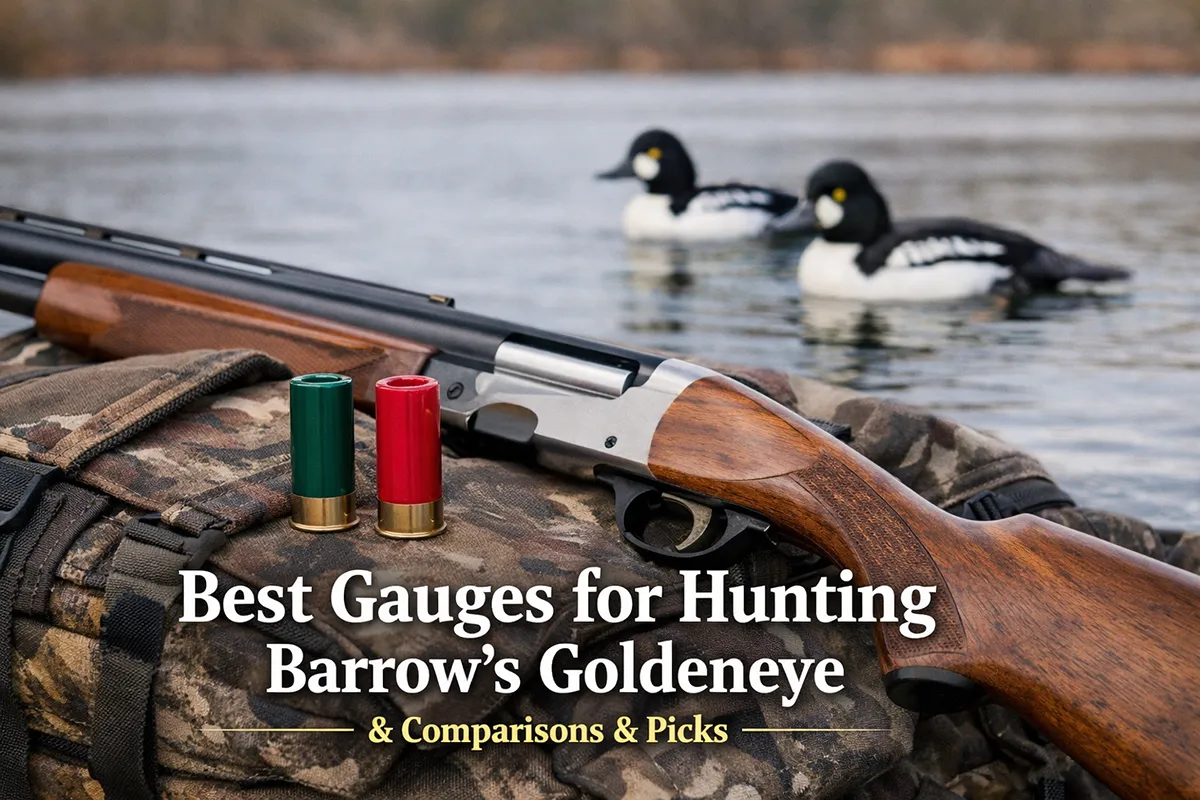
Gauge and .410 bore picks (plus non-toxic load tips) for tough, fast-flying diving ducks.
When you’re dialing in a setup for Barrow’s Goldeneye, you’re really choosing the right shotgun gauge (or .410 bore) and matching it with a consistent non-toxic load. This guide compares practical options for Barrow’s goldeneye hunting—from versatile 12 gauge rigs to ultra-light .410 bore setups—so you can keep patterns dense, shots ethical, and follow-ups fast.
Caliber/Gauge Comparisons
| Feature | 12 gauge | 20 gauge | 28 gauge | 16 gauge | .410 bore |
|---|---|---|---|---|---|
| Recoil How much kick you can expect when firing. |
Moderate–stout (3″ mags) | Moderate | Light | Moderate | Very light |
| Effective Range The distance at which your load stays effective with a usable pattern. |
35–45 yd (pattern-dependent) | 30–40 yd (with the right load) | 25–35 yd (best with premium shot) | 30–40 yd (load dependent) | 20–30 yd (realistic limits) |
| Typical Load Options Typical shot charge (or bullet weight) options you’ll see on shelves. |
1–1 1/4 oz (shot charge) | 7/8–1 oz (shot charge) | 3/4–7/8 oz (shot charge) | 1–1 1/8 oz (shot charge) | 1/2–13/16 oz (shot charge) |
| Versatility How well the caliber or gauge performs for other game species besides your primary target. |
Very high | High | Medium | Medium | Low |
| Ammo Availability How easy it is to find ammunition for the gauge/caliber. |
Very high | Very high | Medium | Medium | Medium (premium varies) |
12 gauge
The do-it-all waterfowl gauge for Barrow’s goldeneye—plenty of payload for steel, bismuth, or tungsten and forgiving patterns when birds flare or quarter.
PROS
- Best pattern density with common non-toxic loads
- Handles wind and longer crossing shots well
- Ammo and choke options are everywhere
CONS
- More recoil with 3″ and high-velocity loads
- Bigger gun/ammo can feel bulky in tight blinds
- Easy to over-shoot at very close range if you don’t pick your shot
Interesting Fact: With the same shot material, the larger payload options in 12 gauge make it easier to keep a dense pattern on fast, diving ducks.
Consider this Option If…
You hunt big water, expect longer shots, or want one shotgun setup for most duck seasons.
20 gauge
A lighter, quicker-handling gauge that still hits hard on goldeneyes when you run quality non-toxic loads and keep shots inside a clean pattern window.
PROS
- Lighter carry for walk-ins and jump-shooting
- Plenty of effective steel and bismuth options
- Less fatigue on long, cold days
CONS
- Less payload than 12 gauge at the same shell length
- Patterns can thin out sooner at distance
- Premium loads matter more on tough late-season birds
Interesting Fact: In many guns, a slightly tighter choke choice in 20 gauge can help maintain pattern density without needing extra speed.
Consider this Option If…
You prioritize a lighter shotgun but still want a mainstream gauge with easy-to-find waterfowl loads.
28 gauge
A sweet-shooting gauge for decoying or close pass-shooting—especially when paired with denser non-toxic shot (like bismuth or tungsten blends) to stretch performance.
PROS
- Very low recoil and fast follow-up shots
- Excellent handling in small-framed shotguns
- Great choice for close, ethical decoy work
CONS
- Premium shells are typically pricier
- Limited heavy-payload options compared to 12/20
- Requires disciplined shot selection beyond 35 yards
Interesting Fact: Because bismuth is denser than steel, many hunters can use a smaller shot size and still get strong penetration at moderate ranges.
Consider this Option If…
You’re calling birds tight, shoot well on close movers, and want a light, lively duck gun.
16 gauge
A classic “in-between” gauge that shines with modern non-toxic loads—ideal if you love a trim field gun but still want respectable payload for diving ducks.
PROS
- Balances well in many traditional field guns
- Good payload potential without full 12-gauge bulk
- Pairs nicely with bismuth for waterfowl
CONS
- Less common on store shelves than 12/20
- Fewer budget waterfowl load choices
- Some older guns need careful ammo/choke selection
Interesting Fact: Many vintage 16-gauge doubles are best served with bismuth because it’s softer than steel and friendlier to classic barrels and chokes.
Consider this Option If…
You already own a 16-gauge you love (or want one) and you’re willing to shop a bit for the right non-toxic shells.
.410 bore
A specialist option for experts only: keep shots close, use the best patterns you can find, and consider tungsten-based loads to maintain pellet energy on goldeneyes.
PROS
- Minimal recoil and very fun to shoot well
- Light, compact guns for tight cover or boats
- Tungsten loads can punch above their payload
CONS
- Very small payload—pattern holes happen fast
- Requires excellent calling, decoys, and restraint
- Premium tungsten loads can be expensive
Interesting Fact: Tungsten Super Shot (TSS) is extremely dense, which helps .410 bore loads deliver adequate pellet energy at close-to-moderate ranges.
Consider this Option If…
You’re an experienced shot, hunt birds over the decoys, and are committed to close-range, high-percentage shots.
Bottom Line: Best Gauges for Barrow’s Goldeneye
If you want one do-everything choice, start with a 12 gauge and a proven steel or bismuth load, then pattern it with the choke you’ll actually hunt. A 20 gauge is the sweet spot for lighter carry without giving up mainstream ammo choices. Go 28 gauge or .410 bore only if you’re committed to close, high-percentage shots (and are willing to pay for premium non-toxic shells). Whatever you pick, confirm local waterfowl regulations (non-toxic shot requirements, season dates, and species limits), practice safe gun handling, and prioritize clean, ethical shot placement.