
Best Gauges for Hunting Atlantic Brant: Comparisons & Picks
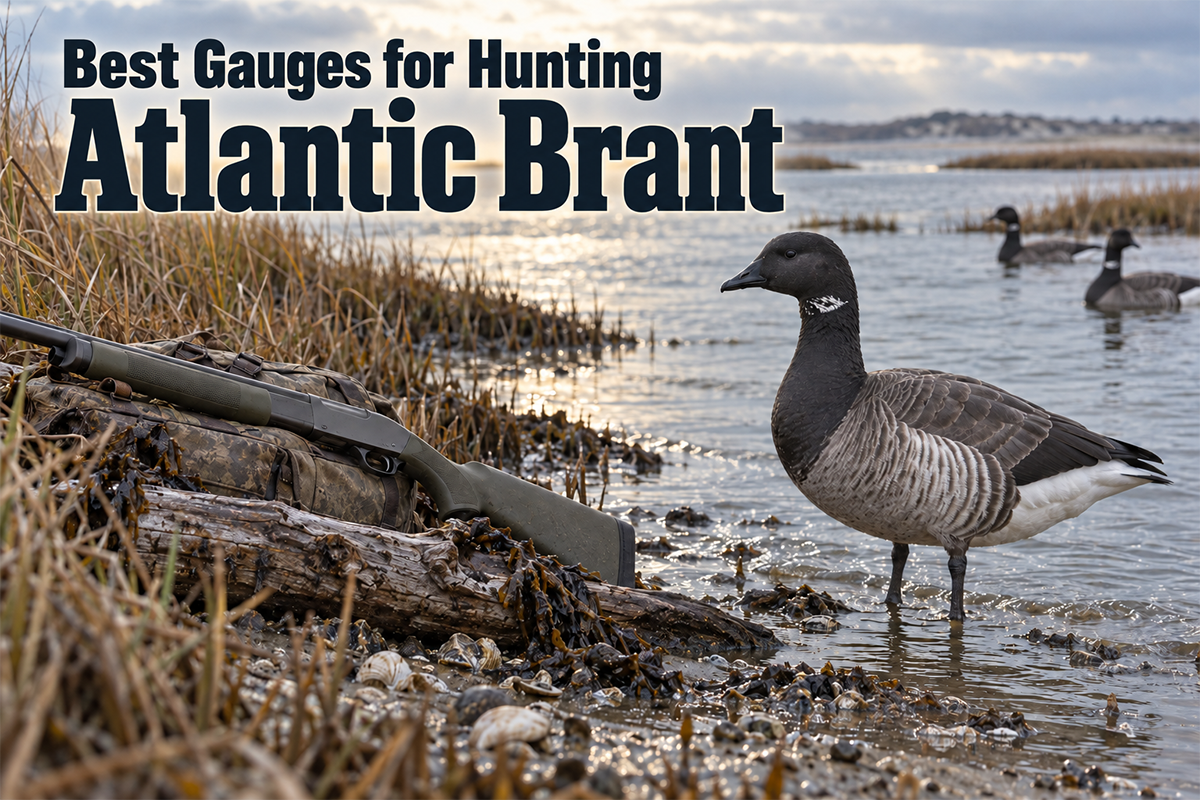
Compare practical shotgun options for coastal brant hunting, from versatile 12 gauge loads to lighter 20 and 28 gauge setups.
Choosing the right Atlantic brant hunting gauges comes down to balancing pattern density, recoil, shotgun weight, ammunition availability, and the conditions you expect along the coast. Brant are relatively small geese, and hunters often encounter them over decoys in bays, tidal marshes, and estuaries rather than at extreme ranges. A dependable shotgun that you shoot accurately is generally more useful than simply choosing the largest gauge available. For most hunters, 12 gauge remains the most versatile choice, while 20 gauge can reduce weight and recoil. Specialized 10 and 28 gauge setups can also make sense for particular hunting styles.
Where/When: Atlantic brant breed primarily in northern Canada and migrate to coastal wintering areas in the eastern United States, with New York and New Jersey supporting especially important concentrations. New York identifies Long Island as a major wintering area, particularly the shallow southern bays, while federal wildlife managers note the importance of New Jersey winter habitat. Hunters typically focus on salt marshes, tidal flats, bays, eelgrass areas, points, and feeding or travel corridors where brant move between resting and feeding water. Migration and local movements often strengthen as fall progresses, but tides, wind, ice, food availability, and hunting pressure can change daily patterns quickly. Morning movements may provide active decoying opportunities, although birds can travel throughout legal shooting hours as tides expose or cover feeding areas. Season timing and regulations vary by jurisdiction and year, so always verify current local rules before hunting.
Atlantic Brant Hunting Gauges Compared
| Feature | 12 Gauge | 20 Gauge | 10 Gauge | 28 Gauge |
|---|---|---|---|---|
| Recoil How much kick you can expect when firing. |
Moderate to heavy depending on load | Mild to moderate | Heavy | Generally mild |
| Effective Range Practical distance depends on pattern quality, load, and shooter ability. |
Excellent for normal decoying and moderate-range shots | Best at close to moderate ranges with proven loads | Strong pattern potential at longer practical waterfowl ranges | Best for disciplined close-range shooting |
| Shot Load Options Typical shell choices vary by chamber length and ammunition manufacturer. |
Broad selection of 2 3/4- and 3-inch waterfowl loads | Good selection of 2 3/4- and 3-inch loads | Primarily heavy 3 1/2-inch loads | Smaller payloads; premium dense-shot options help |
| Versatility How well the gauge works for other waterfowl and game. |
Excellent | Very good | Specialized | Good for lighter upland and waterfowl use |
| Ammo Availability How easy it is to find suitable ammunition. |
Excellent | Very good | Limited | Moderate |
12 Gauge
The 12 gauge is the best all-around choice for most Atlantic brant hunters because it combines widespread ammunition availability with flexible payloads and dependable pattern density. A 3-inch chamber gives hunters plenty of useful non-toxic waterfowl loads without requiring the additional recoil and gun weight associated with more specialized setups. Steel shot remains a common budget-friendly option, while approved denser non-toxic materials can provide additional pellet energy or allow smaller shot sizes. Pattern your shotgun with the exact choke and load you intend to hunt with rather than assuming a particular combination will perform well.
PROS
- Wide selection of non-toxic waterfowl ammunition and shotgun models.
- Provides strong pattern density for typical decoying distances.
- Versatile enough for ducks, larger geese, upland birds, and other hunting uses.
CONS
- Heavy waterfowl loads can produce substantial recoil.
- Full-size guns may feel cumbersome in small boats or compact blinds.
- More payload does not compensate for poor patterning or excessive shooting distance.
Interesting Fact: The 12 gauge has become the dominant general-purpose waterfowl shotgun because hunters can select from a particularly broad range of shell lengths, payloads, shot materials, and choke combinations.
Consider this Gauge If…
Choose a 12 gauge if you want one shotgun that can handle Atlantic brant as well as most other North American waterfowl. It is especially useful when weather, wind, or mixed-species hunting may require different loads. For brant over decoys, start with an open-to-moderate waterfowl choke and test approved non-toxic loads on paper at the distances you actually expect to shoot.
20 Gauge
A 20 gauge is an excellent alternative for hunters who prioritize lower recoil, easier handling, and a lighter shotgun. Modern 3-inch non-toxic loads can provide useful performance for Atlantic brant when birds are worked into sensible distances. The lighter platform is particularly attractive for hunters carrying gear across marshes, maneuvering in layout-style setups, or sharing a shotgun with smaller-framed shooters. Because the payload is typically smaller than a comparable 12 gauge load, careful pattern testing becomes especially important.
PROS
- Lighter shotguns are convenient around boats, marshes, and mobile setups.
- Reduced recoil can encourage better shooting form and faster follow-up shots.
- Ammunition is widely available compared with more specialized gauges.
CONS
- Smaller payloads provide less margin for poor pattern performance.
- Load selection is not as extensive as 12 gauge.
- Hunters should be particularly disciplined about range and presentation.
Interesting Fact: Improvements in non-toxic waterfowl ammunition have made the 20 gauge increasingly practical for hunters who once considered 12 gauge the minimum sensible choice for goose-sized birds.
Consider this Gauge If…
Pick a 20 gauge if recoil sensitivity, shotgun weight, or fast handling matters more than maximum payload. It works best when your hunting style centers on convincing decoy spreads and controlled shots rather than pass-shooting distant birds. Confirm your shotgun’s chamber length, test several approved non-toxic loads, and select the combination that produces even coverage without large gaps.
10 Gauge
The 10 gauge is a specialized choice for hunters who value heavy payload capacity and do not mind carrying a larger, heavier shotgun. Federal waterfowl rules prohibit shotguns larger than 10 gauge, making it the upper end of conventional legal waterfowl shotgun size in the United States. For Atlantic brant, however, its capabilities are often more than necessary when birds are decoying normally. The greatest drawbacks are recoil, firearm weight, ammunition cost, and a much narrower ammunition selection than 12 or 20 gauge.
PROS
- Heavy payload capacity can produce dense patterns when properly matched to the gun.
- Useful for hunters who also pursue larger geese in demanding coastal conditions.
- Substantial shotgun weight can help absorb some recoil during stationary hunting.
CONS
- Heavy and cumbersome compared with common 12- and 20-gauge shotguns.
- Ammunition choices are limited and can be harder to source.
- More gun and payload than most close-decoy Atlantic brant situations require.
Interesting Fact: Although once more common among dedicated goose hunters, the 10 gauge has become a niche option as modern 12 gauge shotguns and non-toxic ammunition have improved.
Consider this Gauge If…
Consider a 10 gauge primarily if you already own one, tolerate the weight and recoil well, and also hunt larger geese or exposed coastal locations. It is rarely necessary solely for Atlantic brant. Pattern the gun carefully and resist treating its larger payload as permission to stretch shooting distance beyond your proven ability.
28 Gauge
The 28 gauge appeals to experienced hunters who want an especially light, quick-handling shotgun and are willing to limit shots to favorable presentations. Its smaller payload leaves less room for pattern deficiencies, so dense approved non-toxic materials such as bismuth or tungsten-based shot can be particularly useful when legal and compatible with the firearm. Steel loads may also work at appropriately close ranges when they pattern well. Always verify that shell length, pressure, choke, and shot material are approved for your specific shotgun.
PROS
- Very light and easy to maneuver in compact coastal hunting setups.
- Mild recoil can make accurate shooting more comfortable.
- Premium dense-shot loads can improve performance from smaller payloads.
CONS
- Smaller payload requires precise range judgment and good pattern performance.
- Premium non-toxic ammunition can be expensive.
- Waterfowl ammunition is less widely available than 12 or 20 gauge.
Interesting Fact: Growing availability of premium non-toxic loads has expanded the 28 gauge’s role beyond traditional upland hunting and into carefully managed waterfowl applications.
Consider this Gauge If…
Choose a 28 gauge if you are an experienced shotgunner who consistently brings brant close over decoys and values a lightweight firearm. Treat pattern testing as mandatory, establish a conservative personal maximum range, and avoid marginal presentations. A lighter gauge works because of disciplined shot selection, not because ammunition technology eliminates normal range limitations.
Choosing the Best Gauge for Atlantic Brant
For most hunters, 12 gauge offers the best combination of pattern density, ammunition selection, versatility, and value. The 20 gauge is a strong choice for hunters who want reduced recoil and lighter equipment, while 28 gauge works best for experienced shooters taking controlled close-range opportunities. The 10 gauge remains capable but specialized. Regardless of gauge, use only approved non-toxic shot for U.S. waterfowl hunting, positively identify every bird before firing, and pattern your shotgun with the exact ammunition and choke you intend to use. Federal rules generally limit migratory-game-bird shotguns to three-shell capacity unless a specific exception applies, and hunters must follow legal shooting hours, seasons, bag limits, licensing requirements, and applicable state or refuge regulations. Atlantic brant harvest can be especially restrictive: for example, New Jersey’s finalized 2026-2027 regulations provide a 30-day brant season with a one-bird daily bag limit. Keep the muzzle controlled, treat every firearm as loaded, retrieve downed or wounded birds promptly, and take shots only when your tested pattern and shooting ability support a clean, ethical harvest.