
Best Gauges for Hunting American Wigeon: Comparisons & Picks
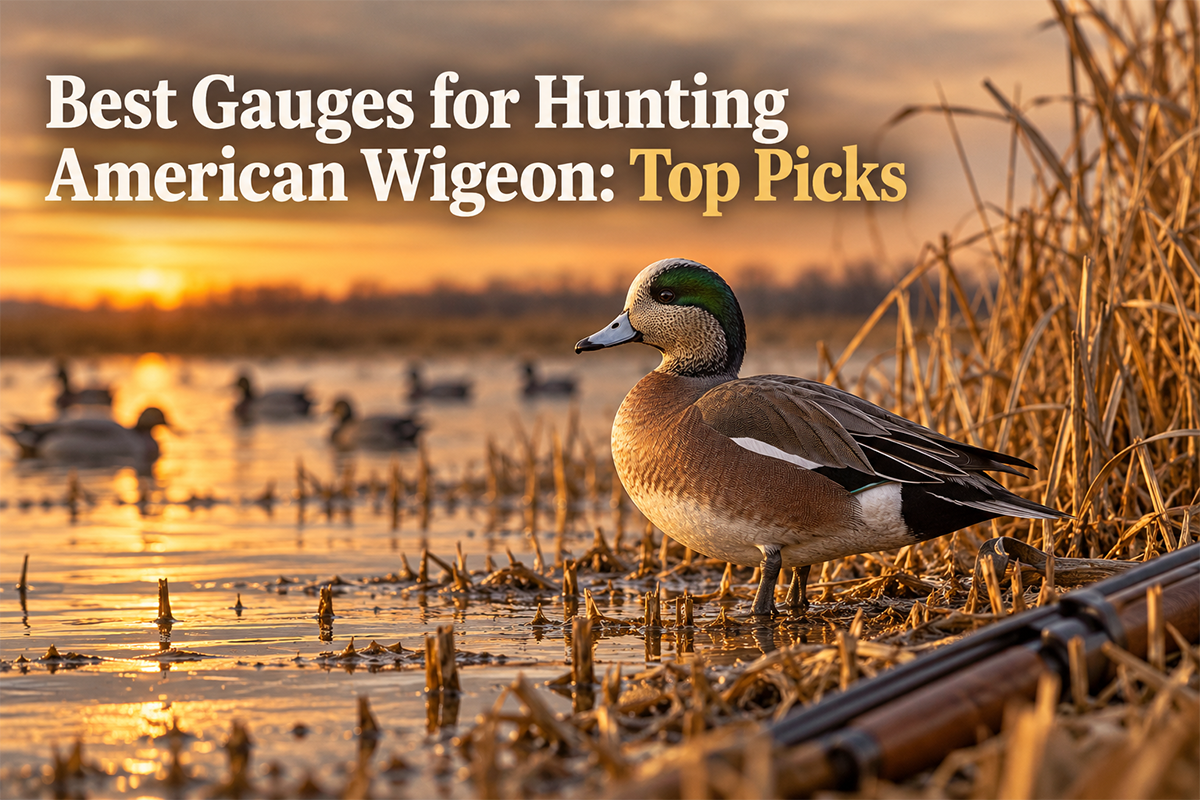
Compare 12 gauge, 20 gauge, 28 gauge, and .410 bore shotguns for American Wigeon hunting, including recoil, effective range, ammunition, and versatility.
Choosing the best American Wigeon hunting gauges comes down to matching your shotgun, ammunition, and shooting ability to the conditions you encounter. American Wigeon are medium-sized dabbling ducks that frequent shallow marshes, coastal wetlands, flooded fields, and open-water feeding areas throughout North America. Although they are not particularly large birds, their quick flight and unpredictable approach angles reward consistent shotgun patterns and disciplined range estimation. The 12 gauge remains a dependable all-around choice, while the 20 gauge, 28 gauge, and .410 bore offer alternatives for hunters prioritizing lighter firearms or reduced recoil. Understanding each option’s strengths, limitations, ammunition requirements, and effective range helps you select a setup that performs reliably without unnecessary expense or excessive recoil.
Where/When: American Wigeon hunting commonly takes place along the Pacific and Central Flyways, including California, Oregon, Washington, the Prairie Pothole Region, Texas, and parts of Canada and Mexico. These ducks typically favor shallow freshwater marshes, vegetated ponds, coastal estuaries, and flooded agricultural areas where aquatic plants and grasses provide food. During early fall migration, hunters may encounter wigeon around prairie wetlands and managed impoundments, while late-season birds often concentrate in coastal marshes and southern wintering habitats. Look for feeding activity near submerged vegetation, pond edges, and protected resting water. Birds frequently move between feeding and resting locations during daylight, although hunting pressure may shift activity toward quieter periods. Cold fronts, changing water levels, and wind can influence movement and decoy response. American Wigeon are often wary, making concealed positions and realistic decoy spreads important. Legal seasons, shooting hours, and bag limits vary by jurisdiction, so always consult current regulations before hunting.
American Wigeon Hunting Gauge Comparisons
| Feature | 12 Gauge | 20 Gauge | 28 Gauge | .410 Bore |
|---|---|---|---|---|
| RecoilTypical perceived recoil with suitable waterfowl loads. | Moderate to heavy | Light to moderate | Generally light | Generally light |
| Practical RangeConservative starting ranges, dependent on pattern testing, load, and shooter proficiency. | 20–40 yards | 20–35 yards | 15–30 yards | 15–25 yards |
| Typical Shot ChargeApproximate payloads; actual loads vary. | 1–1 3/8 oz | 7/8–1 1/4 oz | 5/8–1 oz | 3/8–11/16 oz |
| Versatility | Excellent for ducks, geese, and upland birds | Excellent for ducks and upland birds | Good for upland birds and closer-range ducks | Limited, specialized close-range applications |
| Ammunition Availability | Generally excellent | Generally very good | More limited | Limited waterfowl-specific selection |
| Best Application | All-around waterfowl hunting | Mobile hunting and reduced recoil | Lightweight, close-range hunting | Experienced close-range specialists |
These ranges are practical guidelines rather than guaranteed effective distances. Actual performance depends on the shotgun, choke, approved non-toxic shot material, pellet size, pattern density, and the hunter’s ability. Pattern testing is essential before establishing a responsible maximum range.
12 Gauge: Best Overall for American Wigeon Hunting
The 12 gauge is the most versatile choice for American Wigeon hunters who want dependable performance across changing wetland conditions. Its broad ammunition selection, substantial shot payloads, and availability in pump-action and semi-automatic shotguns make it especially practical for regular waterfowl hunting. It accommodates everything from close-range decoying opportunities to more demanding conditions, provided pattern performance and hunter proficiency justify the distance.
PROS
- Excellent selection of approved non-toxic waterfowl ammunition.
- Generous pellet payloads can produce consistent patterns.
- Highly versatile for ducks, geese, and other legal game.
CONS
- Heavier recoil with powerful loads.
- Some shotguns become tiring during long walks.
- Premium non-toxic ammunition can be expensive.
For typical American Wigeon hunting, 2 3/4-inch or 3-inch shells loaded with steel No. 3 or No. 4 shot are useful starting points. Larger pellets or alternative approved non-toxic materials may suit different conditions, but reliable patterning matters more than choosing the heaviest available load. A modified or improved-cylinder choke can work well depending on the ammunition and engagement distance. Confirm that the choke and barrel are compatible with the selected shot material.
Interesting Fact: Many 12 gauge waterfowl shotguns have interchangeable choke tubes, allowing hunters to adjust pattern characteristics without changing firearms.
Consider This Gauge If…
You regularly hunt mixed duck species, encounter variable wind conditions, or want one shotgun for several waterfowl applications. A properly fitted 12 gauge with manageable recoil provides a particularly versatile long-term investment. Budget-conscious hunters can also choose standard 2 3/4-inch steel loads instead of automatically purchasing magnum ammunition.
20 Gauge: Best Balance of Recoil and Portability
The 20 gauge is an excellent alternative for American Wigeon hunters who prefer lighter shotguns and more manageable recoil. Modern non-toxic ammunition makes it capable of effective performance over sensible duck-hunting distances. Its combination of handling characteristics and sufficient shot payloads is especially attractive for hunters walking into secluded marshes or spending long days carrying equipment.
PROS
- Generally manageable recoil with appropriate loads.
- Lightweight shotgun options are widely available.
- Suitable for decoying ducks and upland hunting.
CONS
- Smaller payloads than comparable 12 gauge loads.
- Less margin for inconsistent patterns at longer distances.
- Lightweight guns can still produce noticeable recoil.
Steel No. 3 or No. 4 shot in suitable 2 3/4-inch or 3-inch ammunition provides a reasonable starting point. A 3-inch shell is not automatically preferable; select ammunition according to chamber compatibility, pattern results, recoil tolerance, and anticipated distance. Hunters should compare several loads on a patterning board before entering the field.
Interesting Fact: Shotgun fit and overall firearm weight can influence perceived recoil as much as the gauge designation itself.
Consider This Gauge If…
You value carrying comfort, hunt over decoys at moderate distances, or find standard 12 gauge loads unpleasant. A well-fitting 20 gauge can encourage better shooting habits by making regular practice more comfortable. It is also a sensible dual-purpose choice for hunters who pursue upland birds during other seasons.
28 Gauge: Best Lightweight Specialty Option
The 28 gauge appeals to experienced American Wigeon hunters who appreciate quick-handling shotguns, modest recoil, and close-range decoy hunting. Although traditionally associated with upland shooting, suitable modern non-toxic loads have expanded its practical waterfowl applications. Its smaller payloads demand careful ammunition selection, accurate range estimation, and consistent shooting technique.
PROS
- Often available in compact, comfortable shotguns.
- Generally mild recoil with suitable ammunition.
- Enjoyable for controlled, close-range shooting.
CONS
- Smaller shot charges limit pattern flexibility.
- Waterfowl ammunition can be harder to locate.
- Specialty non-toxic loads may cost more.
Appropriate steel loads or approved denser non-toxic alternatives can provide useful performance, but the selected shell must match the shotgun’s chamber, barrel, and choke specifications. Since payload capacity is limited, hunters should avoid assuming a specialty load automatically extends ethical range. Pattern density and individual shooting ability remain decisive.
Interesting Fact: Despite its smaller shot charge, the 28 gauge has developed a dedicated following among shooters who value smooth handling and lightweight firearm designs.
Consider This Gauge If…
You primarily hunt American Wigeon over decoys, expect close presentations, and already shoot a 28 gauge confidently. It is less practical as an inexpensive all-purpose waterfowl setup because specialty ammunition can be comparatively costly or difficult to find. Verify ammunition availability before purchasing the shotgun.
.410 Bore: Best for Highly Controlled Close-Range Hunting
The .410 bore is the most specialized option in this comparison. While its low payload capacity presents substantial limitations for American Wigeon hunting, experienced shooters may use it effectively under carefully controlled, close-range conditions. It is not the most forgiving choice for beginners, inconsistent shooters, or situations involving uncertain distances and fast-moving birds.
PROS
- Usually mild recoil in appropriately weighted firearms.
- Compact shotgun configurations are available.
- Can suit disciplined, close-range specialists.
CONS
- Very limited pellet payload compared with larger gauges.
- Demanding pattern performance and narrow practical range.
- Approved non-toxic waterfowl loads can be difficult to source.
Use only properly chambered shells containing approved non-toxic shot, and verify every load’s compatibility with the firearm. The relatively small shot charge makes pattern testing particularly important. Hunters should decline shots that exceed their verified pattern performance, even when birds appear close enough. A 20 gauge is generally a more practical reduced-recoil alternative.
Interesting Fact: The .410 bore is designated by nominal bore diameter rather than the traditional shotgun gauge measurement system.
Consider This Bore Option If…
You are an experienced shotgun hunter who deliberately limits shots to short distances and has established reliable patterns using suitable non-toxic ammunition. It is best viewed as a niche option rather than a general recommendation for new American Wigeon hunters.
Ammunition, Safety, and Hunting Regulations
American Wigeon are regulated migratory game birds, and hunters must follow the applicable federal, state, provincial, territorial, or Mexican regulations. In the United States, waterfowl hunting requires federally approved non-toxic shot, and ordinary migratory waterfowl hunting generally limits shotguns to three-shell capacity, subject to applicable exceptions. Federal rules also prohibit shotguns larger than 10 gauge for migratory game birds. Verify current seasons, daily and possession limits, shooting hours, licenses, permits, duck stamps, and legal hunting methods before entering the field. Never shoot without positively identifying the bird and confirming a safe background. Keep the muzzle pointed in a safe direction, treat every firearm as loaded, and keep your finger off the trigger until ready to shoot. Ethical hunting also means selecting shots within demonstrated patterning ability, aiming for the bird’s vital area, avoiding marginal presentations, and making every reasonable effort to recover downed birds.
Which Gauge Should You Choose for American Wigeon?
For most American Wigeon hunters, the 12 gauge delivers the strongest combination of versatility, ammunition availability, and consistent pattern potential. The 20 gauge is an excellent alternative for those who prioritize carrying comfort and manageable recoil without sacrificing practical decoy-hunting capability. Experienced hunters may appreciate the 28 gauge for lighter, close-range applications, while the .410 bore requires considerably greater selectivity. Regardless of choice, prioritize proper shotgun fit, compatible non-toxic ammunition, suitable choke selection, and regular pattern testing. The best setup is not necessarily the largest or most expensive shotgun. It is the one you can handle confidently, pattern consistently, and use responsibly within the conditions and legal requirements of your hunting area.