
Best Gauges for Hunting American Crow: Comparisons & Picks
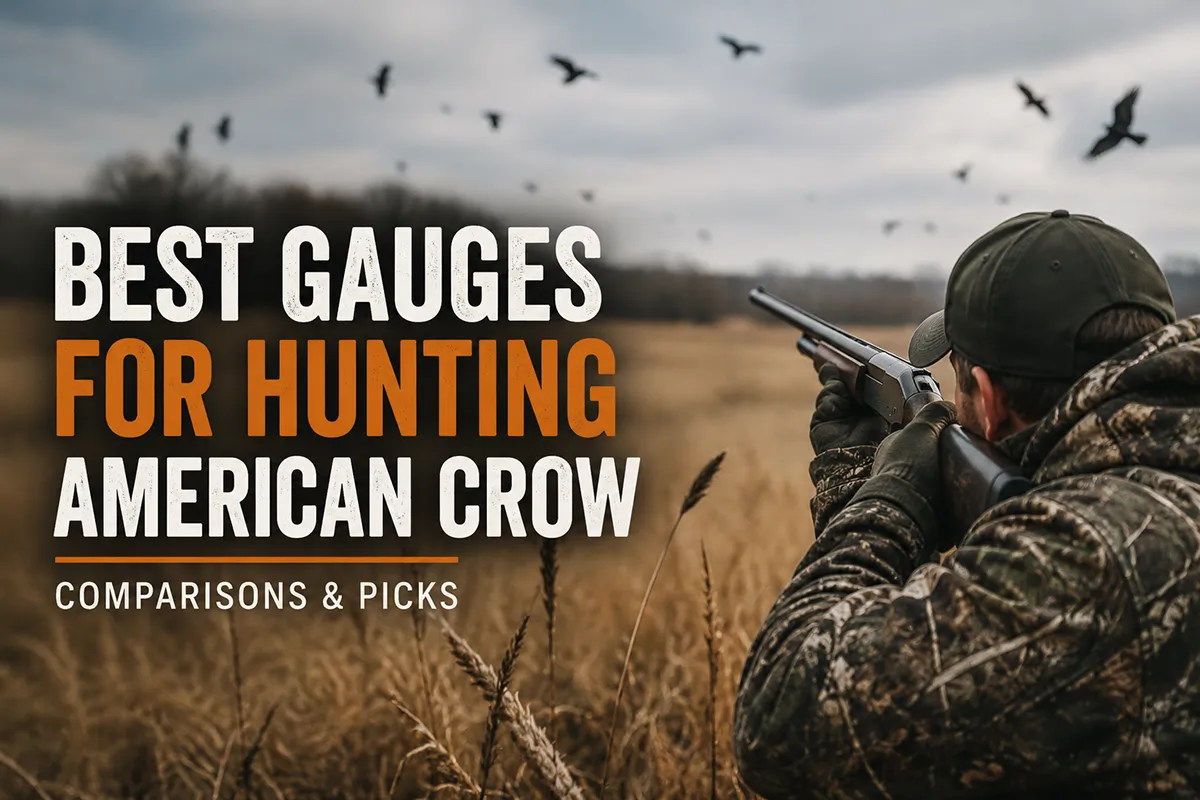
Practical shotgun gauge picks for calling, decoying, and pass-shooting American crows.
Choosing the best American crow hunting gauges means matching your shotgun, shell payload, shot size, choke, and realistic field distance to a wary bird that rarely gives hunters much margin for error. Crows are sharp-eyed, quick to flare from poor concealment, and often taken while responding to calls, circling decoys, or crossing over fields and treelines. The right gauge should solve three problems: enough pattern density for clean hits, manageable recoil for repeat shots, and shell options that comply with local rules. Always handle shotguns safely, confirm your target and background, use ethical shot selection, and check local regulations for crow seasons, legal methods, non-toxic shot requirements, magazine limits, and licensing.
Where/When: American crows are commonly found across much of North America, often using agricultural fields, pastures, woodlots, river bottoms, suburban edges, landfills, and large roosting areas depending on region and season. Hunters often pattern them around food sources, water, loafing trees, flight lines, and travel corridors between feeding areas and evening roosts. Crow hunting seasons and legal methods vary by state and province, but hunting commonly centers on periods when birds are moving predictably, with mornings and late afternoons often producing the most activity. Weather, crop harvest, local food availability, and regional regulations all affect timing, so confirm current rules before planning a hunt.
American Crow Hunting Gauge Comparisons
| Feature | 12 gauge | 20 gauge | 16 gauge | 28 gauge | .410 bore |
|---|---|---|---|---|---|
|
Recoil How much kick you can expect when firing. |
Moderate to heavy, depending on payload | Light to moderate | Moderate, often between 12 and 20 gauge | Light | Very light |
|
Effective Range The distance at which the gauge or bore remains practical with a clean pattern. |
Often 25–45 yards with the right choke and shell | Often 20–40 yards | Often 25–40 yards | Often 20–35 yards | Often 15–25 yards |
|
Shot Payload Range The range of shot payloads typically available for the gauge or bore. |
Commonly around 1 to 1 1/4 oz | Commonly around 7/8 to 1 oz | Commonly around 1 to 1 1/8 oz | Commonly around 3/4 to 7/8 oz | Commonly around 1/2 to 11/16 oz |
|
Versatility How well the gauge or bore performs for other game species besides your primary target. |
Excellent for upland birds, small game, and waterfowl with legal shells | Very good for upland birds, small game, and lighter field guns | Good for hunters who like classic upland shotguns | Good for close upland work and lightweight carry | Limited, best for close-range small game and careful shooters |
|
Shell Availability How easy it is to find appropriate hunting shells. |
Excellent | Excellent | Fair to good | Good in many areas | Good, but hunting shell selection can be narrower |
12 gauge
The 12 gauge is the most forgiving all-around shotgun choice for American crow hunting because it throws dense patterns, handles windy days well, and gives hunters broad flexibility with chokes and shell payloads. It solves the common crow-hunting problem of birds hanging just outside easy range after they spot movement near the blind. With a modified or improved-modified choke and an appropriate legal shell, a 12 gauge can cover calling setups, decoy spreads, pass-shooting along flight lines, and mixed-distance field hunts. It is not automatically the best choice if the shooter flinches, so choose loads you can control.
PROS
- Best pattern density for crows that circle high or drift wide.
- Wide shell, choke, and shotgun availability.
- Useful beyond crow hunting for many small-game and bird seasons.
CONS
- More recoil than smaller gauges in comparable field loads.
- Can be heavier to carry during mobile setups.
- Easy to overdo payload and lose quick follow-up control.
Interesting Fact: Many crow hunters use common field or target-style shot sizes, but the best shell still depends on distance, choke, pattern results, and whether non-toxic shot is required locally.
Consider this Gauge If…
Choose 12 gauge if you want the most versatile crow setup, hunt open fields, shoot in wind, or expect birds to stay alert and circle outside close decoy range. Pattern your shotgun on paper before the hunt, because choke and shell combinations can vary dramatically. For many hunters, the practical setup is a comfortable 12 gauge with reliable cycling, a modified choke, and legal shells that pattern evenly at the distances they actually shoot.
20 gauge
The 20 gauge is one of the smartest choices for hunters who call crows into moderate range and want a lighter, easier-handling shotgun. It solves the recoil problem without giving up too much pattern performance, especially inside 35 to 40 yards with the right shell and choke. A 20 gauge is well suited to hunters who move between setups, younger or recoil-sensitive shooters, and anyone who values fast mounting and smooth swings. It does require honest range discipline because it carries less shot than a 12 gauge.
PROS
- Lighter recoil helps maintain focus during high-volume shooting.
- Easy to carry for run-and-gun calling setups.
- Strong shell availability in many common shot sizes.
CONS
- Less pattern density than 12 gauge at longer distances.
- Requires better range judgment on wary, high-flying crows.
- Light shotguns can still feel snappy with heavier field loads.
Interesting Fact: A well-patterned 20 gauge often performs better in the field than a poorly matched 12 gauge shell and choke pairing.
Consider this Gauge If…
Choose 20 gauge if most of your crow hunting happens over calls and decoys where shots are controlled and relatively close. It is also a strong choice for smaller-framed hunters, anyone who dislikes recoil, or hunters using lightweight field shotguns. Look for shells that produce even coverage at your chosen range, and avoid stretching shots just because birds are visible. Ethical crow hunting depends on putting a clean pattern on the bird, not simply reaching for more distance.
16 gauge
The 16 gauge is a practical middle-ground shotgun option for American crow hunters who like classic field guns and want more payload than a 20 gauge without stepping fully into 12 gauge weight and recoil. It solves the balance problem for hunters who want a lively shotgun with respectable pattern density. In the field, 16 gauge can work well for crows over crop edges, woodlot openings, and smaller decoy spreads where shots are not extreme. The biggest consideration is shell availability, because local stores may carry fewer 16 gauge options than 12 or 20 gauge.
PROS
- Useful balance of payload, carry weight, and recoil.
- Pairs well with classic upland-style shotguns.
- Can pattern well for moderate crow hunting distances.
CONS
- Shell selection is usually smaller than 12 or 20 gauge.
- Replacement parts and choke options may be limited in older shotguns.
- Not the simplest choice for new hunters building a first setup.
Interesting Fact: The 16 gauge has long been appreciated by upland hunters because it can feel lively in the hands while still throwing a useful field pattern.
Consider this Gauge If…
Choose 16 gauge if you already own one, enjoy traditional field shotguns, or want a capable crow setup that sits between the common 12 and 20 gauge options. Before relying on it, confirm you can source legal hunting shells and that your choke is appropriate for the distances you expect. If your local laws require non-toxic shot for certain areas, verify compatible shells before the season rather than assuming they will be easy to find.
28 gauge
The 28 gauge is a refined, low-recoil shotgun option for close to moderate American crow hunting, especially when birds are responding well to calls and finishing near the setup. It solves the fatigue problem for hunters who want a light shotgun that mounts quickly and swings naturally. The 28 gauge is not a long-range crow tool, but it can be effective when the hunter controls distance, uses concealment well, and patterns the shotgun carefully. It rewards discipline and punishes rushed shots at birds that are already leaving the spread.
PROS
- Very pleasant recoil for longer calling sessions.
- Light, quick-handling shotguns are easy to carry and mount.
- Excellent choice for disciplined close-range shooting.
CONS
- Less forgiving pattern than larger gauges at distance.
- Shells can cost more or be less common locally.
- Requires careful choke and shell testing before hunting.
Interesting Fact: The 28 gauge often surprises hunters because its mild recoil and efficient patterns can make it feel more capable than its small shell size suggests.
Consider this Gauge If…
Choose 28 gauge if you hunt from tight cover, use effective calling, and expect crows to pass inside practical range. It is a poor fit for sky-busting or long crossing shots, but a good fit for careful hunters who value low recoil and lightweight shotguns. Select shells with enough pattern density for your chosen distance, and keep shots conservative. In crow hunting, better concealment and smarter setup placement often matter more than more payload.
.410 bore
The .410 bore is the lightest and least forgiving option in this comparison, but it can work for close American crow hunting in the hands of a careful shooter. It solves the recoil and carry-weight problem better than any shotgun option here, making it appealing for short-range setups, small properties, and experienced hunters who want a challenge. The tradeoff is pattern density. With a .410 bore, clean kills require close birds, precise shooting, careful choke selection, and strict discipline about passing marginal shots.
PROS
- Very low recoil and easy carrying.
- Useful for close-range calling when birds finish well.
- Can be a fun challenge for skilled shotgun hunters.
CONS
- Small payload leaves little margin for range or aiming errors.
- Not recommended for long crossing or high-circling crows.
- Hunting shell selection can be limited compared with larger gauges.
Interesting Fact: .410 is properly called .410 bore, not .410 gauge.
Consider this Bore If…
Choose .410 bore only if you are committed to close shots and have patterned your shotgun thoroughly. It is best for hunters who can bring crows into tight range with calling, decoys, and excellent concealment. For most beginners, 20 gauge is a more forgiving light-recoil option. If you use .410 bore, keep your effective range honest, avoid shooting through brush, and never let the novelty of a small bore override ethical shot selection.
Best Overall Gauge for American Crow Hunting
For most hunters, 12 gauge is the best overall choice for American crow hunting because it provides the most forgiving patterns, broad shell availability, and the flexibility to handle close decoying shots or birds that circle wider than expected. The 20 gauge is the best lighter-recoil alternative and may be the better field choice for hunters who walk between multiple calling setups. The 16 gauge is capable if you already own one and can find suitable shells, while the 28 gauge and .410 bore are best reserved for close-range, disciplined shooting. No gauge or bore replaces safe firearm handling, careful pattern testing, good concealment, and ethical range limits. Before hunting, review local regulations for crow seasons, legal methods, non-toxic shot requirements, bag limits, magazine restrictions, and any area-specific rules.