
Best Calibers for Hunting Shiras Moose: Comparisons & Picks
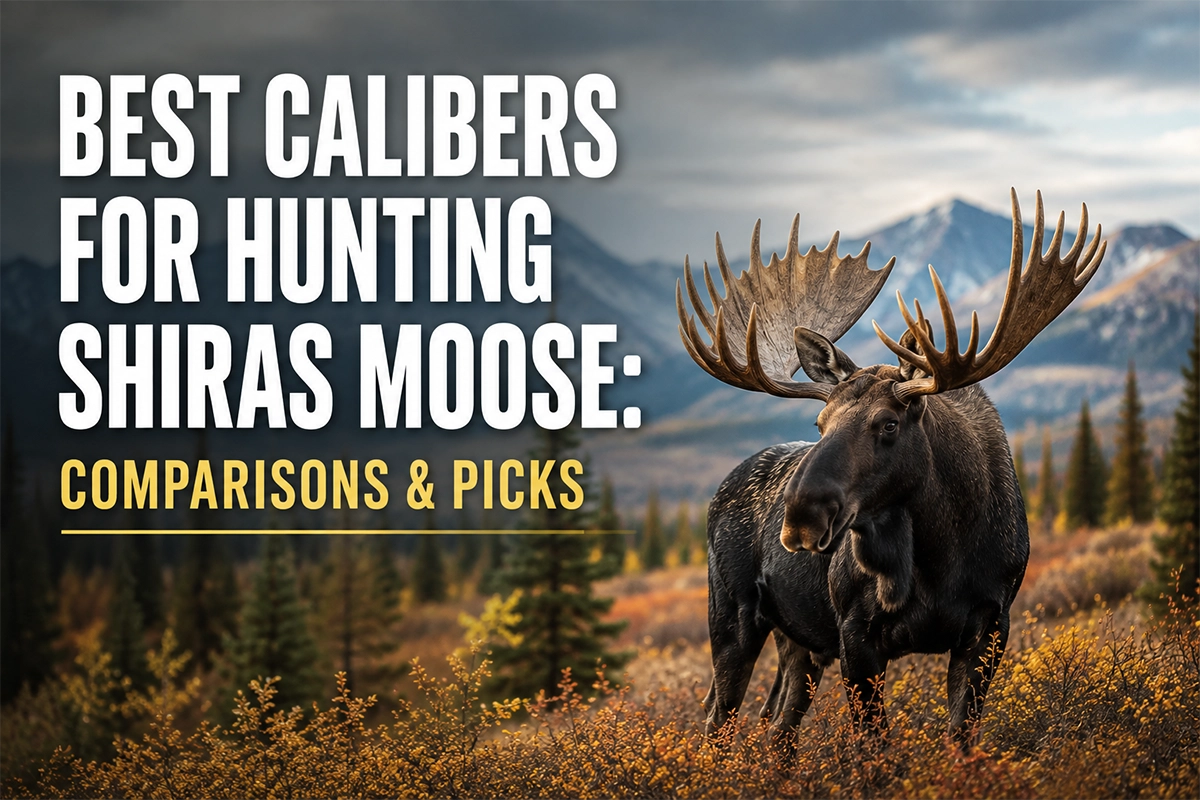
Practical rifle cartridge picks for western moose hunters who need penetration, reach, and confidence on a very large animal.
Choosing the best Shiras moose hunting calibers starts with one reality: even though Shiras moose are generally smaller than Alaska-Yukon moose, they are still big, heavy-boned animals that deserve serious cartridges, strong bullets, and disciplined shot placement. Most hunters should prioritize controlled-expansion bullets, reliable field accuracy, manageable recoil, and enough energy for quartering angles at typical western distances. The right caliber should match the terrain, whether you are calling near willow bottoms, still-hunting dark timber, glassing burns, or covering mountain basins where a follow-up shot may be difficult.
Where/When: Shiras moose are commonly associated with the Rocky Mountain West in places such as Wyoming, Idaho, Montana, Utah, Colorado, and nearby mountain regions, often using willow-lined drainages, beaver ponds, riparian corridors, aspen pockets, lodgepole edges, and high-elevation basins. Hunters often look for tracks, fresh browsing on willow or aspen, rubs, bedding cover near water, and travel routes between feed, cover, and wet areas. Seasons and timing vary by state and unit, but many hunts occur in fall, when bulls may be more responsive to calling around the rut and movement can be best in the morning and evening. Weather, hunting pressure, elevation, and local regulations can change patterns, so always confirm season dates, tag rules, access, and legal equipment before hunting.
Shiras Moose Hunting Calibers Compared
| Feature | .270 Winchester | 7mm Remington Magnum | .30-06 Springfield | .300 Winchester Magnum | .338 Winchester Magnum |
|---|---|---|---|---|---|
|
Recoil How much kick you can expect when firing. |
Moderate; manageable for many experienced deer and elk hunters. | Moderate to stout; usually easier than .300 magnums. | Moderate; familiar, shootable, and widely practiced. | Stout; benefits from good stock fit and practice. | Heavy; best for hunters who tolerate recoil well. |
|
Effective Range The distance at which the caliber remains accurate and lethal. |
Best inside typical practical ranges with premium 150-grain bullets. | Strong to longer western distances with 160-175 grain bullets. | Excellent inside common moose ranges with 180-200 grain bullets. | Excellent reach and authority with 180-200 grain bullets. | Powerful at close to medium-long range with 210-250 grain bullets. |
|
Bullet Weight Range The range of bullet weights typically available for the caliber. |
130-150 grains, with 150-grain controlled-expansion bullets preferred. | 150-175 grains, with 160-175 grains especially useful. | 150-220 grains, with 180-200 grains a practical moose range. | 165-220 grains, with 180-200 grains most common for moose. | 200-250 grains, with 225 grains a popular balanced choice. |
|
Versatility How well the caliber or gauge performs for other game species besides your primary target. |
Great for deer, antelope, and elk with careful bullet choice. | Excellent for mule deer, elk, black bear, and mountain hunting. | One of the most versatile North American big-game calibers. | Excellent for elk, moose, bear, and open-country hunting. | Specialized big-game power for moose, elk, and bear country. |
|
Ammo Availability How easy it is to find ammunition for the caliber. |
Common, though premium heavy-for-caliber loads matter. | Common in many big-game shops and online searches. | Very common with broad hunting load selection. | Very common among western big-game magnum options. | Less common than .30-caliber choices but widely recognized. |
.270 Winchester
The .270 Winchester is the lightest option in this lineup, but it can work for Shiras moose when paired with premium 150-grain controlled-expansion bullets and careful shot selection. It solves the recoil problem for hunters who shoot lightweight rifles well and do not want to move into heavier magnums. It matters most for hunters who already own a proven .270, know their rifle, and expect broadside or slightly quartering shots at moderate distance. Choose tough bullets such as bonded, partition-style, or monolithic designs, and avoid fragile deer loads. For Shiras moose, this is a precision-and-discipline choice, not a license to stretch range or take steep angles.
PROS
- Manageable recoil helps many hunters place shots accurately.
- Flat trajectory is useful in open western basins.
- Rifles and ammunition are commonly available.
CONS
- Less bullet weight and frontal area than larger moose cartridges.
- Requires premium bullets and conservative shot angles.
- Not ideal for hunters who may face close, brushy quartering shots.
Interesting Fact: The .270 Winchester has long been valued for mountain hunting because it combines reach, speed, and moderate recoil in rifles that are often easy to carry.
Consider this Caliber If…
You already shoot a .270 Winchester very well, plan to use a premium 150-grain hunting bullet, and are willing to pass on marginal angles. It is best for hunters who prioritize accuracy over raw power and who understand that ethical shot placement is more important than cartridge reputation.
7mm Remington Magnum
The 7mm Remington Magnum is a strong middle-ground caliber for Shiras moose hunters who want more bullet weight and downrange energy than the .270 Winchester without stepping into the recoil of larger .30 or .338 magnums. It solves the open-country problem by offering a flat trajectory, excellent sectional density, and good penetration with 160- to 175-grain bullets. It matters when hunts involve glassing across parks, burns, or alpine openings where shots can be longer but still need to be ethical and controlled. Choose bonded, partition-style, or copper bullets built for deep penetration, and make sure your rifle stabilizes the heavier bullets you intend to hunt with.
PROS
- Flat trajectory helps in open western terrain.
- Heavy 7mm bullets can penetrate well for their diameter.
- Recoil is often manageable compared with larger magnums.
CONS
- Can be loud and sharp-recoiling in lightweight rifles.
- Requires proper bullet construction for moose-sized game.
- Less frontal diameter than .30- and .338-caliber options.
Interesting Fact: The 7mm Remington Magnum became popular with western hunters because it handles wind and distance well while still fitting in many standard hunting rifle platforms.
Consider this Caliber If…
You hunt mixed deer, elk, and Shiras moose country and want one rifle with reach. It is especially sensible if you can shoot magnum recoil comfortably but do not want the extra kick of a .300 Winchester Magnum or .338 Winchester Magnum.
.30-06 Springfield
The .30-06 Springfield is one of the most practical Shiras moose hunting calibers because it balances power, availability, bullet selection, and shootability. It solves the “one dependable rifle” problem for hunters who want a non-magnum cartridge that still carries serious authority with 180- to 200-grain controlled-expansion bullets. It matters in timber edges, willow pockets, foothill draws, and moderate-distance openings where the hunter needs penetration more than extreme velocity. Choose a rifle you can shoot from field positions, confirm zero with your exact hunting load, and prioritize bullets designed for elk and moose rather than thin-jacketed deer bullets.
PROS
- Excellent bullet selection for large-bodied game.
- Usually easier to shoot well than hard-kicking magnums.
- Very common ammunition and rifle availability.
CONS
- Trajectory is less flat than faster magnum cartridges.
- Needs careful range judgment beyond typical distances.
- Some factory loads are better suited to deer than moose.
Interesting Fact: The .30-06 Springfield remains a benchmark big-game caliber because it can use a wide range of bullet weights while staying manageable for many hunters.
Consider this Caliber If…
You want a proven, widely supported caliber for Shiras moose, elk, mule deer, and black bear. It is a smart choice for hunters who value practical field accuracy, reasonable recoil, and easy access to premium hunting loads.
.300 Winchester Magnum
The .300 Winchester Magnum is a top pick for hunters who want more reach, velocity, and authority while staying in the widely available .30-caliber family. It solves the distance-and-energy problem for Shiras moose hunts where glassing country, canyon wind, and longer approaches can make shot opportunities limited. It matters when you may need a strong 180- or 200-grain bullet to break through heavy muscle and still reach vitals. Choose this caliber only if you can manage the recoil from field positions. A rifle that hurts to practice with is not an advantage. Good stock fit, a quality recoil pad, and regular practice are important.
PROS
- Excellent balance of reach, power, and bullet availability.
- Strong choice for moose, elk, and bear country.
- Common factory loads include premium controlled-expansion bullets.
CONS
- Recoil can reduce accuracy for some hunters.
- Magnum rifles may be louder and heavier to carry.
- More power does not replace ethical shot placement.
Interesting Fact: The .300 Winchester Magnum is popular among western big-game hunters because it offers magnum performance while using a huge selection of .30-caliber hunting bullets.
Consider this Caliber If…
You want a capable all-around western big-game rifle and can shoot magnum recoil consistently. It is a strong option for hunters who may pursue Shiras moose one season and elk, mule deer, or larger-bodied game in future seasons.
.338 Winchester Magnum
The .338 Winchester Magnum is the heavy hitter in this comparison and is especially useful for hunters who want maximum penetration and confidence on close to medium-range shots in heavy cover or bear country. It solves the large-animal, tough-angle problem better than lighter calibers, especially with 225- or 250-grain controlled-expansion bullets. It matters when a bull is quartering away in dark timber, when cover is thick, or when recovery could be difficult. The tradeoff is recoil. This caliber is only a good choice if you practice enough to place shots cleanly. Choose a rifle with appropriate weight, solid optics, and a load that groups reliably.
PROS
- Excellent penetration with heavy controlled-expansion bullets.
- Provides authority for large-bodied animals and tough angles.
- Useful in elk, moose, and bear hunting scenarios.
CONS
- Heavy recoil can make precise field shooting harder.
- Ammunition is usually less common than .30-caliber options.
- More cartridge than many hunters need for open, broadside shots.
Interesting Fact: The .338 Winchester Magnum has a long reputation as a serious North American big-game cartridge because it combines heavy bullets with useful hunting-rifle portability.
Consider this Caliber If…
You are comfortable with heavy recoil, may hunt dense willow or timber cover, or want a rifle that gives extra penetration on large animals. It is best for experienced shooters who will practice from real field positions before the hunt.
Final Thoughts on Shiras Moose Hunting Calibers
The best caliber for hunting Shiras moose is the one that gives you enough penetration while still allowing calm, accurate shooting. For many hunters, the .30-06 Springfield is the practical baseline, the .300 Winchester Magnum is the power-and-reach upgrade, and the 7mm Remington Magnum is a capable western middle ground. The .270 Winchester can work with premium bullets and careful shot choice, while the .338 Winchester Magnum is excellent for hunters who can truly manage its recoil. Whatever you choose, use a strong hunting bullet, confirm accuracy before the season, know your personal distance limit, and wait for ethical shot angles. Always handle firearms safely, understand your backstop, respect private and public-land rules, and check local regulations for seasons, tag conditions, legal minimum calibers, magazine limits, and any special ammunition requirements.