
Best Calibers for Hunting Prairie rattlesnake: Comparisons & Picks
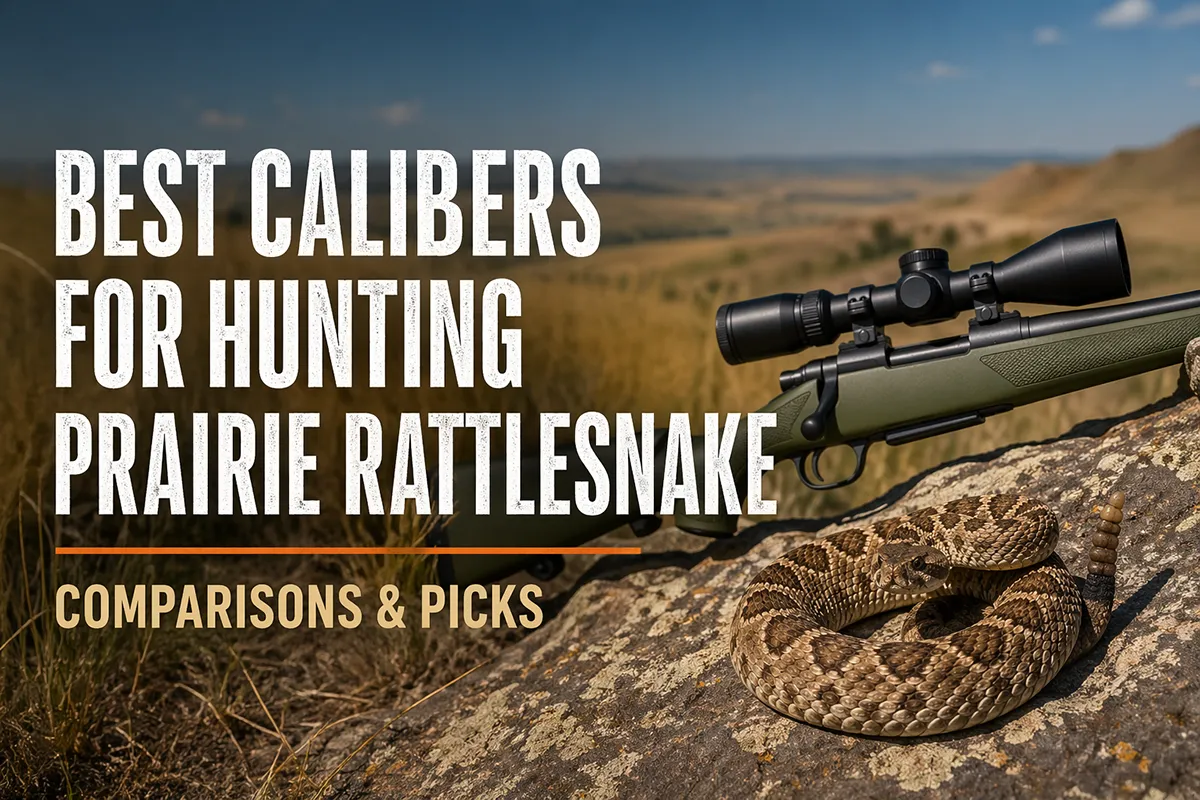
Practical close-range picks for safer, more effective prairie rattlesnake control and hunting decisions.
Choosing the best prairie rattlesnake hunting calibers is really about choosing the right close-range shotshell tool for the terrain, your recoil tolerance, and how much precision you need around rocks, fencelines, and pasture edges. In many situations, lighter shot charges and short, controlled distances make more sense than powerful centerfire rounds, which can increase ricochet risk and destroy more than necessary. Most hunters are best served by a shotgun gauge or handgun/rimfire shotshell that patterns well inside typical snake distances. No matter what you carry, safe muzzle control, a clear backstop, ethical shot placement, and local law compliance matter more than raw power. Regulations vary by state and property, including seasons, methods of take, non-toxic shot rules, and magazine limits, so always check current local laws before heading out.
Where/When: Prairie rattlesnakes are commonly found across much of the Great Plains and interior West, often in open prairie, shortgrass range, badlands, rocky draws, creek bottoms, pasture edges, and sun-warmed slopes with nearby cover. Hunters and landowners typically notice sign and movement near rodent-rich areas, stock water, brushy transition lines, rock piles, denning habitat, and travel corridors between feeding and basking spots. Timing varies by region and regulations, but activity often increases in mild spring and fall conditions, while hot summer weather can push movement toward early morning, evening, or even nighttime. In cooler weather, snakes may bask longer during mid-morning or afternoon. Weather swings, recent rain, and rapid temperature changes can affect movement, so patterning is often most reliable when conditions are warm but not extreme.
Caliber Comparisons
| Feature | .410 bore | 20 gauge | 12 gauge | .22 LR shotshell | .38 Special / .357 Magnum shotshell |
|---|---|---|---|---|---|
| Recoil How much kick you can expect when firing. |
Low | Moderate | Moderate to high | Very low | Low to moderate |
| Effective Range The distance at which the caliber remains accurate and lethal. |
About 10–20 yards | About 12–25 yards | About 15–30 yards | About 6–10 yards | About 8–12 yards |
| Bullet Weight Range The range of bullet weights typically available for the caliber. |
About 1/2–11/16 oz shot | About 7/8–1 oz shot | About 1–1 1/4 oz shot | 31 gr shot capsule | About 90–120 gr shot capsule |
| Versatility How well the caliber or gauge performs for other game species besides your primary target. |
Moderate | High | Very high | Low | Low to moderate |
| Ammo Availability How easy it is to find ammunition for the caliber. |
Good | Excellent | Excellent | Fair | Fair |
.410 bore
For many hunters, .410 bore is the cleanest prairie rattlesnake hunting option when portability and manageable recoil matter most. It throws enough shot for close encounters without the bulk and blast of a larger gauge, making it a strong fit for walking fence lines, checking water sources, or carrying a compact field gun around ranch property.
PROS
- Light recoil and easy handling for quick, controlled shots
- Useful balance of pattern density and portability at snake distances
- Common choice in compact single-shot and lightweight field guns
CONS
- Less forgiving pattern than larger shotgun gauges
- Performance drops quickly as distance stretches
- Ammo variety can be narrower than 12 gauge or 20 gauge
Interesting Fact: .410 bore is properly described as a bore, not a gauge, which makes it the exception most hunters remember.
Consider this Caliber If…
Choose .410 bore if you want a dedicated snake and small-pest tool that is easy to carry all day and simple to shoot well under stress. It shines in tighter ranch chores, short walks, and close, deliberate shooting lanes where you can keep distance realistic. It is also a sensible pick for hunters who want less recoil but still prefer a shoulder-fired platform over a handgun. Pattern your chosen load first, because choke, barrel length, and shell choice matter a lot with .410 bore.
20 gauge
20 gauge is often the best all-around answer for hunters who may encounter prairie rattlesnakes while pursuing other game. It offers a denser, more forgiving pattern than .410 bore, but it is still lighter and softer shooting than many 12 gauge setups. That makes it an excellent practical compromise for mixed-use field carry.
PROS
- Better pattern coverage than .410 bore without heavy recoil
- Widely available ammunition and many field gun options
- Works well as a crossover gauge for upland and small-game hunting
CONS
- Still bulkier than a handgun or compact .410 bore
- Can be more gun than needed for very close encounters
- Not as common as 12 gauge in every load type
Interesting Fact: 20 gauge is frequently considered the sweet spot between easy carry and dependable pattern performance.
Consider this Caliber If…
Pick 20 gauge if you want one field gun to do more than just snake duty. It suits hunters who cover ground, prefer moderate recoil, and want better margin for error than smaller shot charges provide. This gauge makes sense in broken prairie, brushy draws, and pasture country where snakes may appear unexpectedly during other hunts. It is especially attractive when budget matters, because 20 gauge guns and shells are commonly available and useful for many seasons beyond prairie rattlesnake work.
12 gauge
If maximum pattern density is your priority, 12 gauge remains the most forgiving shotgun gauge on this list. It gives you the broadest shell selection and plenty of payload, which can help when shots are not perfectly centered. The tradeoff is more recoil, more bulk, and often more noise than the task really requires.
PROS
- Strong pattern density and the widest ammo selection
- Very versatile for other hunting uses throughout the year
- Easy to find loads, guns, and replacement parts almost anywhere
CONS
- More recoil and muzzle blast than many hunters need for snakes
- Heavier guns can be tiring on long walks
- Less convenient for quick carry around routine property checks
Interesting Fact: 12 gauge has long been the benchmark for judging shotgun pattern performance across many hunting loads.
Consider this Caliber If…
Go with 12 gauge if you already own one, shoot it confidently, and want the simplest path to dense patterns and broad shell availability. It is best for hunters who are comfortable with recoil and do not mind carrying a larger gun in exchange for maximum flexibility. For prairie rattlesnake use, it is wise to keep distances close and choose loads thoughtfully, since the gauge’s extra capability can be unnecessary in tight, rocky spots where safe angles and controlled shooting matter more than sheer payload.
.22 LR shotshell
.22 LR shotshell is a highly specialized caliber option for very short-range prairie rattlesnake encounters. It is light, handy, and easy to carry in a small revolver or rimfire platform, which makes it attractive for chores and property work. Its weakness is obvious: pattern and energy fade fast, so distance discipline is critical.
PROS
- Minimal recoil and very easy day-to-day carry
- Useful for close, opportunistic encounters around camp or equipment
- Lower noise than larger shotgun options in many setups
CONS
- Extremely limited range and quickly thinning patterns
- Far less forgiving than shotgun options
- Load availability can be inconsistent depending on the market
Interesting Fact: Many .22 LR shotshell loads use a capsule design that opens quickly, which is why they are strictly close-range tools.
Consider this Caliber If…
Consider .22 LR shotshell if convenience is your main goal and you expect only very short-range opportunities. It is best for experienced shooters who understand its limitations and will not stretch distance. For hunters working around sheds, corrals, irrigation equipment, or light ranch tasks, a compact rimfire can be easier to keep nearby than a long gun. Even so, it is not the best primary choice when you expect multiple encounters or need more pattern insurance for quick field shots.
.38 Special / .357 Magnum shotshell
This caliber pair gives handgun users a sturdier shotshell option than .22 LR, especially when carried in a revolver. It offers more shot payload and practical range for close snake work, while remaining compact enough for sidearm carry. For hunters who want a belt gun rather than a long gun, this is one of the more realistic choices.
PROS
- Better close-range performance than most rimfire shotshell options
- Convenient sidearm format for ranch work and frequent carry
- Revolvers typically handle shotshell loads reliably
CONS
- Still short-ranged compared with shotgun gauges
- More expensive and less common than popular shotgun shells
- Requires careful practice to understand point of impact and pattern spread
Interesting Fact: Revolvers are often preferred for handgun shotshell loads because they avoid many feeding issues seen in semi-automatic pistols.
Consider this Caliber If…
Choose .38 Special or .357 Magnum shotshell if you want a practical trail or ranch sidearm that can handle close prairie rattlesnake encounters without resorting to a full shotgun. It works best for experienced handgun shooters who value portability and can keep their shots close and controlled. This is also a sensible option when you are already carrying a revolver for general field use. Just remember that ethical results still depend on very short range, clean angles, and realistic expectations about pattern size.
Final Thoughts
For most hunters, .410 bore or 20 gauge will be the smartest prairie rattlesnake hunting calibers and gauges because they balance useful pattern density, manageable recoil, and practical field carry. A 12 gauge makes sense when it is the gun you already shoot best, while .22 LR shotshell and .38 Special/.357 Magnum shotshell fill niche roles for short-range convenience. The best choice comes down to where you hunt, how far your shots usually are, whether you want a long gun or sidearm, and how much recoil and bulk you are willing to tolerate. Whatever you choose, pattern your load first, keep distances realistic, avoid risky shots off hard surfaces, prioritize ethical head-and-neck placement at close range, and verify all local regulations before hunting or dispatching prairie rattlesnakes.