
Best Calibers for Hunting Javelina: Comparisons & Picks
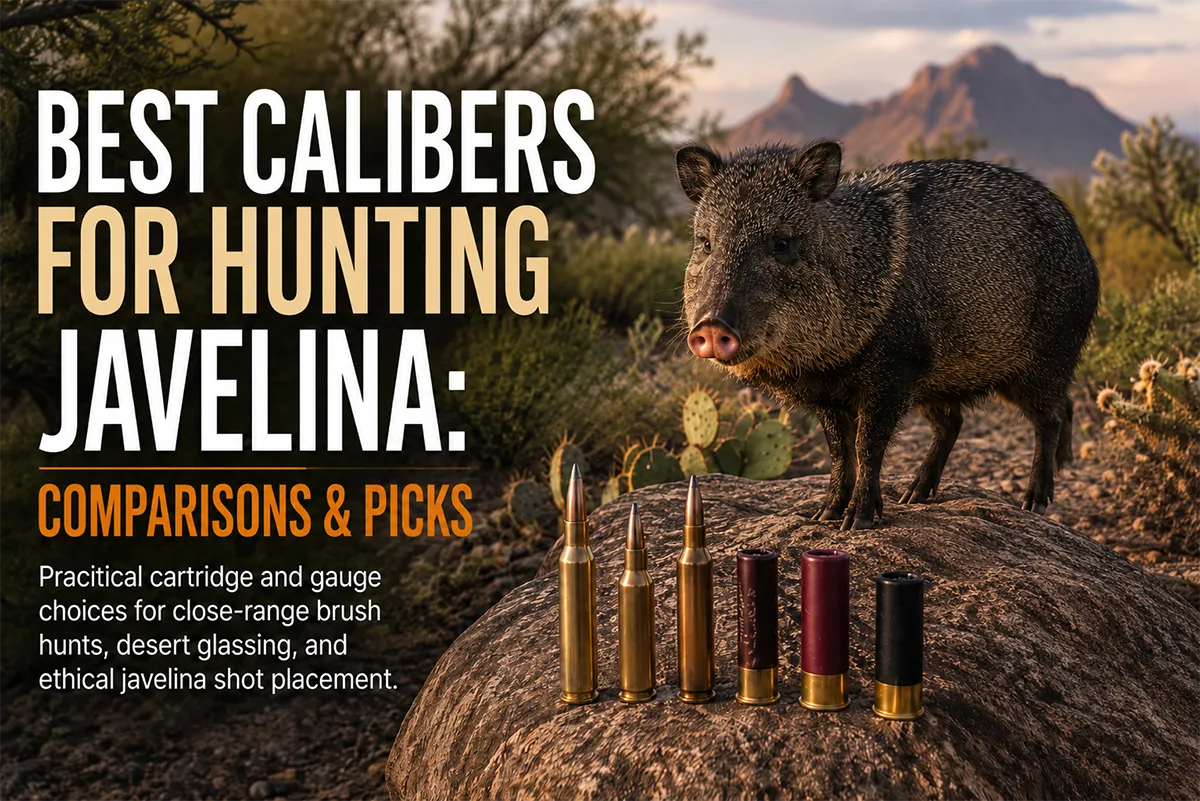
Practical cartridge and gauge choices for close-range brush hunts, desert glassing, and ethical javelina shot placement.
Choosing the best javelina hunting calibers is mostly about matching modest power to real field conditions. Javelina are not large animals, but they are tough for their size, often found in brushy, rocky, or cactus-heavy country where shots can be quick and angles are not always perfect. The right setup should give you enough penetration for the chest cavity without excessive recoil, unnecessary meat damage, or a rifle that is awkward to carry all day. Regulations vary by state and hunt unit, including seasons, legal methods, minimum calibers, non-toxic shot rules, magazine limits, and tag requirements, so check local laws before buying ammunition or going afield.
Where/When: Javelina, or collared peccary, are commonly hunted across parts of the Southwest, especially desert, mesquite flats, oak-juniper hills, arroyos, canyon edges, cactus country, and brushy ranchland in states such as Arizona, Texas, and New Mexico. Hunters often find sign around prickly pear, agave, water sources, bedding cover, washes, and travel corridors between feeding and resting areas. Seasons and legal methods vary by region and regulations, but javelina movement is typically easiest to pattern in cooler parts of the day, with morning and evening glassing often productive. In warm weather they commonly bed during midday, while cold fronts, wind, rain, or hunting pressure can shift where and when they move.
Javelina Hunting Calibers Compared
| Feature | .223 Remington | .243 Winchester | 6.5 Grendel | .30-30 Winchester | 12 gauge slug |
|---|---|---|---|---|---|
| Recoil How much kick you can expect when firing. | Very light | Light to moderate | Light to moderate | Moderate | Moderate to heavy |
| Effective Range The distance at which the caliber remains accurate and lethal. | Inside 150 yards with proper bullets | Out to 250 yards for confident shooters | Inside 200 yards in most field setups | Inside 150 yards, especially in brush | Inside 75 yards with slugs |
| Bullet Weight Range The range of bullet weights typically available for the caliber. | 55-77 grains | 85-100 grains | 90-123 grains | 150-170 grains | Commonly 1 oz slugs |
| Versatility How well the caliber or gauge performs for other game species besides your primary target. | Predators, varmints, and small game where legal | Predators, deer, antelope, and youth rifles | Hogs, deer, predators, and compact rifles | Deer, hogs, black bear in some regions | Close-range deer, hogs, and general shotgun use |
| Ammo Availability How easy it is to find ammunition for the caliber. | Excellent | Very good | Moderate | Good | Excellent |
.223 Remington
The .223 Remington solves the recoil problem for hunters who want a light, accurate rifle for small desert game. It matters most when shots are deliberate, ranges are moderate, and the hunter can place a controlled-expansion bullet precisely behind the shoulder. Choose heavier soft-point, bonded, monolithic, or hunting-specific bullets rather than thin varmint loads. A 62- to 77-grain hunting bullet is often a better javelina choice than a fast, fragile varmint bullet because it improves penetration and reduces the risk of shallow expansion. This caliber is especially useful for new hunters, smaller-framed shooters, and anyone carrying an AR-style rifle where legal. The tradeoff is margin: poor angles, long shots, and light bullets can make it a marginal choice, so keep distances realistic and pass on questionable shots.
PROS
- Very low recoil helps hunters stay steady and spot impacts.
- Ammunition is commonly available in many hunting loads.
- Light rifles are easy to carry while glassing desert country.
CONS
- Requires careful bullet selection for ethical penetration.
- Not ideal for steep quartering shots or long-range attempts.
- May not meet legal requirements in every hunting area.
Interesting Fact: The .223 Remington often performs better on javelina with controlled-expansion hunting bullets than with highly frangible varmint bullets designed for smaller animals.
Consider this Caliber If…
You want minimal recoil, already own a suitable rifle, and expect broadside or slightly quartering shots inside about 150 yards. Confirm your local rules allow it, sight in with the exact hunting load, and focus on the vitals rather than trying to break heavy bone.
.243 Winchester
The .243 Winchester is one of the most balanced javelina hunting calibers because it offers flat trajectory, manageable recoil, and more authority than smaller .22 centerfires. It solves the problem of wanting a mild rifle that can still handle wind, open-country shots, and less-than-perfect field rests. It matters when you are glassing across desert basins, washes, or open slopes where a javelina may appear at 150 to 250 yards. Choose 85- to 100-grain soft-point, bonded, partition-style, or copper hunting bullets. Avoid ultra-light varmint bullets for javelina because they can expand too quickly. A lightweight bolt-action .243 with a clear 3-9x or 2.5-10x scope is simple, accurate, and forgiving for mixed terrain. It is also versatile enough for predators and deer-sized game where legal, making it a strong choice for hunters who want one rifle for several seasons.
PROS
- Flat trajectory helps with longer desert shots.
- Recoil stays comfortable for most hunters.
- Good bullet selection for controlled expansion.
CONS
- Can cause more meat damage with fragile bullets.
- Rifle length and scope weight matter for long walks.
- Still requires careful shot placement on small vital zones.
Interesting Fact: The .243 Winchester’s popularity comes from pairing light recoil with enough velocity to make field-distance mistakes in range estimation less punishing.
Consider this Caliber If…
You want a mild, accurate rifle that handles both close brush and open desert. It is a smart pick for hunters who may also pursue coyotes, deer, or pronghorn, and for anyone who wants more reach than a lever gun without stepping into heavy recoil.
6.5 Grendel
The 6.5 Grendel solves a specific problem for javelina hunters who prefer compact semi-automatic rifles but want better downrange energy and sectional density than many light .22 centerfire loads. It matters in broken desert, brushy draws, and rolling canyon country where shots may be quick at 60 yards or careful from a tripod at 180 yards. Choose 100- to 123-grain hunting bullets built for controlled expansion, and make sure your rifle cycles reliably with the exact magazine and ammunition combination you plan to carry. The 6.5 Grendel is not as universally stocked as .223 Remington or .243 Winchester, so buy and test your ammunition before the season. Its main advantage is efficiency: it gives useful performance from shorter barrels with mild recoil, making it easy to carry and fast to shoulder in thick cover.
PROS
- Good penetration potential with proper 6.5mm hunting bullets.
- Works well in compact, easy-carry rifles.
- Mild recoil supports fast follow-up accuracy.
CONS
- Ammunition availability can be less predictable than common cartridges.
- Magazine and rifle reliability should be tested before hunting.
- Not necessary if you already own a proven .243 or .30-30.
Interesting Fact: The 6.5 Grendel is valued by many hunters because it gets efficient performance from compact rifles without requiring a long action or heavy platform.
Consider this Caliber If…
You hunt with an AR-style rifle where legal, want low recoil, and prefer a cartridge that carries more bullet weight than .223 Remington. It is best for hunters who plan ahead on ammo and value compact handling over maximum range.
.30-30 Winchester
The .30-30 Winchester is a classic close-range javelina caliber for hunters working mesquite, oak brush, creek bottoms, and canyon pockets. It solves the problem of needing quick handling and dependable penetration at realistic woods distances. It matters when shots are likely under 150 yards and the rifle may need to come up fast from a standing or kneeling position. Choose 150- or 170-grain soft-point or modern tipped flat-nose ammunition that is safe for tubular magazines. A low-power scope, peep sight, or quality red dot can all work, but the rifle should be sighted for the ranges you actually expect. The .30-30 has more recoil and bullet weight than javelina strictly require, but it is effective when used carefully. Avoid raking shots and be mindful of meat damage on such a compact animal.
PROS
- Excellent handling in brush and tight cover.
- Proven penetration with standard hunting bullets.
- Lever-action rifles are easy to carry and point naturally.
CONS
- Trajectory limits practical range compared with flatter cartridges.
- More power than needed for small javelina if shot placement is poor.
- Traditional iron sights can limit precision in low light.
Interesting Fact: Many .30-30 rifles are carried because they balance easily in one hand, which is useful when moving slowly through brush or rocky washes.
Consider this Caliber If…
You hunt thick cover, prefer a lever-action rifle, and expect close to moderate shots. It is a practical choice for hunters who value fast handling and already use the .30-30 for deer or hogs.
12 gauge slug
The 12 gauge slug is a gauge option, not a rifle caliber, and it solves the problem of hunting javelina where shotguns are preferred, required, or simply already owned. It matters in close cover, ranch country, and short-range setups where shots are inside about 75 yards. Choose rifled slugs for smoothbore barrels or sabot slugs for fully rifled barrels, and pattern from field positions rather than assuming point of impact. A bead sight can work at close range, but rifle sights or a low-power optic make ethical placement easier. Some areas may have special shotgun, non-toxic shot, or projectile rules, so check regulations carefully before using slugs or buckshot. The 12 gauge hits hard and leaves little room for error in backstop awareness, making safe handling, clear target identification, and disciplined shot angles especially important.
PROS
- Strong close-range authority with proper slug placement.
- Useful for hunters who already own a reliable shotgun.
- Ammo and gun options are widely available.
CONS
- Effective range is limited compared with rifle cartridges.
- Recoil can be stout, especially from lightweight shotguns.
- Slug type must match the barrel and sighting system.
Interesting Fact: A slug gun that is carefully patterned at 25, 50, and 75 yards often teaches hunters more about real-world trajectory than a single benchrest group.
Consider this Gauge If…
You hunt close cover, own a shotgun that groups slugs well, or need a legal shotgun option for a specific hunt. Keep ranges short, verify your sights, and avoid trying to stretch slug performance beyond your proven accuracy.
Final Pick for Javelina Hunting
For most hunters, the .243 Winchester is the safest all-around recommendation because it combines reach, mild recoil, common ammunition, and enough bullet weight for clean javelina harvests. The .223 Remington is excellent for low-recoil hunters who choose proper bullets and keep shots conservative. The 6.5 Grendel is a strong compact-rifle option, the .30-30 Winchester shines in brush, and the 12 gauge slug is a useful close-range gauge when shotguns fit the hunt. Whatever you choose, sight in with your hunting load, know your limits from field positions, handle every firearm safely, and wait for an ethical shot into the vitals. Javelina are small targets, so patience and placement matter more than raw power. Always confirm current regulations before the hunt, including season dates, tag rules, legal cartridges or gauges, non-toxic ammunition requirements, and magazine limits.