
Best Calibers for Hunting Gray Wolf: Comparisons & Picks
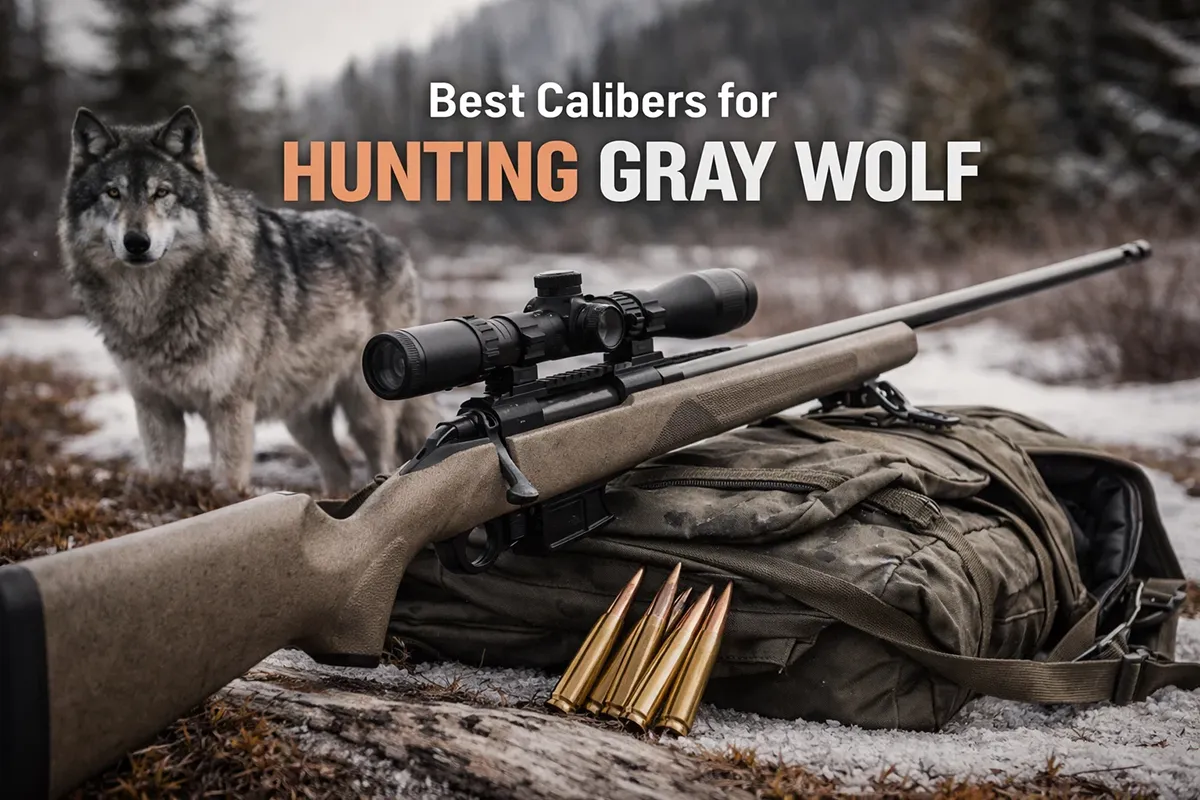
Balanced picks for calling stands, open-country shots, and pelt-friendly setups.
Choosing gray wolf hunting calibers is all about matching your terrain, expected distance, and bullet construction. Wolves aren’t armored, but they’re tough animals that can soak up poor hits—so prioritize controlled-expansion bullets, a stable shooting position, and ethical shot placement. Regulations vary widely (and wolves may be protected or tightly managed in some areas), so always confirm your season rules, minimum caliber requirements, and any ammo restrictions before you hunt.
Caliber Comparisons
| Feature | .223 Remington | 22-250 Remington | 6mm Creedmoor | 6.5 Creedmoor | .308 Winchester |
|---|---|---|---|---|---|
| Recoil How much kick you can expect when firing. |
Very low | Low | Low–moderate | Moderate | Moderate–high |
| Effective Range The distance at which the caliber remains accurate and lethal. |
Up to ~300 yds (with right load) | Up to ~350 yds | Up to ~450 yds | Up to ~500 yds | Up to ~450 yds |
| Bullet Weight Range The range of bullet weights typically available for the caliber. |
50–77 gr | 40–75 gr | 87–110 gr | 120–147 gr | 150–180 gr |
| Versatility How well the caliber or gauge performs for other game species besides your primary target. |
Great for predators/varmints | Predators & varmints | Predators to deer-size game | Predators to elk (with right load) | Excellent all-around big-game |
| Ammo Availability How easy it is to find ammunition for the caliber. |
Very high | High | Medium | High | Very high |
.223 Remington
A light-recoiling predator classic that can be very effective on gray wolves with proper bullets and disciplined shot placement—especially when you’re trying to minimize pelt damage.
PROS
- Very low recoil for fast follow-up shots
- Excellent accuracy in many rifles and AR platforms
- Wide selection of predator-appropriate bullets
CONS
- Less margin for error on raking angles
- Wind drift is more noticeable at distance
- Some jurisdictions require larger calibers for wolves
Interesting Fact: In many platforms, .223 Remington pairs well with high-BC 60–77gr bullets that buck wind better than older varmint loads.
Consider this Caliber If…
You want minimal recoil, shoot from stable rests, and plan to keep shots inside practical distances for your skill level.
22-250 Remington
A speed-demon .22 caliber that extends your effective predator range with flat trajectory—popular for open-country wolf calling where shots can stretch out.
PROS
- Very flat trajectory for simpler holds
- Excellent accuracy and downrange energy for its size
- Often pelt-friendlier than bigger bores (with good bullets)
CONS
- Barrel life can be shorter than milder cartridges
- Louder blast and sharper report than .223
- Factory ammo variety can be thinner in some areas
Interesting Fact: The 22-250’s high velocity helps reduce time-of-flight—one reason it’s favored when coyotes or wolves are constantly on the move.
Consider this Caliber If…
You hunt wide, windy country and want a flat-shooting predator round that still hits hard enough with controlled-expansion bullets.
6mm Creedmoor
A modern 6mm built around efficient bullets and excellent accuracy—giving you a strong blend of manageable recoil, wind performance, and terminal effectiveness on wolves.
PROS
- Low recoil with excellent wind-bucking bullets
- Strong accuracy reputation in factory rifles
- Good balance of reach and terminal performance
CONS
- Ammo availability can be seasonal or region-dependent
- Can be harder to find locally than 6.5 CM or .308
- Heavier bullets may still be more pelt-damaging than .22s
Interesting Fact: 6mm Creedmoor is popular in precision shooting because it pairs sleek bullets with mild recoil—helping shooters spot impacts and correct quickly.
Consider this Caliber If…
You want a ‘do-it-all’ predator-to-deer caliber with modern bullet options and you value wind performance for longer shots.
6.5 Creedmoor
If you want extra margin on tough angles and longer distances, 6.5 Creedmoor brings higher bullet weights and excellent ballistic coefficients without punishing recoil.
PROS
- Very good long-range trajectory and wind drift
- Plenty of bullet options in 120–147gr
- Common in lightweight hunting rifles
CONS
- More recoil and pelt damage potential than .22s
- Not necessary for close-range calling setups
- Bullet selection matters to avoid excessive blow-up
Interesting Fact: The 6.5 Creedmoor’s popularity has driven a huge variety of hunting loads—one reason it’s easy to tailor for predators or bigger game.
Consider this Caliber If…
You expect longer shots, hunt mixed terrain, or want one rifle for wolves plus deer or similar-sized game.
.308 Winchester
A proven, widely available big-game workhorse that offers excellent authority on wolves, especially when shots are closer and angles aren’t perfect.
PROS
- High versatility and common ammo availability
- Strong performance on imperfect angles
- Works well in short-action rifles
CONS
- More recoil than smaller predator calibers
- Greater risk of pelt damage
- Trajectory/wind drift not as ‘slick’ as 6.5 CM
Interesting Fact: .308 Winchester shares a long history with 7.62 NATO, which helped make rifles and ammunition abundant across North America.
Consider this Caliber If…
You want maximum availability and a forgiving cartridge that can also double for deer, bear, or general big-game use.
Final Thoughts
For most hunters, a light .22 centerfire like .223 Remington works well at sensible ranges, while 22-250 Remington stretches reach in open country. If wind and distance are common where you hunt, 6mm Creedmoor or 6.5 Creedmoor add ballistic efficiency with manageable recoil. And if you want maximum availability and extra margin on tough angles, .308 Winchester is hard to beat. Whatever you choose, practice from field positions, know your backstop, and keep shots ethical.