
Best Calibers for Hunting California Ground Squirrel: Comparisons & Picks
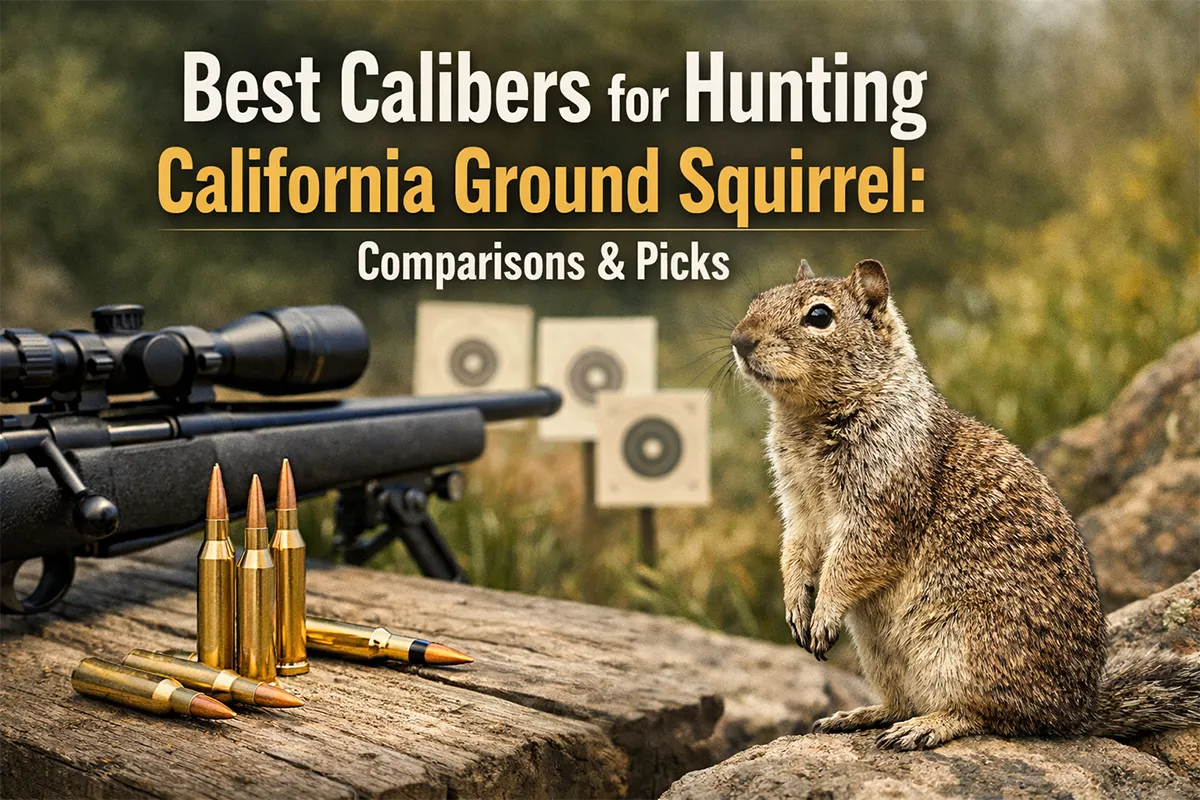
From affordable rimfires to flat-shooting centerfires, the right pick depends on distance, wind, noise, and how much ground you plan to cover.
Choosing the best California ground squirrel hunting calibers is mostly about solving one problem: making precise hits on very small targets in conditions that can change fast. Some setups are ideal for short-range shooting around field edges, orchards, and irrigation banks where moderate noise and low cost matter. Others shine in wide-open country where squirrels hang up farther out and wind starts pushing light bullets off target. In practical terms, your best option depends on typical shot distance, how much recoil and muzzle blast you want to deal with, how often you shoot in a day, and what your local rules allow. Safe firearm handling, a solid backstop, and ethical shot placement matter every time, and regulations can vary on seasons, methods, magazine limits, and nonlead requirements, so check local laws before heading out.
Where/When: California ground squirrels are commonly found across much of the western United States, especially in California’s grasslands, ranch country, foothills, orchards, levees, road margins, and irrigated agricultural areas where they can dig burrows in dry ground near food and visibility. Hunters often find the most activity around pasture edges, alfalfa, open hillsides, fence lines, sunny banks, and travel lanes between burrow systems and feeding areas, especially where fresh diggings, clipped vegetation, or multiple lookout mounds show a well-used colony. Timing varies by region and regulations, but activity often picks up in late winter through spring and can stay productive into early summer; in many areas, mornings and late afternoons are the most reliable windows, while hot midday periods can slow movement unless conditions stay mild or a breeze keeps animals out. Weather matters too, since calm days usually make spotting easier, while wind can complicate shots and cool, sunny conditions often produce more consistent surface activity.
Caliber Comparisons
| Feature | .17 HMR | .22 LR | .22 WMR | .204 Ruger | .223 Remington |
|---|---|---|---|---|---|
| Recoil How much kick you can expect when firing. |
Very light | Very light | Light | Light | Light to moderate |
| Effective Range The distance at which the caliber remains accurate and lethal. |
75-150 yards | 25-75 yards | 50-125 yards | 150-300+ yards | 100-300+ yards |
| Bullet Weight Range The range of bullet weights typically available for the caliber. |
17-20 gr | 36-40 gr | 30-50 gr | 24-40 gr | 35-77 gr |
| Versatility How well the caliber or gauge performs for other game species besides your primary target. |
Good for small varmints | Best for close pests and practice | Good for mixed small-varmint use | Excellent for open-country varmints | Very versatile for varmints and predators |
| Ammo Availability How easy it is to find ammunition for the caliber. |
Moderate | Excellent | Good | Moderate | Excellent |
.17 HMR
For many hunters, .17 HMR is the sweet spot for California ground squirrels because it solves the two most common field problems at once: tiny targets and medium-range shots. It offers a flatter trajectory than most rimfires, very light recoil, and enough precision to make careful hits in open country without jumping straight to a louder centerfire. It matters most when your shots often stretch past typical .22 LR distance but you still want a mild, easy-shooting rifle for high-volume days. When choosing ammo, look closely at 17- or 20-grain varmint loads, test a few brands for accuracy in your rifle, and prioritize a load that groups consistently rather than just chasing velocity numbers.
PROS
- Flat-shooting rimfire for precise holds at moderate distance
- Very light recoil makes spotting hits and misses easier
- Often a strong fit where you want more reach than .22 LR without centerfire blast
CONS
- Ammunition usually costs more than .22 LR
- Light bullets can still get pushed around in gusty wind
- Not as forgiving as centerfire options once distances get long
Interesting Fact: .17 HMR earned its reputation by giving rimfire shooters a noticeably flatter trajectory than traditional .22 rimfire loads, which is a major advantage on small varmints.
Consider this Caliber If…
Choose .17 HMR if most of your hunting is in open pastures, levees, or hillsides where 75- to 150-yard shots are common and you want a low-recoil rifle that still feels precise. It is especially appealing for newer shooters, hunters who want fast follow-up sight pictures, or anyone working within rimfire-only preferences. Use a stable rest whenever possible, keep shot placement exact, and verify whether local rules affect ammunition type.
.22 LR
.22 LR remains one of the most useful California ground squirrel hunting calibers when the job is close, frequent, and budget-conscious. It solves the need for affordable practice and low report, which matters when you plan to shoot a lot in a single outing or want a rifle that is easy for almost anyone to handle well. Its real strength is efficiency inside modest distances, where careful range judgment and good shot placement matter more than raw speed. To choose well, focus on the most accurate load for your rifle, usually in the 36- to 40-grain range, and keep expectations realistic by treating it as a short-range option rather than stretching it beyond its comfort zone.
PROS
- Affordable ammunition encourages more practice and better field accuracy
- Minimal recoil and mild report make it easy to shoot well
- Rifles and ammunition are commonly available in many setups
CONS
- Trajectory drops quickly as distance increases
- Wind and range estimation can cause misses on small targets
- Leaves less margin for error than faster rimfire or centerfire choices
Interesting Fact: Many hunters shoot their best real-world groups with .22 LR simply because they can afford enough range time to learn their holds and trigger control.
Consider this Caliber If…
Pick .22 LR if your shots are usually close, you want an economical setup, or you hunt in places where lower noise is a practical advantage. It is often a smart choice for farm edges, short-range colony shooting, and training newer shooters. Keep shots conservative, always use a safe backstop, and pass on angles that do not allow precise, ethical hits.
.22 WMR
.22 WMR is the practical middle ground for hunters who want more reach and energy than .22 LR without moving into centerfire territory. It solves the common problem of squirrels hanging up just far enough away that standard rimfire performance starts to feel limiting. That extra speed matters in mixed terrain where some shots are close and others push past 100 yards. When shopping, compare 30- to 40-grain varmint loads, pay attention to how your rifle groups them, and think of .22 WMR as a flexible field cartridge for days when you expect a range of distances but still want mild recoil and simple handling.
PROS
- Offers more reach and impact than .22 LR
- Still easy to shoot accurately with light recoil
- Works well as an all-around rimfire varmint choice
CONS
- Ammunition is pricier than .22 LR
- Not as flat-shooting as .17 HMR or centerfire options
- Can still feel limited when wind or distance increases
Interesting Fact: .22 WMR has stayed relevant for decades because it fills a useful niche between the low cost of .22 LR and the reach of small centerfires.
Consider this Caliber If…
Consider .22 WMR if you want one rimfire rifle for varied California ground squirrel setups, especially when shots may run from 50 to 125 yards and you do not want to deal with the extra noise of centerfire cartridges. It is a solid option for hunters who value simplicity and versatility. As always, confirm local hunting rules, including any restrictions on ammunition materials or methods.
.204 Ruger
When California ground squirrels are out in broad, open country and shots start getting genuinely long, .204 Ruger becomes one of the best tools available. It solves the long-range precision problem by combining light recoil with a very flat trajectory, which matters on tiny targets where holdover and wind correction can make or break a shot. It is especially useful in pasture, rangeland, and other open terrain where 150- to 300-yard opportunities are realistic. To choose the right load, look at 32- to 40-grain varmint bullets, verify accuracy from a cool barrel, and pair the cartridge with good optics and a stable shooting rest.
PROS
- Very flat trajectory helps on small targets at long range
- Low recoil for a centerfire allows fast correction and follow-up
- Excellent fit for open-country varmint hunting
CONS
- Louder and more expensive to shoot than rimfires
- Barrels can heat up during high-volume sessions
- Less practical where shots are mostly close or noise is a concern
Interesting Fact: .204 Ruger became popular with varmint hunters because it pushed light bullets at very high speed while still keeping recoil relatively mild.
Consider this Caliber If…
Choose .204 Ruger if you routinely hunt wide-open fields and want a purpose-built varmint rifle that makes longer shots simpler than any rimfire can. It is best for experienced shooters who can judge wind, manage barrel heat, and take advantage of the cartridge’s flat trajectory. Because this is a centerfire with real reach, be extra disciplined about backstops, shot angles, and neighboring property lines.
.223 Remington
.223 Remington is the most versatile pick in this lineup because it solves more than one hunting scenario well. It gives you better wind resistance and longer practical range than rimfires, yet it remains common, easy to find, and available in a wide variety of rifles and load types. That matters if you want one general-purpose varmint setup for squirrels today and other pest or predator work at other times, depending on local laws. To choose wisely, most hunters should start with light varmint loads in the 40- to 55-grain range for ground squirrels, then confirm that their rifle’s twist rate and barrel length shoot those loads accurately.
PROS
- Widely available ammo and rifle options make setup easy
- Handles wind better than rimfire choices in many conditions
- Highly versatile for broader varmint and predator use
CONS
- More muzzle blast than rimfires and .17 HMR
- Greater range means stronger backstop discipline is essential
- Can be more cartridge than you need for short, easy shots
Interesting Fact: .223 Remington’s popularity means hunters can usually find multiple bullet styles, from lightweight varmint loads to heavier general-purpose options.
Consider this Caliber If…
Go with .223 Remington if you want a flexible rifle that covers California ground squirrels well in open country and can also serve other varmint roles. It is a smart pick for hunters who already own a .223, expect some wind, or prefer one do-it-all centerfire instead of specialized rimfire setups. Be sure to match the load to the job, confirm zero carefully, and check local regulations before using it in the field.
Final Picks for California Ground Squirrel Hunting
If you want the best all-around balance of precision, mild recoil, and useful field reach, .17 HMR is hard to beat. If low cost and high-volume shooting matter most, .22 LR still earns a place, especially at closer ranges. .22 WMR is the best “middle” option for hunters who want more rimfire reach without stepping up to centerfire noise. In wide-open country, .204 Ruger is the specialist for long shots, while .223 Remington is the most versatile centerfire if you want one rifle for multiple varmint jobs. No matter which caliber you choose, the right answer is the one that fits your usual terrain, your realistic shot distances, your accuracy level, and your local rules. Prioritize safe handling, solid backstops, and ethical shot placement every time, and verify current regulations before you hunt.