
Best Gauges for Hunting Cackling Goose: Comparisons & Picks
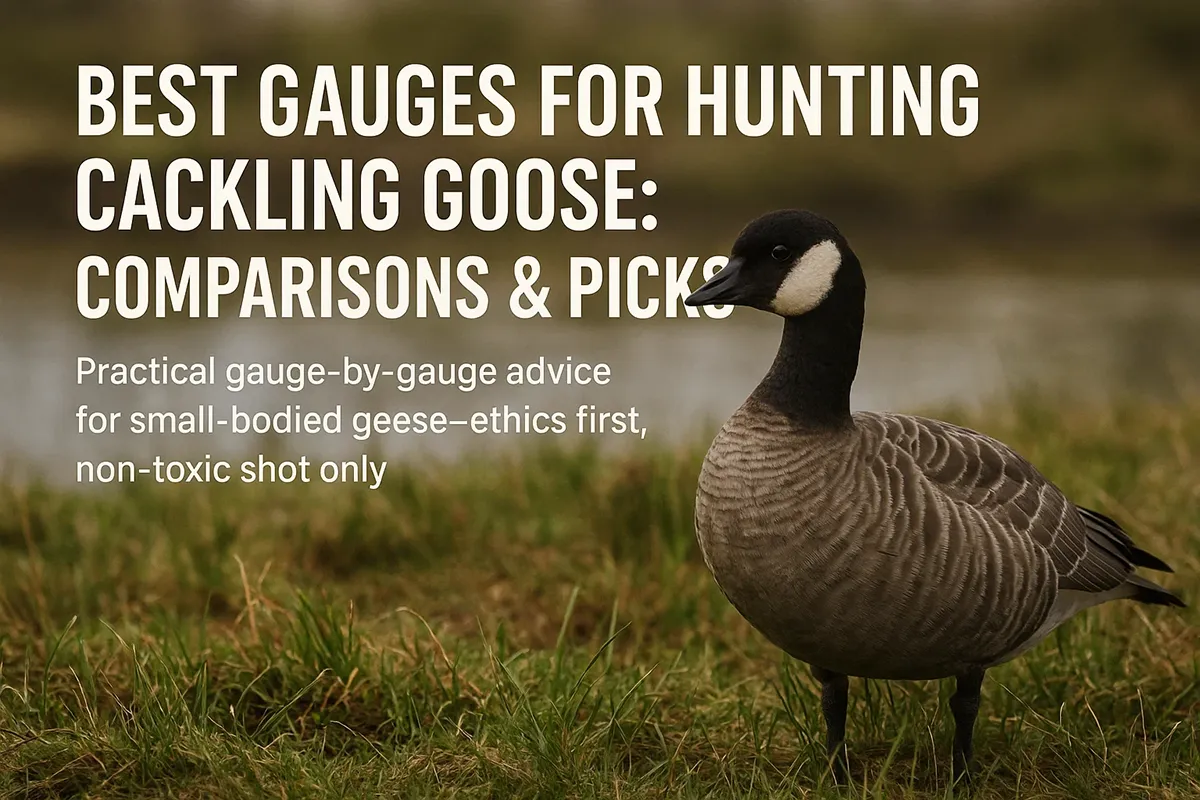
Practical gauge-by-gauge advice for small-bodied geese—ethics first, non-toxic shot only.
Cackling geese are smaller than standard Canadas, which opens the door to lighter gauges when shots are close and over decoys. US federal law requires non-toxic shot for waterfowl, and many jurisdictions limit shotgun capacity to three shells—always confirm local regulations. In this guide to the best shotgun gauge for cackling geese, you’ll see a clear comparison of popular options, plus detailed pros and cons.
Gauge Comparisons for Cackling Geese
| Gauge | Recoil | Effective Range* | Shot Payload (oz) | Versatility | Ammo Availability |
|---|---|---|---|---|---|
| 12 Gauge | Moderate | 35–45 yards (steel); 40–50 with denser shot | 1–1⅜ typical steel; up to 1½–2 heavy | Excellent: ducks, geese, upland with lighter loads | Common |
| 20 Gauge | Low–Moderate | 25–35 yards (steel); ~40 with bismuth/tungsten | ⅞–1¼ typical | Good: teal to pheasants; light to carry | Common to Moderate |
| 10 Gauge | High | 40–50 yards (steel); 50+ with dense shot & patterning | 1⅜–2+ heavy waterfowl payloads | Niche: pass-shooting big water geese | Moderate |
| 28 Gauge | Very Low | 20–30 yards over tight decoys (prefer bismuth/TSS) | ⅝–1 light payloads | Specialist: teal/upland; careful range discipline | Niche |
| 16 Gauge | Moderate | 30–40 yards (steel/bismuth) | ⅞–1¼ traditional | All-around classic; limited factory options | Moderate to Niche |
*Effective Range assumes well-patterned loads, appropriate choke (often Modified to Improved-Modified for steel), solid hold, and ethical shot angles.
12 Gauge
The do-everything waterfowl gauge. For cacklers over decoys, 1–1⅛ oz steel #2–#3 or bismuth #3–#4 pattern well. For windy days or longer edges, heavier 1¼–1⅜ oz steel #1–#2 or bismuth #2 extend reach. Most hunters manage recoil in modern gas-guns.
Pros
- Broad ammo selection in non-toxic shot (steel, bismuth, tungsten blends)
- Strong patterns to ~45 yards with proper choke
- Works for ducks and upland via lighter payloads
- Widely available shotguns and spare parts
Cons
- Heavier guns than sub-gauges when hiking long levees
- Can over-penetrate at close range with large shot—watch meat damage
- Recoil noticeable with 1¼–1½ oz magnum loads
Interesting fact: Many “waterfowl” 12-ga barrels are optimized around steel shot; older fixed-choke barrels may not be suitable for large steel—check markings.
Consider this gauge if… you want a single do-all waterfowl setup that balances payload, pattern density, and availability.
Bottom line: For the best gauge for cackling geese across conditions, 12-ga offers the widest safety margin and ammo choice.
20 Gauge
Great for small geese over tight decoys and for hunters who prioritize lighter guns and milder recoil. Steel #2–#4 in ⅞–1 oz loads works inside ~35 yards. Bismuth #3–#4 or TSS #7–#9 (denser shot) can extend ethical reach a bit when patterned carefully.
Pros
- Lighter, quick-handling shotguns—ideal for long walks to hides
- Reduced recoil aids fast follow-ups and youth/smaller-statured hunters
- Effective on cacklers with disciplined ranges over decoys
Cons
- Narrower steel load choices vs. 12-ga
- Less forgiving on marginal angles or longer shots
- Premium bismuth/TSS can be costly
Interesting fact: Many modern 20-ga waterfowl loads run higher velocities to maintain pellet energy with smaller payloads—patterning becomes even more important.
Consider this gauge if… your hunts are primarily over decoys with typical shots inside 35 yards and you value a lightweight setup.
Bottom line: If you keep shots honest, 20-ga humanely handles cacklers while saving weight and shoulder fatigue.
10 Gauge
The sledgehammer of waterfowl gauges. Its heavy payloads shine for windy days, big water, or pass-shooting where geese may edge past decoy range. It’s overkill for most cackler setups yet unmatched for long-range patterns when tuned.
Pros
- Large payloads deliver dense patterns at distance
- Excels in high wind and big-water pass-shooting
- Stable swing from heavier gun mass
Cons
- High recoil and heavier guns
- Limited shotgun and ammo choices; pricier shells
- Unnecessary for typical close decoy work on cacklers
Interesting fact: The modern 10-ga largely survives because of waterfowlers; many loads target geese with large steel shot (BB–BBB) or dense alternatives.
Consider this gauge if… your hunts regularly involve windy pass-shooting or open water where shots stretch beyond 40 yards and you’re comfortable with recoil.
Bottom line: Keep it specialized—powerful and effective but rarely necessary for decoyed cacklers.
28 Gauge
A specialist choice that’s surprisingly capable on small geese over tight decoys when paired with dense shot like bismuth or TSS. Keep shots conservative and pattern extensively; payloads are light, so pellet count matters.
Pros
- Feathery carry weight and minimal recoil
- Fast handling inside small blinds and layouts
- Dense-shot options can humanely anchor cacklers up close
Cons
- Very light payloads—limited margin for error
- Steel choices are sparse; premium shells can be expensive
- Tight range envelope; not ideal in wind
Interesting fact: The recent surge in 28-ga waterfowl interest is driven by bismuth/TSS payloads that keep pellet energy up despite small hulls.
Consider this gauge if… you love ultralight guns and shoot disciplined, close over-decoy setups with premium non-toxic shot.
Bottom line: Choose 28-ga only if you commit to dense shot and strict, close-range discipline.
16 Gauge
The classic “in-between” gauge. With modern non-toxic loads, 16-ga can handle cacklers cleanly to ~40 yards when patterned well. Availability lags 12/20, so plan ahead for ammo and chokes rated for steel/bismuth.
Pros
- Sweet handling with useful payloads
- Capable goose performance with the right non-toxic shot
- Appeals to fans of classic guns
Cons
- Ammo choices and waterfowl-rated chokes can be limited
- Steel loads may be lighter than 12-ga equivalents
- Fewer modern factory waterfowl models
Interesting fact: Many vintage 16-ga guns are not rated for steel; bismuth is often the safer non-toxic choice for older barrels—verify before use.
Consider this gauge if… you like classic handling and are willing to source ammo ahead of season.
Bottom line: A charming, capable middle-ground if you plan around ammo and choke compatibility.
Which Shotgun Gauge for Cackling Geese Should You Choose?
For most hunters, the 12-gauge is the balanced, widely available pick that covers calm to windy days and decoy to edge-of-range shots on cackling geese. If you’re packing light and shooting over tight decoys, the 20-gauge is delightful and humane inside ~35 yards—especially with bismuth. The 10-gauge is a specialized long-range tool for big water and wind, while the 28-gauge is a close-range specialist for experts using dense shot. The 16-gauge sits between, rewarding planners who stock ammo early. Whatever you choose, pattern your gun with your actual load, use non-toxic shot, mind capacity and season rules, and keep shots ethical.
Bottom line: the best shotgun gauge for cackling geese depends on your range and recoil tolerance—12-ga for flexibility, 20-ga for light decoy work.