
Best Calibers for Hunting Black-tailed Prairie Dog: Comparisons & Picks
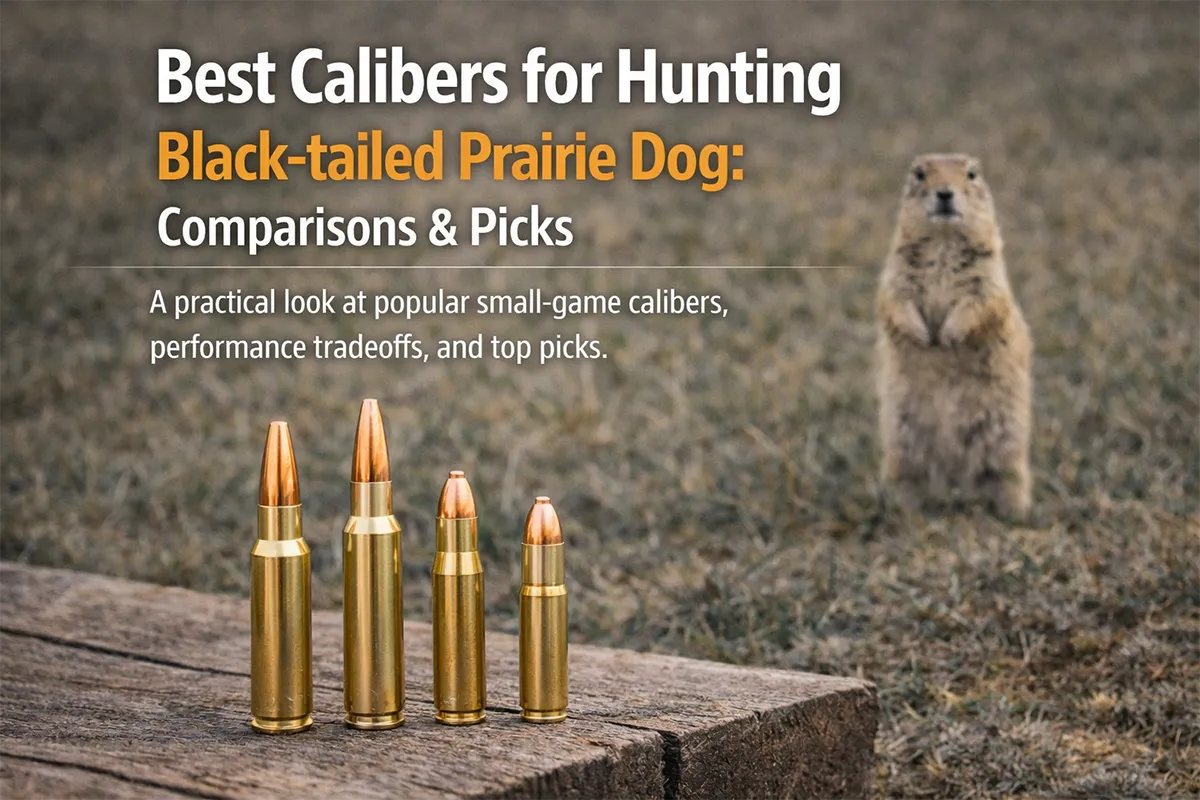
Practical caliber picks for close, mid, and long-range prairie dog shooting in open country.
Choosing the right black-tailed prairie dog hunting calibers is mostly about matching cartridge performance to distance, wind, rifle platform, and how much shooting you expect to do in a day. Prairie dog hunts often involve dozens of shots from a steady rest, sometimes at surprisingly small targets in changing crosswinds, so flat trajectory, manageable recoil, barrel heat, and ammo cost all matter. The best option for you is not always the fastest cartridge. A rimfire can make sense for short-range, low-cost shooting, while a fast centerfire shines once distances stretch and wind starts moving bullets off target. In this guide, the goal is simple: help you pick a caliber that fits your terrain, your budget, and your practical shooting ability while keeping safety, humane hits, and local regulations front and center.
Where/When: Black-tailed prairie dogs are most commonly associated with short- and mixed-grass prairie across the Great Plains and nearby western grasslands, where hunters often locate them on open flats, grazed pasture, and broad prairie dog towns near food sources, travel lanes, and burrow openings with good visibility. They are diurnal, so activity is typically best during daylight, with many hunters focusing on calmer morning periods and productive late-afternoon windows when mirage and wind can be less punishing than midday. In many areas they remain above ground year-round rather than truly hibernating, although cold, cloudy, or rough weather can keep them underground longer. Seasonal timing, access, and any open seasons or control rules vary by state, tribe, property, and local regulation, so always check the rules where you hunt.
Caliber Comparisons
| Feature | .17 HMR | .22 LR | .204 Ruger | .223 Remington | .22-250 Remington |
|---|---|---|---|---|---|
| Recoil How much kick you can expect when firing. |
Very light | Minimal | Very light | Light | Moderate-light |
| Effective Range The distance at which the caliber remains accurate and lethal. |
Best inside 150 yards | Best inside 75-100 yards | Excellent to 300+ yards | Strong to 300 yards | Excellent to 400+ yards |
| Bullet Weight Range The range of bullet weights typically available for the caliber. |
17-20 gr | 30-40 gr | 24-40 gr | 35-77 gr | 35-64 gr |
| Versatility How well the caliber or gauge performs for other game species besides your primary target. |
Low to moderate | Low | Moderate | High | Moderate to high |
| Ammo Availability How easy it is to find ammunition for the caliber. |
Common | Very common | Moderate | Very common | Common |
.17 HMR
The .17 HMR solves a very specific prairie dog problem: you want more precision and less rainbow-like drop than .22 LR, but you do not need a louder, hotter centerfire for every shot. It is a smart choice for closer stands, newer shooters, and days when you plan to shoot from a bench with a rimfire you already trust. In calm conditions, this caliber is fast, clean, and easy to spot through the scope because recoil is so light. It matters most when shots are inside about 125 to 150 yards and you want better wind performance than .22 LR without the cost and heat of a centerfire varmint rig.
PROS
- Very low recoil makes sight picture and follow-through easier
- Flatter than .22 LR at practical rimfire distances
- Good training and budget-friendly option for short-range prairie dog shooting
CONS
- Wind moves light bullets quickly once distances increase
- Less margin for error than centerfire varmint calibers
- Not the best pick for long, breezy Western shots
Interesting Fact: The .17 HMR became popular because it gives rimfire shooters a much flatter-shooting option than traditional .22 LR without stepping into centerfire recoil and report.
Consider this Caliber If…
Choose .17 HMR if most of your shooting will be relatively close, you value a quiet and easy-shooting rifle, or you are introducing a younger or recoil-sensitive shooter to varmint shooting. Look for accurate 17- or 20-grain loads, a quality rimfire scope with repeatable adjustments, and a rifle that prints tight groups from a steady rest. It is especially practical if your property setup, safety considerations, or local rules make a rimfire a better fit than a centerfire. As always, safe backstops, clear target identification, and ethical shot placement matter more than raw speed.
.22 LR
The .22 LR is the simplest and least expensive path into prairie dog shooting, but it is also the most range-limited option in this guide. What it solves is cost: if you want affordable practice, high-volume trigger time, and a familiar rifle, .22 LR remains useful at close range. It matters most when shots are short, winds are light, and you are working around more controlled conditions rather than wide-open, long-range prairie. For many hunters, .22 LR is less of a primary black-tailed prairie dog caliber and more of a niche tool for very modest distances.
PROS
- Usually the least expensive option for practice and casual shooting
- Minimal recoil and report
- Common rifles, common ammo, and easy platform familiarity
CONS
- Trajectory drops quickly as range increases
- Wind drift is a major issue on small targets
- Too limited for the open-country shots many prairie dog hunters expect
Interesting Fact: Many hunters still keep a .22 LR on hand because cheap practice with the same shooting rest and optics routine can sharpen fundamentals before switching to a faster varmint rifle.
Consider this Caliber If…
Choose .22 LR only if you know your shots will stay close and you are prioritizing low cost over reach. Standard and high-velocity loads both have a place, but your rifle’s real-world accuracy matters more than brand reputation, so test several loads before the hunt. A good match between ammo and barrel often determines whether .22 LR is viable at all on small targets. This is a practical training caliber, but it is not the best all-around choice for typical open-plains prairie dog shooting.
.204 Ruger
For many dedicated varmint hunters, .204 Ruger is one of the sweetest spots in the entire category. It solves the classic prairie dog challenge of stretching range while keeping recoil light enough to stay on target and watch bullet impact through the scope. That matters on long shooting days, because seeing your own hits helps you correct for wind and holdovers faster. The .204 Ruger is especially appealing when you expect regular shots from roughly 150 to 350 yards and want a flatter, faster option than rimfires or heavier .223 loads without stepping up to more barrel-heating cartridges.
PROS
- Very flat trajectory for practical varmint distances
- Low recoil helps shooters spot impacts
- Excellent fit for dedicated prairie dog and small varmint work
CONS
- Ammo is usually less common than .223 Remington
- Less versatile if you want one rifle for many different roles
- Factory load selection can be narrower depending on your area
Interesting Fact: The .204 Ruger earned a following largely because it offers centerfire speed with surprisingly light recoil, making it a favorite for seeing impacts on tiny varmints.
Consider this Caliber If…
Choose .204 Ruger if prairie dogs are a primary goal and you want a purpose-built varmint caliber rather than a generalist. Look for accurate 32- to 40-grain loads and a rifle with a barrel profile that can handle repeated shot strings without heating too quickly. It pairs well with a stable bench or bipod setup and quality optics that let you dial or hold precisely in wind. If your shooting style is all about small targets in open country, this caliber deserves serious consideration.
.223 Remington
If you want the most balanced, easy-to-live-with option for black-tailed prairie dog hunting, .223 Remington is hard to beat. It solves several problems at once: ammo is widely available, rifles are everywhere, recoil is light, and the caliber is useful well beyond one species. That matters when you want one setup that can handle practice, general varmint work, and high-volume range days without punishing cost. It may not be the flattest cartridge in the field, but it is often the most practical. For many hunters, .223 Remington is the safest recommendation because it works well across a broad spread of distances and rifle platforms.
PROS
- Excellent balance of cost, recoil, and field performance
- Very common ammo and rifle availability
- Useful in bolt guns and AR-platform rifles alike
CONS
- Not as flat as the fastest dedicated varmint calibers
- Heavier bullet choices can be more than you need for prairie dogs
- High-volume strings can still heat a light barrel quickly
Interesting Fact: The .223 Remington remains a default recommendation for many hunters because nearly every local gun shop and sporting goods store understands it and stocks some version of it.
Consider this Caliber If…
Choose .223 Remington if you want the most flexible answer rather than a niche specialist. Light varmint loads in the 40- to 55-grain range are usually the place to start for prairie dogs, while a heavy-barrel rifle, a quality trigger, and a good rest will help you make the most of the caliber. It is also a strong choice if you already own an accurate .223 rifle and want to buy ammo instead of another gun. For many hunters, that combination of practicality, availability, and useful range makes .223 the best overall pick.
.22-250 Remington
The .22-250 Remington is the long-range, high-speed answer for hunters who expect bigger fields, more wind, and more distant targets. What it solves is reach. Compared with the mild cartridges in this list, it gives you a flatter trajectory and more confidence as distance stretches. That matters when black-tailed prairie dogs are popping up across broad colonies and you want fewer holdover corrections. The tradeoff is real: more blast, somewhat more recoil, and faster barrel heating than softer options. Still, when the terrain is wide open and you want a classic varmint performer, .22-250 Remington remains one of the strongest choices available.
PROS
- Very flat trajectory for longer shots
- Excellent varmint performance in open country
- Strong choice when wind and distance increase
CONS
- Louder and sharper than mild rimfire or .223 options
- Can heat barrels quickly during extended shooting sessions
- Usually costs more to feed than .223 Remington
Interesting Fact: The .22-250 Remington built its reputation as a classic high-velocity varmint round long before many newer specialty cartridges entered the market.
Consider this Caliber If…
Choose .22-250 Remington if you routinely hunt large prairie expanses where shots often run long and wind drift becomes a constant problem. A heavier barrel, a solid bench setup, and careful pacing between shot strings help this caliber shine on extended outings. Light varmint bullets are the usual fit, and accuracy matters more than pure velocity, so pick the load your rifle groups best. This is a top-end field choice for experienced shooters who want reach and flatter flight, but it rewards discipline in barrel management and shot selection.
Which Black-tailed Prairie Dog Caliber Makes the Most Sense?
For most hunters, .223 Remington is the best all-around answer because it balances cost, availability, light recoil, and enough reach for typical field conditions. If you want a dedicated varmint setup and expect frequent mid- to long-range shots, .204 Ruger and .22-250 Remington move higher on the list. If your shooting is close and economical practice matters most, .17 HMR or even .22 LR can still do useful work within their limits. The smartest choice comes down to your usual shot distance, wind, recoil tolerance, rifle platform, and how much ammunition you realistically want to burn in a day. Whatever you choose, build around accuracy first: a stable rest, a good optic, careful trigger control, safe handling, and ethical shot placement matter more than chasing maximum velocity. Finally, check local laws before heading out, because rules on seasons, access, magazine limits, allowable methods, and land-specific restrictions can vary widely.