
Best Gauges for Hunting Kalij Pheasant: Comparisons & Picks
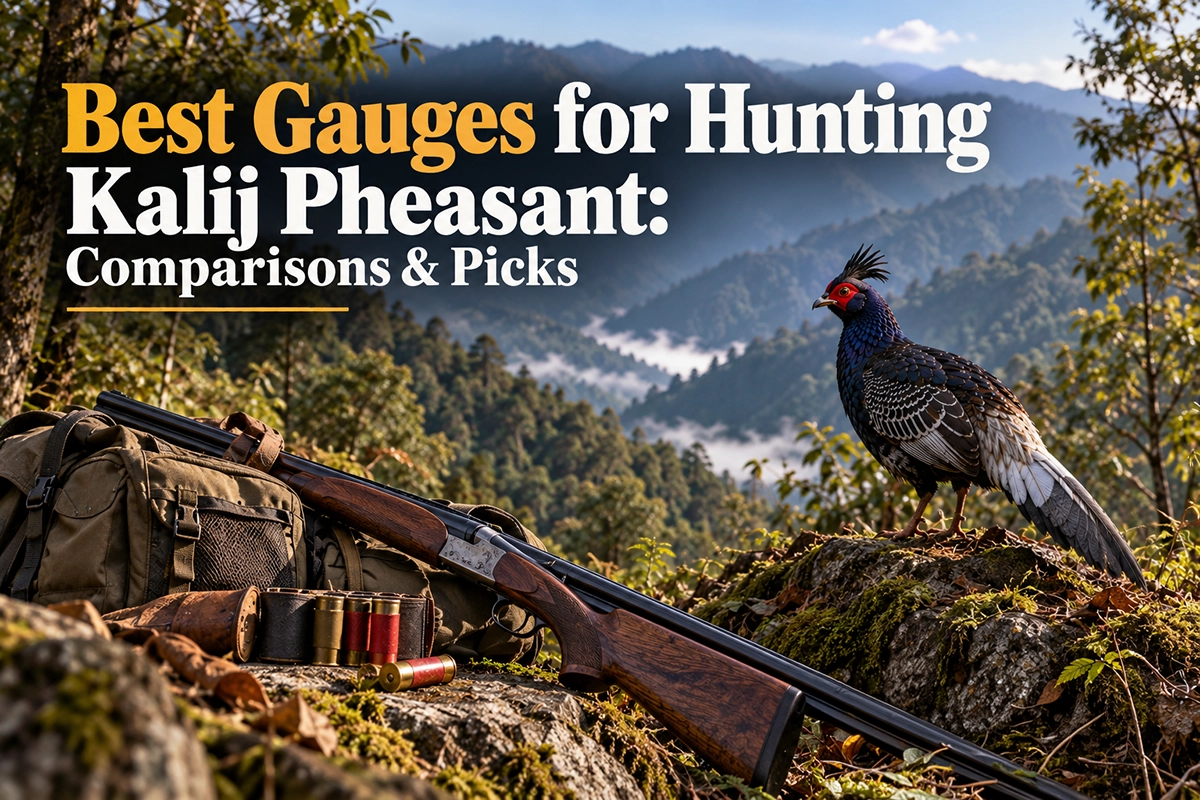
Choose a shotgun that balances pattern density, recoil, carry weight, and the close-to-moderate shots common in thick Kalij pheasant cover.
The best Kalij pheasant hunting gauges are those you can carry comfortably, mount quickly, and pattern reliably with an appropriate upland load. In brushy, forested terrain, shots can develop fast and visibility may be limited, so handling and pattern quality matter more than simply choosing the largest shotgun. For many hunters, 12 gauge and 20 gauge balance payload and availability well, while 28 gauge offers lighter handling. The .410 bore is the most demanding option because its smaller payload leaves less margin for error.
Where/When: Kalij pheasants are native to forested regions of South and Southeast Asia and are also established in Hawaiʻi, where current Hawaiʻi DLNR information lists hunting opportunities for the species on Hawaiʻi Island and Oʻahu during declared game bird seasons. In many areas they commonly use upland forest, dense fern or shrub cover, edges, openings, feeding areas, water sources, loafing cover, and travel corridors between those features. Hunters often encounter birds moving most actively in the morning and again later in the day, while midday birds may hold in thicker cover; cool, damp, windy, or otherwise changing weather can alter how tightly birds hold and how readily they flush. Early-season birds may sometimes tolerate a closer approach, while later-season birds can become warier and may run or flush farther ahead. Exact seasonal timing, legal hunting days, shooting hours, bag limits, open units, and methods vary by region and can change, so always check the current regulations for the specific property and island before hunting.
Gauge Comparisons
| Feature | 12 Gauge | 20 Gauge | 28 Gauge | .410 Bore |
|---|---|---|---|---|
| Recoil How much kick you can expect with common upland loads. |
Moderate; load and gun weight matter | Light to moderate | Light | Very light |
| Practical Pheasant Range A conservative field window that still depends on your tested pattern. |
About 30–40 yards | About 25–40 yards | About 25–35 yards | About 20–30 yards |
| Typical Shot Charge Common upland payload territory; verify the exact shell and shotgun chambering. |
About 1–1 1/4 oz | About 7/8–1 oz | About 3/4–1 oz | About 1/2–11/16 oz |
| Versatility How broadly the gauge or bore option can cover other upland hunting roles. |
Very high | High | Good for lighter upland work | Specialized and range-sensitive |
| Ammo Availability General relative availability; local stock varies. |
Usually excellent | Usually very good | Moderate and improving | Common, but hunting-load selection can be narrower |
12 Gauge
The 12 gauge provides a forgiving pattern when a Kalij pheasant flushes farther than expected or angles through broken cover. It also suits hunters who want one shotgun for several game birds. An upland load around 1 to 1 1/4 ounces of No. 5 or No. 6 shot is a common starting point, subject to shotgun compatibility and local law. Pattern the exact load first; improved cylinder or modified chokes can suit close forest cover better than an unnecessarily tight choke.
PROS
- Dense patterns provide useful margin on crossing and quartering birds.
- Broad selection of shotguns, shell lengths, shot materials, and upland loads.
- Versatile for hunters who also pursue other upland birds or larger game birds.
CONS
- Can produce more recoil than lighter gauges, especially in a light shotgun.
- Some 12 gauge guns feel heavy during long climbs in steep upland terrain.
- Heavy loads are unnecessary for many close Kalij pheasant shots.
Interesting Fact: The 12 gauge is popular partly because changing load weight and choke can cover a wide range of bird-hunting situations without changing shotguns.
Consider this Gauge If…
Choose 12 gauge if you want broad load flexibility, hunt mixed cover, or prefer more pattern density near the edge of your tested range. Recoil-sensitive hunters should compare gun weight and lighter upland loads.
20 Gauge
The 20 gauge suits Kalij pheasant hunters who cover steep ground and want less gun weight and recoil while retaining useful pattern density. Loads around 7/8 to 1 ounce of No. 5 or No. 6 shot are common starting points, subject to local law and shot material. Confirm shell length matches the chamber marking, then pattern your choke-and-load combination at realistic distances.
PROS
- Lighter shotguns can be easier to carry through steep, brushy country.
- Moderate recoil can help many hunters maintain a smooth mount and follow-through.
- Widely available guns and hunting loads make compatibility easier to manage.
CONS
- Less payload than comparable 12 gauge loads leaves slightly less pattern margin.
- Very light guns can still recoil sharply with heavy loads.
- Longer shots demand disciplined range limits and proven patterns.
Interesting Fact: A well-fitted 20 gauge can feel faster in dense cover because many models combine a trim receiver with a lighter overall package.
Consider this Gauge If…
Choose 20 gauge if you expect plenty of walking, prefer moderate recoil, and want a practical upland shotgun with enough payload for well-selected Kalij pheasant shots.
28 Gauge
The 28 gauge reduces carry weight and recoil for hunters who spend long days climbing and pushing cover. It works best when birds flush close and the hunter passes marginal shots. Upland payloads around 3/4 to 1 ounce can work when the pattern is even and the load is legal. Because pellet count is lower than with many 12 or 20 gauge loads, pattern testing is especially important.
PROS
- Light recoil supports comfortable practice and smooth shooting.
- Many 28 gauge field guns are light and quick in close cover.
- Well suited to hunters who keep shots inside proven pattern distance.
CONS
- Lower pellet count reduces forgiveness as distance increases.
- Hunting ammunition can cost more or be less available than 12 or 20 gauge.
- Requires restraint when a flushing bird is already getting away.
Interesting Fact: Despite its smaller bore diameter, the 28 gauge has a devoted upland following because a well-balanced gun can be exceptionally easy to carry and point.
Consider this Gauge If…
Choose 28 gauge if close cover, light recoil, and fast handling matter more than maximum pattern density. Establish a conservative personal range after patterning your exact load.
.410 Bore
The .410 bore minimizes gun weight and recoil, but its small payload makes pattern density the limiting factor. For Kalij pheasant, treat it as a specialized close-range option rather than an easy beginner choice. Common field loads carry roughly 1/2 to 11/16 ounce of shot. Pattern the exact gun, choke, and shell at short intervals, and stop extending range when coverage becomes inconsistent.
PROS
- Very low recoil encourages deliberate practice and clean gun handling.
- Lightweight shotguns can be pleasant to carry in steep terrain.
- Can be effective at genuinely close range with a proven pattern.
CONS
- Small payload leaves little margin for pointing error or longer shots.
- Pattern quality can deteriorate quickly as distance increases.
- More demanding choice for ethical pheasant hunting than larger gauges.
Interesting Fact: The .410 is named for its bore diameter in inches rather than by the gauge system used for 12, 16, 20, and 28 gauge shotguns.
Consider .410 Bore If…
Choose .410 bore only if you shoot it well, expect close opportunities, and have confirmed a reliable pattern at your maximum range. Its small payload makes disciplined shot selection essential.
Choosing a Kalij Pheasant Shotgun Responsibly
For many Kalij pheasant hunters, 20 gauge balances carry weight, recoil, and pattern density, while 12 gauge offers broader load flexibility. The 28 gauge rewards disciplined close-range shooting, and the .410 bore demands the most restraint. Whatever you carry, verify chamber markings, use compatible ammunition, pattern before the season, and set a personal maximum range from actual pellet coverage. Keep the muzzle controlled and your finger off the trigger until the bird is positively identified and the shot is safe; avoid shots toward people, dogs, roads, buildings, or uncertain backgrounds. Hawaiʻi DLNR currently lists shotguns and bows as legal game-bird weapons and generally prohibits BB or larger shot except during spring turkey hunts. Check current local rules for seasons, bag limits, shooting hours, non-toxic-shot requirements, magazine limits, legal methods, and area-specific changes before every hunt.