
Best Gauges for Hunting Montezuma Quail: Comparisons & Picks
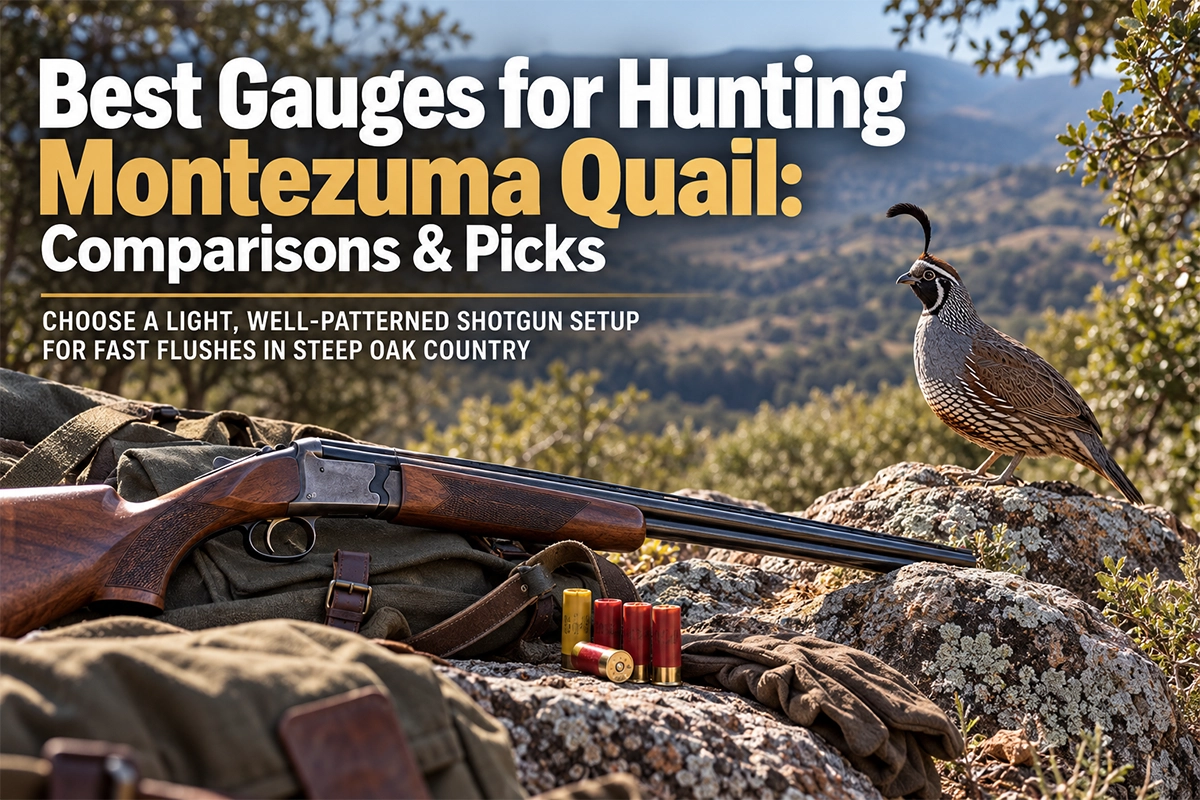
Choose a light, well-patterned shotgun setup for fast flushes in steep oak country.
The best Montezuma quail hunting gauges balance quick handling, manageable recoil, useful pattern density, and enough payload for clean shots in rough country. These birds are often pursued on foot with pointing dogs in oak-grassland terrain, so shotgun fit and carry weight matter as much as shell capacity. For most hunters, 20 gauge and 28 gauge are especially practical, while 12 gauge offers broad ammunition choice and .410 bore rewards disciplined shooters at close range. Pattern the exact shotgun, choke, and load before hunting, control the muzzle around dogs and partners, positively identify the bird, and pass shots beyond your proven pattern range.
Where/When: Montezuma quail, also called Mearns’ quail, occur in parts of the southwestern United States and Mexico, with hunting opportunities commonly associated with Arizona and New Mexico where seasons allow. They typically favor oak or pine-oak woodland, grassy savannas, steep slopes, shaded drainages, and openings with a strong grass understory. Hunters often focus on feeding areas, grassy benches, travel corridors, loafing cover, and slopes near seasonal moisture. Hunting generally takes place from late fall into winter, but dates, closures, bag limits, shooting hours, and legal methods vary by jurisdiction and year. Birds may hold tightly in good grass, while later hunting pressure can make coveys less predictable. Morning and afternoon movement can improve as temperatures moderate, and rain may change cover and food conditions. Always confirm current regional regulations; some areas within the species’ broader range may be closed to harvest.
Gauge Comparisons
| Feature | 20 Gauge | 28 Gauge | 12 Gauge | .410 bore |
|---|---|---|---|---|
|
Recoil How much kick you can expect when firing. |
Low to moderate; comfortable in many field-weight guns | Low; excellent for high-mileage upland days | Moderate; varies widely with gun weight and load | Very low with common field loads |
|
Effective Range Your ethical range should be set by actual pattern testing. |
Strong all-around choice for typical close-to-moderate flushes | Very capable when patterns stay dense enough | Excellent pattern potential, though rarely necessary for extra distance | Best kept close because the small payload leaves less margin |
|
Typical Shot Charge Common upland payloads; exact offerings vary by shell length and manufacturer. |
Often 7/8 to 1 oz | Often 3/4 to 1 oz | Often 1 to 1 1/8 oz | Often 1/2 to 11/16 oz |
|
Versatility How useful the option is for other upland birds and hunting styles. |
Excellent for quail, dove, grouse, and similar upland work | Excellent upland specialist with light-gun appeal | Very broad use across upland and other shotgun hunting | Specialized; best for close birds and skilled wingshooters |
|
Ammo Availability How easy it is generally to find suitable hunting shells. |
Usually very good | Improving but typically less broad than 12 or 20 gauge | Usually the broadest selection | Common enough, but upland load choices can be narrower |
20 Gauge
For many hunters, 20 gauge is the best balance for Montezuma quail. It reduces the burden of carrying a heavy shotgun over steep ground while still providing enough payload for forgiving patterns. A well-fitting field gun is quick to shoulder, and recoil is generally manageable for regular practice. Start with upland loads around 7/8 to 1 ounce and shot sizes such as No. 7 1/2 or No. 8 where legal, then pattern improved-cylinder and modified chokes at realistic distances. If non-toxic shot is required, choose a legal alternative and re-pattern because pellet material can change pattern behavior.
PROS
- Excellent balance of payload, recoil, and gun weight
- Common ammunition and broad shotgun selection
- Well suited to fast shots over pointing dogs
CONS
- Heavier than many comparable 28 gauge guns
- Light guns can still feel sharp with heavier loads
- Pattern quality still depends on the individual gun and load
Interesting Fact: The 20 gauge has enough upland versatility that one properly fitted field gun can cover many quail, dove, and grouse situations without requiring heavy shells.
Consider this Gauge If…
Choose 20 gauge if you want one practical quail shotgun with manageable recoil, widely available ammunition, and enough pattern density to be forgiving without unnecessary bulk.
28 Gauge
The 28 gauge shines when mobility and fast handling are priorities. Montezuma quail country can involve hours of climbing and working behind dogs, so a lighter gun may reduce fatigue and stay lively late in the day. Typical 3/4-ounce upland loads are pleasant to shoot, while some 1-ounce offerings add pellets when they pattern well. A smaller gauge does not set the ethical range by itself: pattern density, choke, pellet size, and shooter skill matter more. For close cover, start with open chokes and test at realistic flush distances.
PROS
- Light, responsive guns are excellent in steep terrain
- Low recoil encourages regular practice
- Efficient upland payloads for close and moderate shots
CONS
- Shells can cost more than common 12 or 20 gauge loads
- Local ammunition selection may be limited
- Very light guns demand good mount and follow-through
Interesting Fact: The 28 gauge is popular with dedicated upland hunters because it can deliver useful pattern performance from especially trim, easy-carrying shotguns.
Consider this Gauge If…
Choose 28 gauge if you value a lively, lightweight gun and are willing to pattern carefully and budget for somewhat less common ammunition.
12 Gauge
A 12 gauge is not too large for Montezuma quail when loaded appropriately; the bigger concerns are often gun weight and unnecessary recoil. It solves the compatibility problem for hunters who already own a familiar 12 gauge and do not want a dedicated upland gun. Mild 1-ounce target or field-style loads can pattern well, and a gas-operated semi-automatic may soften recoil. Avoid heavy loads simply because they fit the chamber. A lighter payload, open or moderate choke, and careful pattern testing are usually more useful than maximum shell length in fast quail shooting.
PROS
- Very broad selection of guns, chokes, and shells
- Easy to tailor with lighter upland loads
- Useful if you want one shotgun for many hunting roles
CONS
- Many field guns are heavier to carry all day
- Heavy loads add recoil without solving most quail-hunting problems
- Dense patterns can damage birds at very close range
Interesting Fact: Because 12 gauge ammunition is offered in such a wide range of payloads, hunters can often tune an existing shotgun for quail without buying a new firearm.
Consider this Gauge If…
Choose 12 gauge if you already shoot one well, want maximum ammunition flexibility, or prefer a single shotgun that can move from quail to other shotgun hunting with a change of load and choke.
.410 bore
The .410 bore is a specialized option for experienced wingshooters who keep shots close and know how their gun patterns. Its small payload reduces pellet count, leaving less margin for pointing error or thin coverage, so load selection and pattern testing matter greatly. Common field payloads around 1/2 to 11/16 ounce can work with the right choke and reasonable distances, but the goal should never be to stretch range. The .410 bore is light to carry and mild in recoil, yet those benefits do not compensate for sparse patterns.
PROS
- Very light recoil
- Trim guns are easy to carry in rugged country
- Rewarding for disciplined, experienced shooters
CONS
- Small payload provides less pattern margin
- Poor choice for stretching shot distance
- Requires careful load and choke testing
Interesting Fact: Despite its name, .410 bore is identified by bore diameter rather than the gauge system used for 12, 20, and 28 gauge shotguns.
Consider this Bore If…
Choose .410 bore only if you are confident on close flushing birds, have verified a sufficiently dense pattern, and are willing to pass marginal angles or longer shots.
Choosing the Right Montezuma Quail Shotgun Setup
For most Montezuma quail hunters, 20 gauge is the easiest all-around recommendation, with 28 gauge close behind for hunters who prioritize a light, lively gun. A 12 gauge remains practical with light loads, while .410 bore is best treated as an expert, close-range option. Buy based on fit first: the shotgun should mount naturally and remain comfortable after hours on steep ground. Pattern several legal loads through the chokes you intend to carry, checking realistic distances for even pellet distribution. In the field, keep the muzzle clear of dogs and partners, identify the bird before firing, and choose shots that offer a high probability of clean recovery. Verify current season dates, bag and possession limits, shooting hours, legal methods, shotgun capacity or magazine limits, ammunition restrictions, and any non-toxic shot rules before every trip.