
Best Gauges for Hunting Rio Grande Wild Turkey: Comparisons & Picks
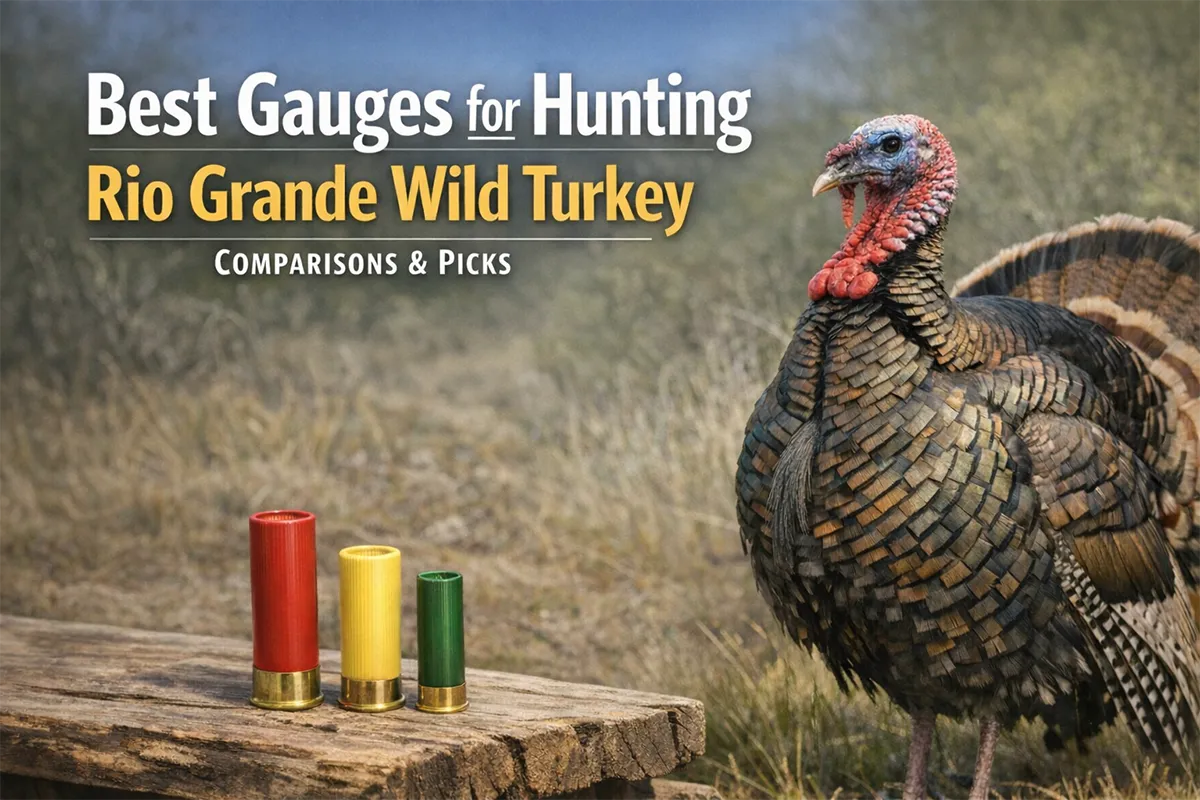
The best Rio Grande turkey pick is usually the gauge you pattern well, carry comfortably, and can shoot with confidence when a gobbler hangs up.
Rio Grande wild turkey hunters usually do not need the heaviest shotgun on the rack—they need the gauge that patterns tightly, carries comfortably, and fits the way they hunt. Birds are often called into creek bottoms, field edges, mesquite flats, and shelterbelts where a 25- to 45-yard shot is common, so pellet density in the head-and-neck area matters more than raw power. That is why most searches for Rio Grande wild turkey hunting calibers really come down to choosing the right shotgun gauge or .410 bore, then pairing it with a turkey choke and a load your gun patterns well. The best pick depends on recoil tolerance, gun fit, shell cost, and how much margin you want when a tom hangs up.
Where/When: Rio Grande wild turkeys are commonly hunted across the south-central Great Plains, especially Texas, Oklahoma, Kansas, parts of eastern New Mexico, and other regions with transplanted birds. In many areas they favor river bottoms, shelterbelts, mesquite country, brushy creek corridors, agricultural edges, and open ground with nearby roost trees, food, and water. Hunters often find movement along roost-to-feed travel routes, strut zones, field corners, sandy roads, and shaded loafing cover. Timing varies by region and regulations, but spring is the classic gobbling season, and movement is often strongest at fly-down, through late morning, and again toward evening depending on wind, heat, rain, and pressure.
Gauge Comparisons
| Feature | 12 Gauge | 20 Gauge | 28 Gauge | .410 Bore | 10 Gauge |
|---|---|---|---|---|---|
| Recoil How much kick you can expect when firing. |
Medium-High | Medium | Mild-Medium | Light | High |
| Effective Range The distance at which the gauge remains practical for ethical head-and-neck shots with a proven pattern. |
About 40-50 yards | About 35-45 yards | About 25-40 yards | About 20-35 yards | About 40-55 yards |
| Payload Weight Range The shot charge range commonly used in turkey loads. |
1 3/4-2 1/4 oz | 1-1 1/2 oz | 7/8-1 1/4 oz | 1/2-13/16 oz | 1 3/4-2 1/4 oz |
| Versatility How well the gauge or bore performs for other game species besides your primary target. |
Excellent | Excellent | Good | Fair | Limited |
| Ammo Availability How easy it is to find ammunition for the gauge or bore. |
Excellent | Excellent | Moderate | Moderate | Limited |
12 Gauge
12 gauge remains the default answer for Rio Grande wild turkey because it gives the biggest, most forgiving patterns with common turkey loads. It solves the problem of wanting maximum pellet count when a tom hangs up or wind and open ground make the shot feel less certain. Choose it when recoil is manageable, your shotgun fits well, and you want the easiest path to a dependable 40-yard setup.
PROS
- Largest selection of turkey loads and choke options
- Strong pellet counts for dense practical patterns
- Good choice when you want the most margin for error
CONS
- Heavier guns and sharper recoil can slow practice
- Can feel excessive for some close-range setups
- Premium turkey shells still add cost
Interesting Fact: The right choke and pattern often matter as much as payload size.
Consider this Gauge If…
you want the broadest ammo selection and do not mind a slightly heavier shotgun.
20 Gauge
A good 20 gauge balances portability, manageable recoil, and real turkey performance. It solves the problem of hunters wanting a lighter gun for long walks, blinds, or more practice without giving up much inside normal calling distance. Choose it when gun fit and confidence matter more than maximum payload, and pair it with a dedicated turkey choke and a load your shotgun patterns evenly.
PROS
- Noticeably easier recoil than many 12 gauge turkey guns
- Lighter, handier shotguns are common
- Very capable inside common turkey ranges
CONS
- Less pellet margin than a comparable 12 gauge
- Some premium loads are expensive
- Pattern testing is still essential
Interesting Fact: Tungsten-based loads made 20 gauge turkey guns more capable than many hunters once assumed.
Consider this Gauge If…
you value a lighter shotgun, want less recoil, or need a practical all-around turkey option.
28 Gauge
28 gauge has become a serious turkey option because it offers soft recoil and trim guns while still producing useful patterns with modern loads. It solves the problem of wanting a shotgun that is pleasant to carry and easy to shoot from awkward seated positions. Choose it when you are committed to patterning carefully, limiting shots to proven distances, and paying for specialty ammunition when needed.
PROS
- Pleasant recoil encourages better practice
- Lightweight guns carry well in brush and bottoms
- Can pattern surprisingly well with premium loads
CONS
- Ammo choices are narrower than 12 or 20 gauge
- Less room for error if a bird hangs up
- Shells are often pricier and harder to find
Interesting Fact: Denser shot materials helped turn 28 gauge into a legitimate turkey conversation.
Consider this Gauge If…
you like lightweight shotguns, keep shots conservative, and want a softer-shooting setup.
.410 Bore
.410 bore is the specialist’s pick, not the universal answer, but it can work on Rio Grande wild turkey when the shotgun, choke, load, and shooter are all dialed in. It solves the problem of recoil-sensitive hunters needing the lightest-kicking platform available. Choose .410 bore only if you will pattern meticulously, pass marginal shots, and aim with extreme care at the head and neck.
PROS
- Minimal recoil and very lightweight guns
- Useful for disciplined, close-range turkey setups
- Can help recoil-sensitive hunters stay comfortable
CONS
- Small payload leaves very little pattern margin
- Requires strict range limits and excellent aim
- Loads and chokes may be expensive or scarce
Interesting Fact: Premium turkey loads are the main reason .410 bore became a real option for gobblers.
Consider this Bore If…
you are extremely disciplined about range and need a very light-recoiling turkey rig.
10 Gauge
10 gauge is a niche choice for hunters who want maximum payload and do not mind the weight, recoil, or limited ammo options that come with it. It solves the problem of squeezing as much pellet count as possible into a dedicated turkey setup. Choose it only if your shotgun fits, you shoot heavy recoil well, and you value specialty performance over convenience.
PROS
- Heavy payloads can produce dense patterns
- Appeals to hunters who already own a dedicated big-bore gun
- Still offers a legitimate specialty option
CONS
- Heavy gun to carry on long walks
- Recoil is substantial
- Ammo and accessory choices are limited
Interesting Fact: Before modern 3.5-inch 12 gauge loads became common, 10 gauge mattered much more in the turkey market.
Consider this Gauge If…
you already shoot a 10 gauge well and want a specialized turkey rig.
Which Gauge Is Best for Rio Grande Wild Turkey?
The best Rio Grande wild turkey setup is usually a patterned 20 gauge or 12 gauge, with 28 gauge and .410 bore filling more specialized roles and 10 gauge serving a niche crowd. Start with the distances you can realistically keep shots inside, then match that to recoil tolerance, gun fit, and shell availability. Whatever you choose, pattern your shotgun on paper before season, keep your finger off the trigger until you are ready to shoot, and always identify your target and background. Ethical turkey hunting means aiming for the head and neck, passing questionable angles, and respecting the effective range you have personally confirmed. Regulations vary by state and unit, including legal gauges, shot types, magazine limits, and season structure, so check local laws before hunting.