
Best Gauges for Hunting Eastern Wild Turkey: Comparisons & Picks
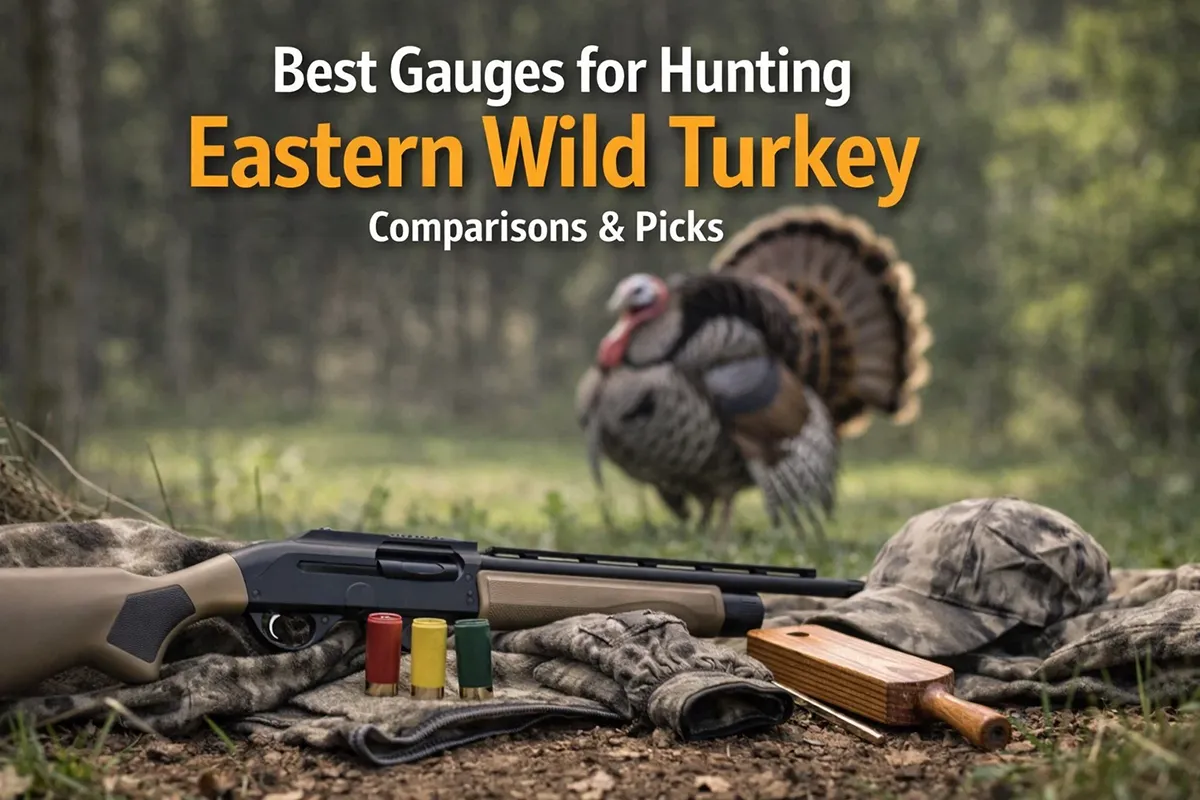
From versatile 12 gauge setups to lighter 20 gauge, 28 gauge, and .410 bore options, these are the practical shotgun choices hunters commonly weigh for Eastern wild turkey seasons.
Choosing the best eastern wild turkey hunting gauges is mostly about matching pattern density, recoil, shotgun weight, and honest field range to the way you hunt. For turkey hunting, this is usually a gauge decision rather than a rifle cartridge discussion, because shotguns remain the standard tool in many spring seasons and regulations often focus on legal shot size, action type, magazine limits, and sometimes non-toxic shot requirements. The right choice is the one that throws an even, dependable pattern into a turkey’s head-and-neck vital area at the distance you have actually tested on paper, fits you well from a seated or braced position, and still feels manageable when you are carrying it between setups.
Where/When: Eastern wild turkeys are widespread across much of the eastern United States and are commonly hunted in mixed hardwoods, pine edges, creek bottoms, farm country, oak ridges, and broken timber with nearby openings. Hunters often locate birds around roost trees, scratching zones, logging roads, field corners, food plots, soft mast areas, water sources, and travel corridors between feeding and loafing cover. In many areas, spring hunting revolves around gobbler breeding activity, with birds often most vocal around fly-down and again when they begin moving through mid-morning. Early season birds may stay with hens longer, while later season gobblers can become more callable after hens leave to nest. Wind, rain, pressure, and abrupt weather changes often shift movement patterns, so exact timing varies by region, habitat, and local regulations.
Gauge Comparisons
| Feature | 12 gauge | 20 gauge | 10 gauge | 28 gauge | .410 bore |
|---|---|---|---|---|---|
| Recoil How much kick you can expect when firing. |
Moderate to heavy with turkey loads | Moderate and manageable for most hunters | Heavy | Light to moderate | Light |
| Effective Range The distance at which the shotgun remains practical and lethal with a proven pattern. |
Commonly 40+ yards with tuned loads | Commonly 30–40+ yards with modern loads | Often 40+ yards with dense patterns | Commonly 25–35 yards; sometimes farther with tuned setups | Best kept close unless thoroughly patterned |
| Payload Range The range of turkey shot payloads typically available for the gauge or bore. |
Turkey payloads commonly around 1 3/4 to 2 1/4 oz | Commonly around 1 1/4 to 1 5/8 oz | Commonly around 2 to 2 1/4 oz | Commonly around 1 to 1 1/4 oz | Commonly around 11/16 to 13/16 oz |
| Versatility How well the gauge or bore can serve for other game and bird hunting roles. |
Very versatile for many game and bird roles | Highly versatile with less recoil | Limited and specialized today | Good upland crossover option | Niche; limited but useful in the right hands |
| Ammo Availability How easy it is to find hunting ammunition for the gauge or bore. |
Excellent | Excellent | Fair to limited | Good but not as broad as 12 or 20 | Good but load choice matters |
12 gauge
The 12 gauge is still the default answer for many Eastern wild turkey hunters because it solves the most common turkey problem: building a dense, forgiving pattern on a very small target zone at realistic woods-and-field distances. It gives you the broadest selection of turkey loads, the widest choke support, and usually the easiest path to finding a shell-and-choke combination that performs well in your shotgun. That matters for hunters who may need to anchor a bird that hangs up near the edge of comfortable range, or for anyone who wants the least hassle when buying shells and accessories. Choose 12 gauge when you want maximum flexibility, wide ammunition availability, and the best odds of tuning a dependable setup without chasing rare loads. It is often the strongest pick for hunters who sit in blinds, hunt field edges, or simply prefer a little more margin when birds stop a bit farther than expected.
PROS
- Usually the easiest gauge to tune for dense, even turkey patterns
- Broadest shell, choke tube, and shotgun availability
- Strong option for hunters who want more pattern margin at normal turkey distances
CONS
- Heavy turkey loads can produce significant recoil
- Shotguns and shells can feel bulky on long hikes or run-and-gun hunts
- Can be more gun than necessary for hunters keeping shots close
Interesting Fact: Much of the 12 gauge’s long-standing turkey dominance comes from how easily hunters can find loads, chokes, and aftermarket parts built around it.
Consider this Gauge If…
Pick 12 gauge if you want the most forgiving all-around turkey option and do not mind heavier recoil. It is especially practical when shell availability, choke choices, and proven field performance matter more than shaving weight.
20 gauge
The 20 gauge has become one of the smartest eastern wild turkey hunting gauges because it solves a different problem than the 12 gauge: it offers serious turkey performance with less recoil and often in a lighter, more comfortable shotgun. That matters for hunters covering ridges, public tracts, creek-bottom timber, and multiple calling setups in a single morning. With the right choke and quality turkey load, a 20 gauge can be extremely effective inside common turkey ranges, especially when the hunter has patterned the shotgun carefully and keeps shots honest. Choose 20 gauge when you want a strong middle ground between shootability and performance. It is also a sensible pick for smaller-framed hunters, youth hunters, or anyone who already owns a 20 gauge for deer, small game, or upland birds and wants one gun to handle several hunting jobs.
PROS
- Usually easier recoil than comparable 12 gauge turkey setups
- Often found in lighter shotguns that carry well through timber
- Very capable for Eastern birds when paired with the right load and choke
CONS
- Gives up some payload and pattern cushion compared with 12 gauge
- Can be less forgiving if shots stretch past your tested limit
- Some shotguns may require more pattern testing to find the best shell match
Interesting Fact: The 20 gauge became far more respected for turkey hunting as modern shotshells improved pellet density and downrange pattern quality.
Consider this Gauge If…
Choose 20 gauge if you want a lighter, easier-shooting turkey shotgun without giving up serious effectiveness at normal spring gobbler distances. For many hunters, it is the practical sweet spot.
10 gauge
The 10 gauge is a specialized turkey choice for hunters who want maximum payload and are willing to accept more gun weight, more recoil, and more limited ammunition options in return. It solves the problem of pushing a heavy turkey load with strong pattern potential, which can matter for fixed-position hunters who want a dedicated gobbler setup and are not carrying it all over the woods. In Eastern turkey country, that usually means blind hunting, field-edge hunting, or short walks to known setups rather than covering miles of broken terrain. Choose 10 gauge only when you specifically want its strengths and understand its tradeoffs. For many hunters, a modern 12 gauge is simpler, easier to feed, and easier to live with, but the 10 gauge can still make sense for someone who values specialization over convenience.
PROS
- Heavy payload potential for strong turkey pattern performance
- Works well as a dedicated, purpose-built gobbler setup
- Can shine from blinds or stationary field positions
CONS
- Shotgun and ammo choices are more limited than 12 or 20 gauge
- Recoil and overall gun weight are substantial
- Less practical for mobile hunting in Eastern woods terrain
Interesting Fact: The 10 gauge remains a niche favorite mainly because many hunters found that improved 12 gauge turkey loads covered their needs with less bulk.
Consider this Gauge If…
Go with 10 gauge if you already own one, want a dedicated turkey shotgun, and mostly hunt from locations where extra weight is not a major drawback.
28 gauge
The 28 gauge is a lighter, more specialized turkey option that appeals to hunters who value low recoil, trim handling, and disciplined shot selection. It solves the comfort problem better than the distance problem, which makes it attractive for hunters who walk a lot, prefer compact shotguns, or simply shoot a lighter gun more accurately. In Eastern wild turkey hunting, that matters most where shots are likely to be close to moderate and the hunter is patient enough to let birds enter a proven pattern window. Choose 28 gauge when you care more about carrying comfort and clean gun fit than about stretching range. With a modern turkey load and careful patterning, it can be effective, but it works best when you treat it like a deliberate close-range tool rather than trying to force it into jobs better suited to a larger gauge.
PROS
- Light recoil and pleasant handling in many compact shotguns
- Good match for hunters who prioritize mobility and comfort
- Can be effective at sensible turkey ranges with proper patterning
CONS
- Provides less margin for error than 12 or 20 gauge
- Ammo selection is narrower and can be more expensive
- Requires disciplined range limits and honest field choices
Interesting Fact: Interest in the 28 gauge for turkey hunting grew as hunters began trusting lightweight shotguns paired with better modern turkey shells.
Consider this Gauge If…
Pick 28 gauge if your expected shots are close, your shotgun fits exceptionally well, and you value a light-carrying setup enough to accept a narrower performance window.
.410 bore
The .410 bore is the most specialized option in this comparison and demands the most restraint from the hunter. It solves the problem of minimal recoil and very light carry weight, which can matter for recoil-sensitive shooters or for highly controlled setups where distance is limited and shot presentation is carefully managed. For Eastern wild turkey hunting, the .410 bore only makes sense when the shotgun has been patterned thoroughly, the hunter understands the hard range ceiling, and local regulations clearly allow its use. Choose .410 bore only if you are committed to waiting for a clean, stationary head-and-neck shot at close range and passing anything uncertain. It is not a forgiving choice, but in the right hands and within verified limits, it can be a workable turkey tool.
PROS
- Very light recoil and easy-carry shotguns
- Can work in tightly controlled turkey setups with quality shells
- Useful for hunters prioritizing comfort, precision, and discipline
CONS
- Very small pattern margin demands strict range control
- Not well suited to rushed, uncertain, or longer opportunities
- Ethical practicality depends heavily on skill, setup, and local law
Interesting Fact: The .410 bore gained more turkey attention only after specialized loads made it more practical than many hunters once believed.
Consider this Gauge If…
Use .410 bore only if recoil reduction is a top priority and you are willing to keep every shot close, deliberate, and fully inside your tested pattern limit.
Which turkey gauge is best for most hunters?
For most Eastern wild turkey hunters, the 12 gauge remains the most complete answer because it offers the easiest combination of pattern density, shell availability, aftermarket support, and real-world forgiveness. The 20 gauge is the best all-around alternative and may be the smarter choice for hunters who value lower recoil, lighter carry weight, or better all-day comfort. The 10 gauge still has a place as a dedicated specialty option, while the 28 gauge and .410 bore reward careful hunters who are disciplined about distance and willing to pass marginal shots. No matter which gauge or bore you choose, pattern your exact shotgun, choke, and shell combination before the season and set a maximum range based on actual pellet hits, not marketing claims. Safe firearm handling, patient setups, and ethical head-and-neck shot placement matter more than chasing the heaviest payload. Regulations also vary by state and season, including legal shot types, minimum standards, non-toxic requirements in some areas, magazine restrictions, and season dates, so always check local laws before hunting.