
Top 10 Accessories for Grant’s Gazelle Hunting
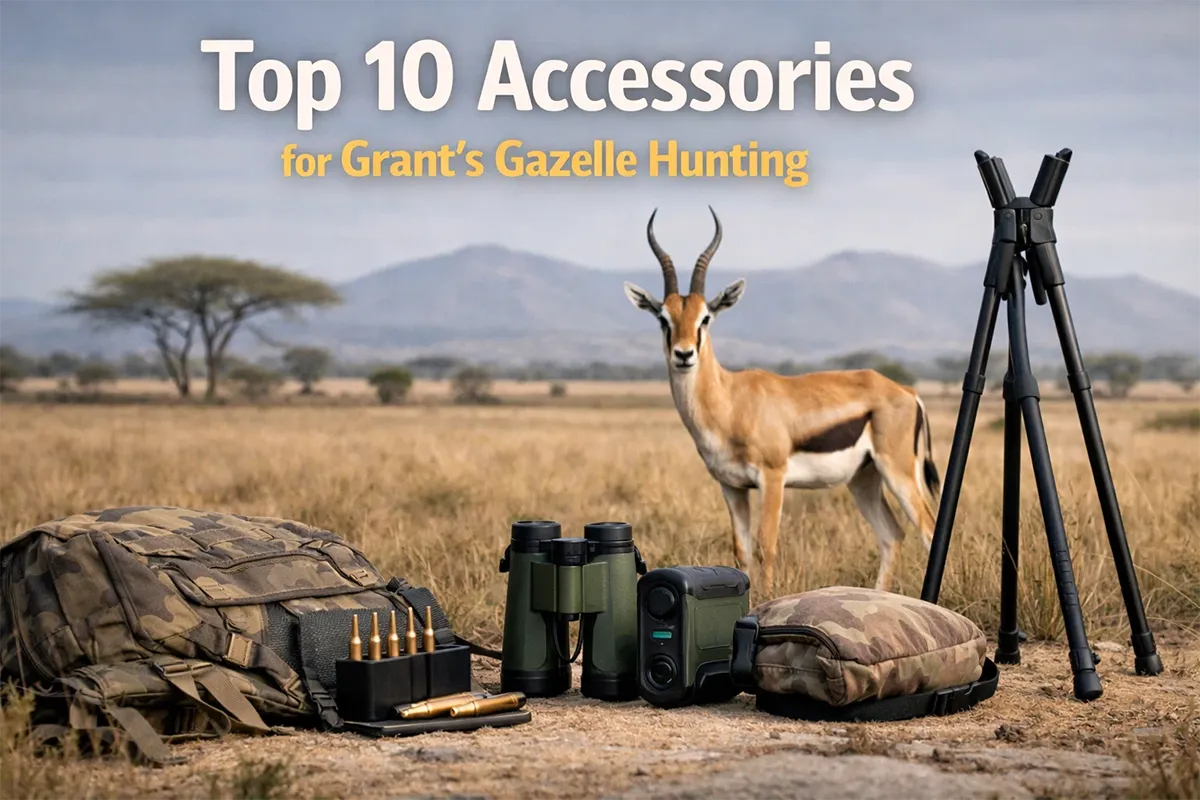
Open-country success comes from seeing more, ranging better, and shooting steadier—these accessories help you do all three.
Grant’s gazelle hunts are often a game of optics, patience, and wind. You may spot animals at long distance, plan a careful stalk, then make a steady shot from shooting sticks in bright light with tricky mirage and crosswinds. That’s why Grant’s gazelle hunting accessories should focus on three priorities: (1) finding and judging animals quickly, (2) making your shot solution simple and repeatable, and (3) protecting your rifle/optics from dust, bumps, and travel.
This list assumes a typical plains-game rifle and scope setup (no brand-specific bias) and highlights accessories that solve real problems: shaky field positions, uncertain distance, cant errors, foggy lenses, loose mounts, and ammo management when you’re moving in and out of vehicles or walking miles. When you choose gear, think about your hunting style (spot-and-stalk vs. sitting water), your realistic shot distance (many hunters keep it inside 300–400 yards), and your recoil tolerance—because the best accessory is the one you’ll actually practice with before you fly.
A few non-negotiables: always handle firearms safely, confirm your zero after travel, and prioritize ethical shot placement (heart/lung) with a broadside or slightly quartering-away angle. Regulations and outfitter requirements vary by country and concession (minimum calibers/energy, magazine limits, seasons, transport rules, and airline ammo limits), so verify local laws and your PH’s preferences before you pack. With that squared away, here are ten accessories that reliably make the hunt smoother and the shot cleaner.
1) Quality 8×42 (or 10×42) Binoculars
Glassing is the backbone of gazelle hunting. Good binos let you spot animals earlier, judge horn shape more confidently, and save time (and boot leather) on stalks that won’t pan out.
Overview
In bright savanna light, clarity and glare control matter as much as magnification. Many hunters prefer 8×42 for a steadier view and wider field of view; 10×42 can help with detail at distance if you’re steady or pair it with a tripod. Look for fully multi-coated lenses, good edge sharpness, and a focus wheel that’s smooth but not “loose” in dusty conditions. Comfort counts: you’ll wear them for hours.
Benefits
- Finds animals faster and reduces wasted stalks.
- Improves trophy evaluation and helps confirm “the one” in a group.
- Less eye fatigue during long glassing sessions.
Notable Brands
- Vortex
- Leupold
- Swarovski
2) Laser Rangefinder
Distance errors are common in open country. A rangefinder turns “I think it’s 310” into a number you can trust—especially when adrenaline and mirage are doing their best to fool you.
Overview
Choose a unit that ranges reliably on animals and brush, not just reflective targets. Angle-compensated modes can be helpful in rolling terrain, but don’t overthink it—consistent ranging is the main goal. Look for a simple display you can read in harsh sunlight, and practice ranging quickly from kneeling or standing with sticks. If you’ll share one rangefinder in the group, prioritize speed and easy controls.
Benefits
- Reduces holdover/come-up mistakes on longer shots.
- Helps you pick a clean shooting lane and avoid “hidden” brush.
- Speeds decisions so you can shoot during brief windows.
Notable Brands
- Leupold
- Sig Sauer
- Bushnell
3) Binocular Harness (Chest Rig)
A harness keeps binos protected, accessible, and stable while you stalk—no bouncing, no neck strain, and fewer dusty lenses when the wind kicks up.
Overview
In dusty environments, a covered harness is a big upgrade over a plain neck strap. Look for a snug fit that doesn’t flop when you jog a few steps, quiet fabric (no loud zippers), and room for your binocular size (42mm objectives are common). Many harnesses include small pockets for a wind checker, lens cloth, or spare battery—handy when you’re living out of a daypack.
Benefits
- Keeps optics cleaner and reduces lens scratching.
- Cuts neck fatigue during all-day glassing.
- Fast access when animals appear and disappear quickly.
Notable Brands
- Badlands
- KUIU
- Vortex
4) Adjustable Shooting Sticks (Tripod or 2-Leg)
Shooting sticks are the “field bench” for plains game. They steady your crosshairs, help you track a walking gazelle, and make longer shots far more ethical and repeatable.
Overview
Your PH may carry sticks, but having a set you’ve practiced with is a major advantage. Tripod sticks are very stable and versatile for standing shots; 2-leg sticks can be quicker and lighter. Look for quiet joints, a yoke that won’t mar your stock, and easy height adjustment for standing and kneeling. Practice mounting the rifle smoothly and building consistent shoulder pressure—most misses happen from wobble and rushed trigger work.
Benefits
- Steadier aim for confident heart/lung shot placement.
- Works in tall grass where prone shots aren’t possible.
- Helps follow and stop moving animals smoothly.
Notable Brands
- Primos
- Bog
- African Sporting Creations
5) Comfortable, Quiet Rifle Sling
You’ll carry your rifle a lot—often with quick transitions in and out of a vehicle or while weaving through brush. A good sling keeps the rifle secure without snagging or squeaking.
Overview
Skip hard, slick slings that slide off your shoulder. Look for a sling with a grippy backing and hardware that won’t rattle. Quick-adjust models are great when you want the rifle tight to your body during a stalk, then instantly loosened for a fast mount. Confirm your swivel studs (or QD cups) are solid and that your sling won’t interfere with the bolt handle or your support hand position on sticks.
Benefits
- Reduces fatigue and keeps your hands free for glassing.
- Helps prevent bumps to optics during long walks.
- Quicker, safer transitions when climbing in/out of vehicles.
Notable Brands
- Quake
- Magpul
- Blue Force Gear
6) Scope Bubble Level (Anti-Cant Level)
Cant is a sneaky miss-maker on longer shots. A small bubble level helps you keep the rifle perfectly upright so your elevation hold or turret dial stays true.
Overview
When you’re shooting off sticks on uneven ground, it’s easy to “lean” the rifle without noticing—especially when you’re rushing a shot window. Choose a level that fits your scope tube diameter (commonly 1-inch, 30mm, or 34mm) and mounts solidly without interfering with turret access. The best placement is where you can see it in your peripheral vision while maintaining a normal cheek weld. Then practice: level, breathe, press.
Benefits
- Reduces lateral drift caused by rifle cant at distance.
- Improves consistency when dialing elevation.
- Adds confidence on uneven terrain and awkward stick heights.
Notable Brands
- Wheeler
- Vortex
- MK Machining
7) Wind Checker or Wind Meter
Wind is often the biggest variable on gazelle-sized targets. A simple wind checker helps up close; a compact wind meter helps you learn what “10 mph” actually feels like.
Overview
You don’t need to overcomplicate wind calls, but you do need a repeatable process. Many hunters carry a tiny bottle of unscented powder to visualize breeze direction during a stalk. If you like data, a pocket wind meter can help you build better judgment during practice—just remember wind at your position can differ from wind halfway to the target. Use the accessory to inform decisions, then confirm with grass movement, mirage, and your PH’s input.
Benefits
- Helps you plan stalks that keep wind in your favor.
- Improves hold decisions when conditions change quickly.
- Builds confidence and consistency during pre-trip range sessions.
Notable Brands
- Kestrel
- WeatherFlow
- Primos
8) Ammo Wallet or Cartridge Carrier
Loose rounds in a pocket pick up dust and get noisy fast. A compact ammo wallet keeps your hunting ammo organized, protected, and quiet—especially when you’re swapping loads or topping off after a follow-up.
Overview
Choose a carrier that matches your cartridge length and holds rounds securely without tearing bullet tips. Soft wallets are quiet and pack well; rigid boxes protect better in vehicles. Consider how you actually hunt: if you’ll carry just a few spare rounds, a slim 10-round wallet is plenty. If you’re running detachable magazines, you may still want a wallet for “insurance ammo” and to keep lots separated (practice vs. hunt).
Benefits
- Keeps ammo clean and reduces rattling noise.
- Speeds reloads and prevents fumbling during excitement.
- Helps you track the exact hunting load you’re using.
Notable Brands
- MTM
- Allen
- Butler Creek
9) Scope Covers + Lens Cleaning Kit
Dust, fingerprints, and vehicle vibration are constant on safari-style hunts. Keeping your scope lenses clean and protected preserves brightness and prevents that heartbreaking “hazy” sight picture at the moment of truth.
Overview
Flip-up covers or stretch covers protect your scope during rides and stalks, and a simple lens kit (blower, brush, microfiber, and lens-safe solution) keeps optics crisp without scratching coatings. The key is habit: cover your scope when you’re moving, then uncover quietly before you mount the rifle on sticks. Avoid shirt tails or dusty rags—those can grind grit into the glass. Pack a spare microfiber in case one gets sandy.
Benefits
- Maintains a bright, sharp sight picture in harsh conditions.
- Reduces scratches and extends optic life through travel.
- Prevents debris from obscuring reticles or target detail.
Notable Brands
- Butler Creek
- Vortex
- Zeiss
10) Compact Torque Driver + Field Tool Kit
Travel, vibration, and temperature swings can expose weak screws or mounts. A small torque driver and bit set helps you keep rings, bases, and stock fasteners secure—without over-tightening and causing damage.
Overview
This is an “insurance policy” accessory: you hope you never need it, but you’ll be glad you packed it if a screw backs out or a scope shifts. Choose a torque driver that covers common inch-pound ranges and includes Torx/Allen bits used by your rings and bases. Add a small multi-tool, spare battery for your rangefinder, and a tiny thread locker (used sparingly) in your checked luggage per travel rules. Confirm torque specs for your mounts before the trip.
Benefits
- Helps prevent zero shifts from loose optics hardware.
- Allows quick, controlled fixes in camp without guesswork.
- Reduces the risk of over-tightening and damaging components.
Notable Brands
- Wheeler
- Fix It Sticks
- Real Avid