
Best Calibers for Hunting Sable Antelope: Comparisons & Picks
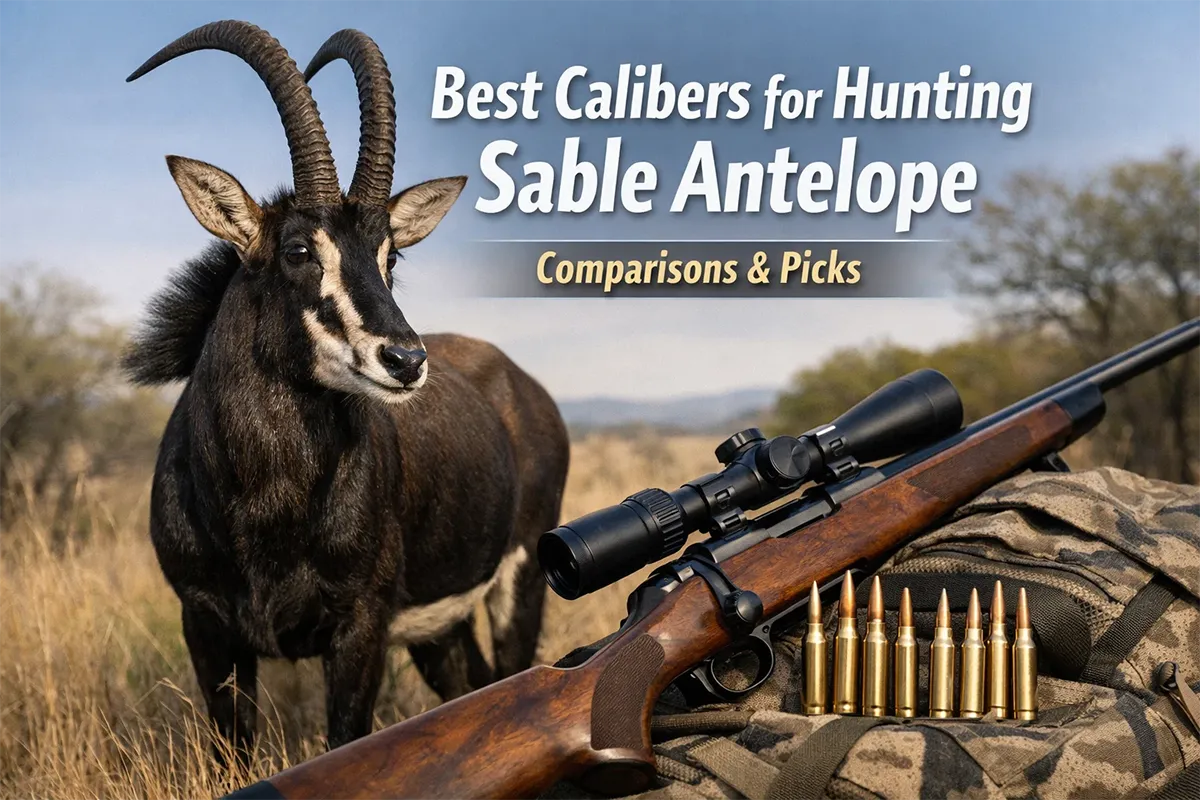
Five proven rifle calibers for tough, heavy-boned plains game—plus practical bullet and setup tips for real African field conditions.
Sable antelope are among Africa’s most striking plains game—and one of the tougher ones to drop quickly. Big bulls carry heavy muscle and stout shoulder bones, and thick bushveld can make follow-ups happen fast. The goal is a caliber you can shoot accurately that drives a controlled-expansion bullet deep through the vitals at realistic distances (often 75–250 yards, sometimes farther). Below are five rifle calibers commonly chosen for sable-size game.
Prioritize safe handling, confirm your zero after travel, and practice from shooting sticks. Regulations and outfitter rules can vary (including minimum caliber/energy requirements and magazine limits), so verify local laws and your PH’s preferences before you hunt.
Caliber Comparisons
| Feature | .270 Winchester | 7mm Remington Magnum | .308 Winchester | .30-06 Springfield | .300 Winchester Magnum |
|---|---|---|---|---|---|
| Recoil How much kick you can expect when firing. |
Low–Moderate | Moderate | Moderate | Moderate | High |
| Effective Range The distance at which the caliber remains accurate and lethal. |
300+ yds (with practice) | 350+ yds (with practice) | 300 yds (typical) | 300+ yds (with practice) | 400 yds (with practice) |
| Bullet Weight Range The range of bullet weights typically available for the caliber. |
130–150 gr | 139–175 gr | 150–180 gr | 150–200 gr | 165–200+ gr |
| Versatility How well the caliber or gauge performs for other game species besides your primary target. |
Excellent (deer to plains game) | High (broad plains-game use) | Excellent (wide game range) | Excellent (very broad) | High (large game focus) |
| Ammo Availability How easy it is to find ammunition for the caliber. |
High | High | Very High | Very High | High |
.270 Winchester
The .270 Winchester is a classic “do-most-things” plains-game caliber that stays flat enough for mixed cover and open edges while keeping recoil manageable. For sable, it works best when you lean into tougher bullets (bonded or monolithic) and avoid overly light, rapidly expanding designs. It’s a strong choice for hunters who shoot better with moderate recoil and want a cartridge that’s easy to find and easy to train with.
PROS
- Manageable recoil helps many hunters place first shots precisely from sticks.
- Flat trajectory reduces holdover errors on longer shots in open savanna or cutlines.
- Widely supported in rifles and ammo, making load development and resupply simpler.
CONS
- Less margin for error than larger bores if angle is steep or shot is slightly back.
- Best performance depends on premium, controlled-expansion bullets—not bargain soft points.
- Wind drift can become noticeable beyond ~300 yards compared with heavier 7mm/.30 bullets.
Interesting Fact: Introduced in 1925, the .270 Win built its reputation on flat shooting and has remained a go-to “one-rifle” cartridge for generations.
Consider this Caliber If…
Choose the .270 Winchester if you’re confident in your shot placement, prefer moderate recoil, and plan to use a tough 140–150 grain controlled-expansion bullet. It’s especially appealing when your hunt may include other plains game (impala, wildebeest, kudu cows) and you want one familiar rifle.
7mm Remington Magnum
The 7mm Remington Magnum adds speed and heavier bullet options without jumping all the way to the biggest magnums. That extra velocity can help controlled-expansion bullets open reliably at longer distances while still penetrating well—useful if you get a 250–350 yard opportunity across a valley or burned area. It’s a favorite “plains game magnum” for hunters who want reach but still want to shoot comfortably.
PROS
- Strong balance of flat trajectory and deeper-penetrating bullet weights for sable-size animals.
- Good long-range energy retention when paired with sleek 160–175 gr bullets.
- Common in quality rifles; plenty of proven hunting loads exist.
CONS
- Recoil and muzzle blast are a step up from standard cartridges—practice matters.
- Fast 7mm loads can be tough on barrels if you do very high-volume range sessions.
- Some factory loads prioritize speed over bullet construction; pick tough bullets.
Interesting Fact: Released in the early 1960s, the 7mm Rem Mag became one of the most popular magnum hunting cartridges worldwide.
Consider this Caliber If…
Consider the 7mm Rem Mag if you want a flatter-shooting option with more bullet weight than the .270, and you’re comfortable practicing enough to manage recoil. A 160–175 grain bonded, partition-style, or monolithic bullet is commonly chosen when sable are on the menu.
Check current 7mm Remington Magnum ammo options on GunBroker
.308 Winchester
The .308 Winchester is a practical, confidence-building choice: efficient, accurate, and widely available. It doesn’t chase maximum velocity, but it delivers heavy-for-caliber bullets with dependable penetration—ideal for sable in thicker cover where shots are often inside 200 yards and follow-ups may be quick. If you want a simple setup that works and you value ammo availability, the .308 is hard to argue with.
PROS
- Broad selection of tough 165–180 gr hunting bullets suited to heavy-boned game.
- Excellent accuracy potential; many rifles shoot it well without fuss.
- Ammo and components are easy to find in many markets.
CONS
- More drop and wind drift than the magnums past ~300 yards—range discipline matters.
- Shorter “forgiveness window” on steep quartering shots if using lighter bullets.
- Some hunters may want more reach for very open-country plains hunts.
Interesting Fact: The .308 Win’s efficient case design helped it become a dominant military and sporting cartridge, and it’s known for accuracy in short-action rifles.
Consider this Caliber If…
Pick the .308 Winchester if you’re hunting sable in bushveld or mixed cover, expect most shots inside 250 yards, and want maximum simplicity. A 165 or 180 grain controlled-expansion bullet is a common pairing when you want reliable penetration on shoulder-to-offside angles.
.30-06 Springfield
If there’s a “default answer” for medium-to-large game worldwide, the .30-06 Springfield is it. For sable, the big advantage is flexibility: you can run 165–180 grain bullets for a balanced setup, or step up to 200 grain bonded/partition-style bullets for extra penetration on quartering shots. It’s a steady performer that rewards good fundamentals.
PROS
- Widest useful bullet-weight range on this list, including tough 180–200 gr options.
- Proven field performance on large-bodied game with controlled-expansion bullets.
- Rifles and ammunition are ubiquitous, and recoil is manageable for many hunters.
CONS
- Not as flat as the magnums at longer distances—know your holds or dial.
- Full-power loads can still feel snappy in light rifles; fit and pad matter.
- Older, cheaper soft points may expand too quickly—choose premium construction.
Interesting Fact: Adopted by the U.S. military in 1906, the .30-06 has over a century of hunting history and remains one of the most versatile cartridges ever made.
Consider this Caliber If…
Choose the .30-06 if you want one rifle that can cover sable and a wide menu of other plains game, and you like having heavier bullet options without needing a magnum. A 180 grain bonded or partition-style bullet is a common “do-it-all” choice when shot angles are uncertain.
.300 Winchester Magnum
The .300 Winchester Magnum is the “extra margin” option—more velocity with heavier .30-caliber bullets, which can translate to deeper penetration and better performance when shots stretch or angles get tricky. On sable, it’s often chosen by hunters who want authority for shoulder shots and the ability to hold onto energy in windier, more open conditions. The tradeoff is recoil and blast, so it’s best when you’re committed to practice and good recoil management.
PROS
- Excellent energy and penetration potential with 180–200+ gr controlled-expansion bullets.
- Flatter trajectory and better wind performance than standard .30-caliber cartridges.
- Provides more margin on tougher angles—useful when sable won’t always stand broadside.
CONS
- High recoil can degrade accuracy for some shooters unless practiced and properly fit.
- Muzzle blast is significant; hearing protection at the range is essential.
- Heavier rifles and quality optics mounts are often needed to keep it comfortable and reliable.
Interesting Fact: Introduced in 1963, the .300 Win Mag quickly became a benchmark magnum for hunters who wanted long-range capability with readily available ammunition.
Consider this Caliber If…
Consider the .300 Win Mag if you shoot magnums well, want maximum reach and authority for sable and other large plains game, and you’re willing to run a rifle that’s set up to tame recoil (good pad, proper stock fit, solid brake/suppressor where legal). Pair it with a tough 180–200+ grain bullet and prioritize calm, deliberate shot placement.
Check current 300 Winchester Magnum ammo options on GunBroker
Final Picks for Sable Antelope Hunts
For a straightforward, widely supported setup, the .30-06 Springfield or .308 Winchester paired with a tough 165–200 grain controlled-expansion bullet covers most sable hunts well, especially in thicker country. If you expect longer distances or more open edges, the 7mm Remington Magnum is a practical blend of reach and shootability. The .270 Winchester can work well for disciplined shooters using premium bullets, while the .300 Winchester Magnum adds extra margin if you handle magnum recoil confidently.
Confirm zero after travel, practice from sticks, and prioritize the heart/lung pocket for quick, ethical results. Check local regulations for any minimum-caliber, magazine, or ammunition restrictions.