
Best Gauges for Hunting Bufflehead: Comparisons & Picks
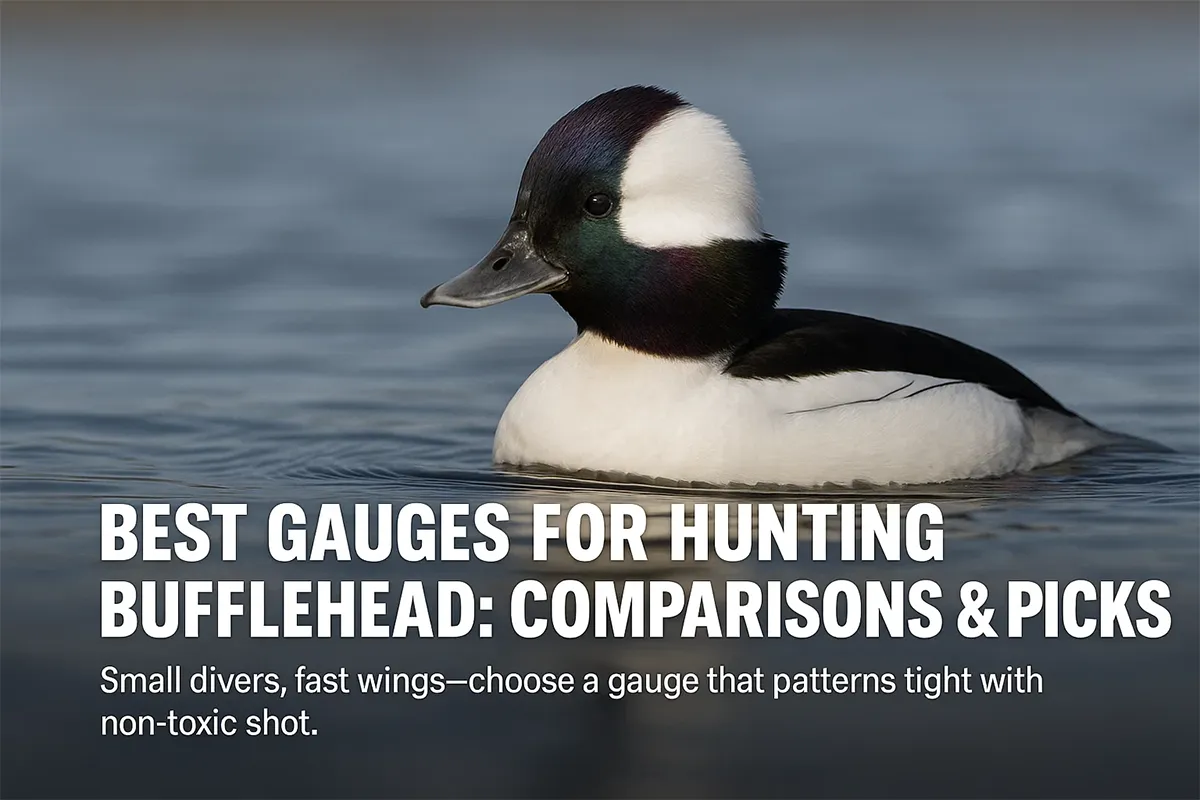
A practical, non-toxic-focused gauge guide for fast little divers—built around real-world ranges and clean kills.
When you’re picking bufflehead hunting gauges, you’re really choosing pattern density, handling, and how confident you feel on quick, low-flying shots over water. Most hunters do their best work with a 12 gauge or 20 gauge using non-toxic waterfowl loads, but smaller options can shine when you keep shots close and your pattern is dialed. Whatever you carry, prioritize safe gun handling, ethical shot selection, and always follow local waterfowl regulations (ammo type, shot size rules, and capacity limits can vary).
Gauge Comparisons
| Feature | 12 gauge | 20 gauge | 28 gauge | .410 bore | 10 gauge |
|---|---|---|---|---|---|
|
Typical Effective Range Approximate distance where hunters can expect reliable performance with good shot placement and proper load selection. |
35–45 yds (with the right non-toxic load/choke) | 30–40 yds | 25–35 yds | 20–30 yds | 40–50 yds (conditions-dependent) |
|
Recoil Felt recoil can vary by firearm weight and ammunition load. |
Moderate | Mild–Moderate | Mild | Very mild | Heavy |
|
Payload Weight Range Typical shot payload weights commonly available for the gauge/load. |
~1 1/8–1 1/4 oz payload (common waterfowl loads) | ~7/8–1 oz payload | ~3/4–7/8 oz payload | ~1/2–11/16 oz payload | ~1 3/8–1 5/8 oz payload |
|
Versatility How well the caliber or gauge performs for other game species besides your primary target. |
High (ducks, geese, upland, clays) | High (ducks, upland, clays) | Medium (upland/clays; limited waterfowl options) | Low–Medium (small game/clays; waterfowl is niche) | Medium (big waterfowl; specialized overall) |
|
Ammo Availability How widely available ammo is for the caliber or gauge. |
Very high | High | Medium | Medium | Medium–Low |
12 gauge
The do-it-all choice for bufflehead hunting: plenty of payload and pattern density for fast little divers, plus the widest selection of non-toxic waterfowl loads.
PROS
- Biggest selection of non-toxic waterfowl loads and choke options
- Strong pattern density for crossing shots and windy days
- Works well from a boat, blind, or shore with 2 3/4″–3″ shells
CONS
- More recoil than smaller gauges (especially in light guns)
- Heavy guns can feel bulky in small boats or long hikes
- Easy to over-gun close decoy shots if you don’t pick the right load/choke
Interesting Fact: Modern non-toxic loads (steel, bismuth, tungsten blends) let a 12 gauge cover everything from teal to late-season divers with the right choke and shot size.
Consider this Gauge If…
You want one shotgun setup that can handle bufflehead plus other ducks and geese, and you value easy ammo availability at any sporting goods shop.
20 gauge
A lighter, handier option that still hits hard enough for buffleheads when shots are kept reasonable and your pattern is dialed with a good choke and non-toxic load.
PROS
- Lighter guns swing fast on diving ducks and quick pass-shooting
- Noticeably less recoil than 12 gauge for many shooters
- Great balance of effectiveness and carry comfort for walk-in spots
CONS
- Less pellet count than 12 gauge at equal shot size
- Some premium non-toxic loads cost more or are harder to find
- You’ll notice the limits sooner on long, wind-pushed shots
Interesting Fact: A tight, consistent pattern matters more than raw payload—pattern your 20 gauge with your chosen non-toxic load before the season.
Consider this Gauge If…
You prefer a lighter shotgun, shoot best with moderate recoil, and plan to hunt buffleheads mostly over decoys or on closer passes.
28 gauge
A specialist’s gauge that can be deadly on buffleheads inside typical decoy range. With the right non-toxic load, it’s a joy to carry and quick to mount.
PROS
- Very light and quick-handling—great for snap shots
- Soft recoil encourages clean follow-through and better hits
- Ideal for close-range decoying where buffleheads commit hard
CONS
- Limited pellet count makes load/choke selection critical
- Non-toxic waterfowl loads can be scarce and expensive
- Not forgiving if your shots stretch past your effective range
Interesting Fact: Because buffleheads are small, fast targets, consistent pattern coverage is the name of the game—28 gauge shines when you keep shots tight and centered.
Consider this Gauge If…
You’re a confident shotgunner who hunts tight setups (boats, layout, or small water) and you’re disciplined about passing longer shots.
.410 bore
A fun, challenging option for bufflehead hunting when conditions are perfect: close birds, good angles, and a hunter who has patterned the gun thoroughly.
PROS
- Ultra-light guns are easy to carry and point
- Low recoil makes it pleasant for recoil-sensitive shooters
- Great for skilled hunters targeting close, clean opportunities
CONS
- Small payload means very tight margins on pattern and range
- Requires excellent shot selection and follow-through
- Some non-toxic options are limited depending on where you hunt
Interesting Fact: Think of .410 bore as a “precision tool”—it rewards patience and punishes rushed, marginal shots.
Consider this Gauge If…
You’re hunting buffleheads at very close range, you enjoy the challenge, and you’re committed to only taking high-percentage shots.
10 gauge
The heavy hitter for open-water diver hunting. It’s more gun than most bufflehead hunts require, but it can shine when you’re fighting wind and stretching patterns responsibly.
PROS
- Excellent pattern density with large non-toxic payloads
- Can provide extra reach for tough open-water situations
- Great option when your hunt also targets larger divers or geese
CONS
- Heavy guns and shells—less fun to pack or swing all day
- More recoil and slower handling than smaller gauges
- Overkill for typical close decoy shots on buffleheads
Interesting Fact: Most hunters choose 10 gauge for conditions (wind, big water, mixed-bag hunts), not because buffleheads “need” it.
Consider this Gauge If…
You’re hunting big water in late-season conditions, want maximum pattern density with non-toxic loads, and don’t mind extra weight.
My go-to picks for buffleheads
If you want the simplest, most flexible setup, start with a 12 gauge and a quality waterfowl choke, then pattern a few non-toxic loads until you find the one your gun loves. If you value light carry weight and quick handling, a 20 gauge is a sweet spot—just keep shots inside your patterned range. The 28 gauge and .410 bore can be incredibly fun (and effective) in tight decoy spreads, but they demand discipline and very honest shot selection. And while 10 gauge is rarely “needed” for buffleheads, it can make sense for big-water, mixed-bag hunts when conditions are brutal.