
Best Gauges for Hunting Northern Shoveler: Comparisons & Picks
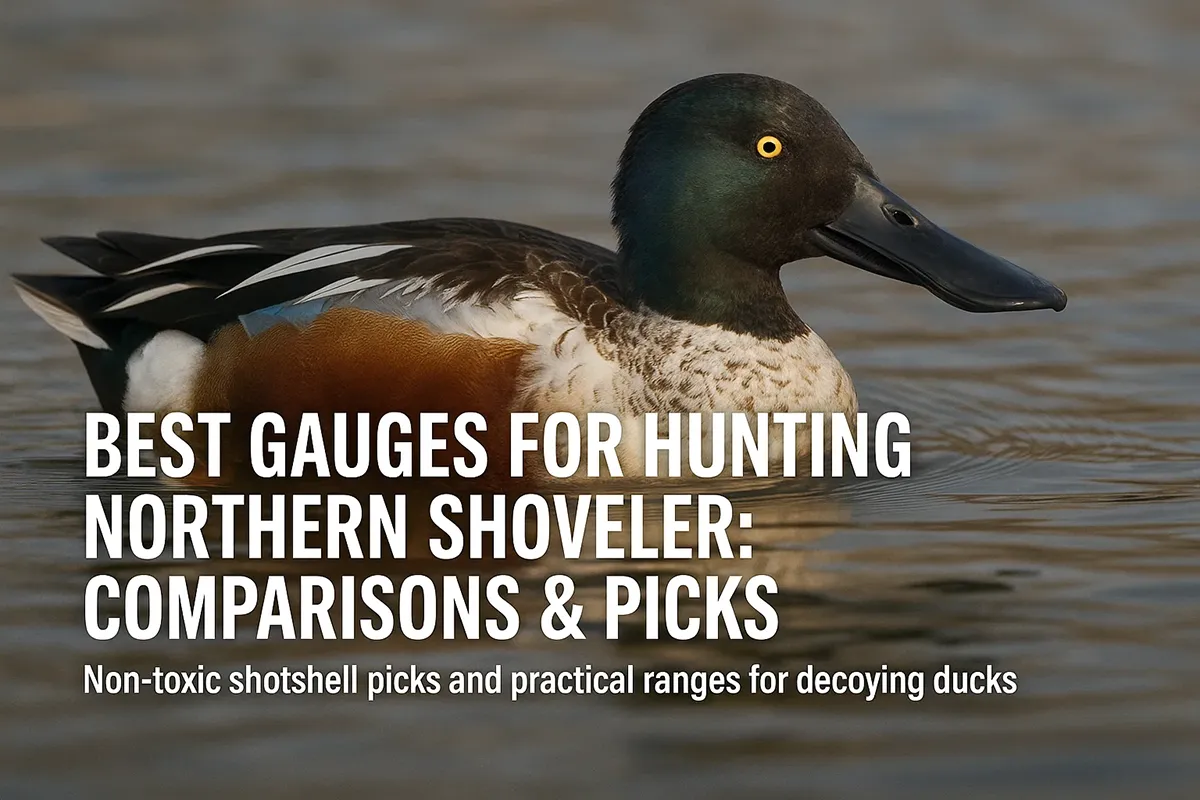
Non-toxic shotshell picks and practical ranges for decoying ducks.
Looking for the best gauges for northern shoveler hunts? This guide compares popular waterfowl gauges—12 gauge, 20 gauge, 28 gauge, and .410 bore—with realistic ranges, recoil, and ammo availability. Always use non-toxic shot for waterfowl.
Gauge Comparisons
| Feature | 12 gauge | 20 gauge | 28 gauge | .410 bore | |
|---|---|---|---|---|---|
| Recoil How much kick you can expect when firing. |
Moderate–High | Moderate–Low | Low | Very Low | |
| Effective Range The distance at which the gauge remains pattern-dense and lethal. |
40–50 yd (steel) | 35–40 yd (steel) | 30–35 yd (bismuth/TSS) | 25–30 yd (TSS/bismuth) | |
| Typical Payloads Common shot charges that pattern well. |
1–1¼ oz steel/bismuth | ⅞–1 oz steel/bismuth | ¾–1 oz bismuth/TSS | ½–11/16 oz TSS/bismuth | |
| Versatility How broadly the option covers conditions and bird sizes. |
Very High | High | Moderate | Low | |
| Ammo Availability How easy it is to find ammunition for the gauge. |
Excellent | Very Good | Fair | Fair |
12 Gauge
The all-around waterfowl workhorse. Big payloads pattern well with modern wads and non-toxic shot, giving forgiving margins on decoying shovelers and longer follow-ups.
Pros
- Widest choice of non-toxic loads (steel, bismuth, TSS)
- Reliable 40–50 yd performance with proper choke
- Heavier payloads keep patterns dense on windy days
Cons
- More recoil and heavier guns
- Can encourage over-ranging shots
- Bulkier ammo to carry in the marsh
Interesting Fact: Many public marsh hunters standardize on #2 or #3 steel for mixed puddle-duck flights.
Consider this Gauge If…
You want maximum forgiveness and hunt mixed groups at varied ranges.
20 Gauge
A sweet-spot for puddle ducks. Manageable recoil with plenty of pattern density for shovelers over decoys when paired with #3–#4 steel or bismuth.
Pros
- Lighter, handier guns for long walks to the blind
- Good 35–40 yd performance with steel; farther with bismuth
- Less recoil promotes faster follow-ups
Cons
- Smaller payloads are less forgiving on marginal hits
- Steel options fewer than 12 gauge
- Windy days can thin patterns at distance
Interesting Fact: Modern 3″ 20-gauge shells often carry ⅞–1 oz payloads that pattern surprisingly well with improved-cylinder or modified chokes.
Consider this Gauge If…
You prioritize lighter carry and mild recoil but still want solid 35–40 yd capability.
28 Gauge
Featherweight and fun. With bismuth or TSS, the 28 can cleanly take close-working shovelers over decoys, but it demands discipline on range.
Pros
- Very light recoil and quick handling
- Bismuth/TSS loads deliver dense patterns for size
- Great for early-season, close decoy shots
Cons
- Steel options are limited; bismuth/TSS cost more
- Shorter effective range than 12/20 gauges
- Less margin for error on quartering birds
Interesting Fact: Bismuth’s higher density vs. steel lets you drop one shot size for similar penetration at the same range.
Consider this Gauge If…
You hunt tight decoy spreads and value low recoil; you’re disciplined about keeping shots under ~35 yards.
.410 Bore
A niche waterfowl option that shines only at short range with premium TSS or bismuth and a tight choke. Ethical shots are close and broadside.
Pros
- Ultra-low recoil and featherweight guns
- TSS can pattern impressively within 30 yards
- Great training tool for recoil-sensitive shooters
Cons
- Narrow payloads leave little room for error
- Premium ammo is expensive and sometimes scarce
- Strictly a short-range choice on decoying birds
Interesting Fact: Despite the name, .410 is a bore size, not a gauge—unique among common shotgun shells.
Consider this Gauge If…
You’re highly disciplined, shooting decoying ducks inside ~30 yards and willing to buy premium non-toxic loads.
Final Picks & Quick Tips
For most Northern shoveler hunts, a 12 or 20 gauge with #3–#4 steel through an improved-cylinder or modified choke is easy to trust. If you prefer light recoil, the 28 gauge is excellent inside ~35 yards with bismuth or TSS. Reserve .410 bore for disciplined, close-decoy shots with premium non-toxic loads. Always handle firearms safely, pattern your gun with the exact load you’ll use, and confirm local regulations—waterfowl requires non-toxic shot, and seasons, limits, and equipment rules vary by state.