
Michigan Gun Sales and Economic Trends
Introduction
When it comes to understanding the firearm market, numbers often tell a bigger story than we realize. A recent analysis of NICS background checks in Michigan sheds light on how economic shifts and recreational activities are connected to gun purchases. From rising incomes to hunting seasons, the data uncovers some surprising patterns that affect both outdoor enthusiasts and the broader shooting sports community.
Income and Firearm Purchases Move Together
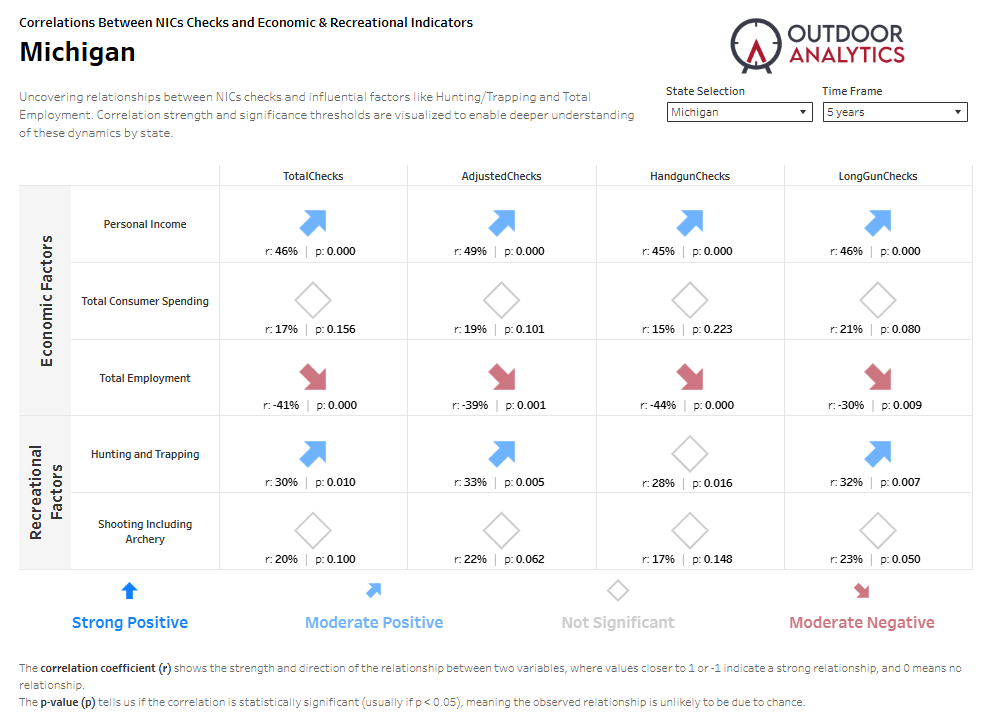
One of the strongest findings is that as personal income increases, firearm background checks also rise. The correlation is especially strong for long gun and handgun checks, both showing nearly identical positive links. This suggests that when Michiganders feel more financially secure, they’re more likely to invest in firearms—whether for sport, hunting, or personal defense.
Employment Tells the Opposite Story
Interestingly, employment trends move in the opposite direction. The data shows a moderate negative relationship between total employment and firearm checks. In plain English: when more people are employed, fewer gun purchases are made. This could reflect tighter budgets during employment transitions, or simply less free time to focus on shooting and hunting activities.
Hunting Keeps the Market Steady
Michigan’s deep hunting tradition continues to play a big role. The analysis shows a clear positive relationship between hunting participation and firearm checks—especially for long guns. This reinforces the idea that hunting remains a driving force in sustaining gun sales, even as the economy shifts.
Recreational Shooting—A Softer Link
While hunting has a strong connection, recreational shooting and archery show only a weaker tie to firearm background checks. That doesn’t mean the activity is unimportant—it may just reflect that many participants already own their firearms and don’t need frequent purchases.
Key Takeaways for Michigan’s Firearm Market
- Rising incomes = more gun purchases.
- Higher employment = fewer gun purchases.
- Hunting remains a cornerstone of the firearms economy.
- Recreational shooting is steady but less tied to new sales.
Conclusion
Michigan’s firearm market tells a story of balance between tradition, economics, and recreation. While money in the pocket can drive sales up, employment stability may actually cool down demand. And through it all, hunting continues to anchor the state’s relationship with firearms.